
Lang
Flaxseed oil: a vegetable oil extracted from the seeds of the flax plant. A comprehensive reference covering specifications, fatty acids, production, and uses.
Linum usitatissimum
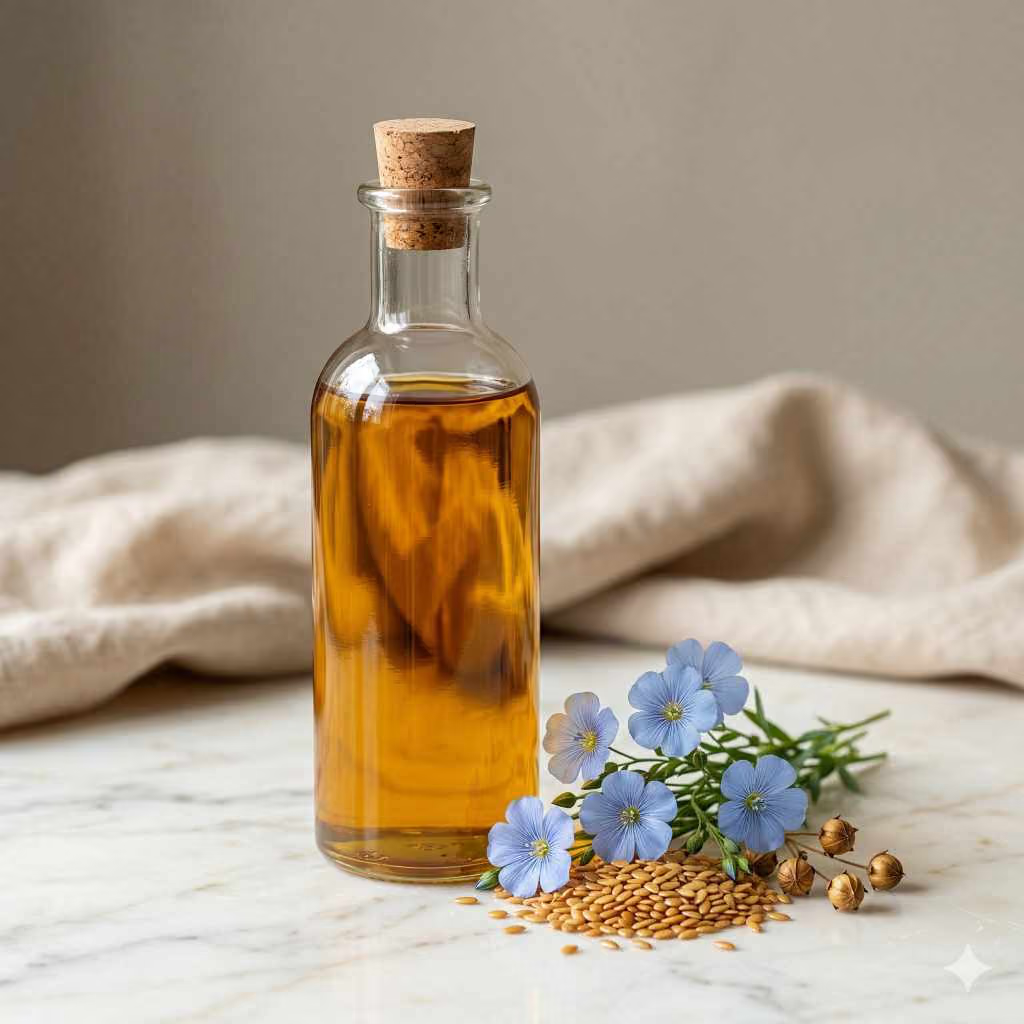
Flaxseed oil is a vegetable oil extracted from the seeds of the flax plant Linum usitatissimum, and is one of the oldest oils known in human history. It is also known as "linseed oil" (for industrial uses) or "flaxseed oil" (for food uses). The seed contains 35-45% oil by weight.
Flax cultivation has a history extending more than eight thousand years in the Fertile Crescent and to Pharaonic Egypt, where linen garments were woven for mummies and the oil was used in embalming. After cotton fiber was industrially developed, flax became less used in textiles, and instead its oil production led to industrial roles (paints), then it recently returned to prominence as a healthy source of plant-based omega-3.
Flaxseed oil is very unique in its fatty composition: it contains an exceptional proportion of linolenic acid (omega-3) reaching 53%, and linoleic acid (omega-6) at 14%, with an omega-6:omega-3 ratio of 1:4 (the only one among vegetable oils in which omega-3 exceeds omega-6). The high omega-3 concentration makes it thermally unstable and unsuitable for cooking.
USDA-FAS data are not available for flax oil production, as it is a specialty oil, and Russia, Canada, Kazakhstan, and China lead global seed production. A large part of global production goes to industry (paints, insulation), and the food oil market is much smaller. The oil is governed by Codex Alimentarius standard CXS 210-1999.
Flaxseed oil is used in food cold (in salads, smoothies, and yogurt), and not for cooking, to avoid destroying omega-3 with heat. Industrially, the oil is considered the best "drying oil" in the world, and goes into the making of oil paints and varnishes, linoleum flooring paste, leather dyeing, and the treatment, finishing, and preservation of wood.
HS Code
1515
Oil percentage in the seed/fruit
35-45%
Oil yield/hectare
400 kg/ha
Omega-6:Omega-3
1:4
This oil conforms to the Codex Alimentarius standard for named vegetable oils, CXS 210-1999, which specifies fatty acid composition, and quality and authenticity criteria. The following cards present the specification for each variety of this oil.
Flaxseed (linseed) oil is derived from the seeds of various cultivated species of Linum usitatissimum.
Oleic acid (Omega-9)
9.8-36.0
Linoleic acid (Omega-6)
8.3-30.0
Linolenic acid (Omega-3)
43.8-70.0
Palmitic acid
4.0-11.3
Stearic acid
2.0-8.0
Lauric acid
n.d.-0.3
Erucic acid
n.d.-1.2
Total saturated
Total monounsaturated
Total polyunsaturated
Iodine value
170-211
Vitamin E (mg/kg)
150-905
Caproic acid (C6:0): n.d.
Caprylic acid (C8:0): n.d.
Capric acid (C10:0): n.d.
Lauric acid (C12:0): n.d.-0.3
Myristic acid (C14:0): n.d.-0.2
Palmitic acid (C16:0): 4.0-11.3
Palmitoleic acid (C16:1): n.d.-0.5
Margaric acid (C17:0): n.d.-0.1
Heptadecenoic acid (C17:1): n.d.-0.1
Stearic acid (C18:0): 2.0-8.0
Oleic acid / Omega-9 (C18:1): 9.8-36.0
Linoleic acid / Omega-6 (C18:2): 8.3-30.0
Linolenic acid / Omega-3 (C18:3): 43.8-70.0
Arachidic acid (C20:0): n.d.-1.0
Gadoleic acid (C20:1): n.d.-1.2
Eicosadienoic acid (C20:2): n.d.
Behenic acid (C22:0): n.d.-0.5
Erucic acid (C22:1): n.d.-1.2
Docosadienoic acid (C22:2): n.d.
Lignoceric acid (C24:0): n.d.-0.3
Nervonic acid (C24:1): n.d.
Sterols (% of total):
Cholesterol: n.d.
Brassicasterol: n.d.-1.0
Campesterol: 25.0-31.0
Stigmasterol: 7.0-9.0
Beta-sitosterol: 45.0-53.0
Delta-5-avenasterol: 8.0-12.0
Delta-7-stigmastenol: n.d.
Delta-7-avenasterol: n.d.
Other sterols: n.d.
Total sterols (mg/kg): 2300-6900
Tocopherols and tocotrienols (mg/kg):
Alpha-tocopherol: 2-265
Beta-tocopherol: n.d.
Gamma-tocopherol: 100-712
Delta-tocopherol: n.d.-14
Alpha-tocotrienol: n.d.
Gamma-tocotrienol: n.d.
Delta-tocotrienol: n.d.
Total tocopherols and tocotrienols (mg/kg): 150-905
Relative density: 0.925-0.935 (25°C)
Apparent density (g/mL): —
Refractive index: 1.472-1.487 (20°C) / 1.472-1.475 (40°C)
Saponification value: 185-197
Iodine value: 170-211
Unsaponifiable matter (g/kg): ≤ 20
Melting point: —
δ¹³C ratio: —