 Advertise
Note: This article was AI-translated from Arabic and is currently under manual review. The author is not responsible for any translation errors. Please refer to the original Arabic text for the most accurate and authoritative information.
In light of the increasing global trend towards natural and healthy products “as returning to nature is not a luxury, but a necessity for better health”, cold-pressed virgin oils emerge as one of the ideal options that combine purity, quality and economic value.
It is not just a food product. It represents an opportunity to achieve true sustainability through a production chain that starts from selecting healthy and fresh seeds, through accurate extraction processes, and recycling waste to achieve maximum benefit.
Virgin oils are extracted by mechanical means without chemical solvents or high temperatures, allowing the preservation of their vital micro-compounds such as fat-soluble vitamins, tocopherols, sterols, antioxidants, and plant dyes. They are compounds that have a proven physiological role in supporting immunity, fighting inflammation, and preventing chronic diseases.
Examples of these oils are: nigella oil, flax, watercress, sesame, coconut, almond, and others. They are all highly sensitive to physical and chemical conditions, which requires great care at all stages of processing and storage.
With the increasing demand for these oils as a sophisticated and natural food option, producers are responsible for controlling all stages of extraction, purification, packaging and distribution in order to ensure that the full value remains in every drop and to maintain the pure image of this product until it reaches the consumer.
Cold pressed virgin oils are a highly valuable nutritional and functional asset, but maintaining this quality requires a thorough understanding of the stages of production, storage and utilization of by-products such as raisins.
Choosing oilseeds is the first factor in ensuring oil quality. Fresh, clean seeds, free from insect and fungal infections, produce a purer and more stable oil. The novelty of the season also directly affects the oil content.
Transportation and storage conditions are equally important. High humidity, poor ventilation, or high temperatures may spoil the seeds before they are squeezed. Therefore, it is recommended to store them in cool, dry, ventilated and clean places.
- The presence of moisture or impurities in crude oil may lead to decomposition and oxidation, which increases the peroxide number and changes the taste and smell.
- The oxygen in the air accelerates oxidation, especially in unsaturated oils such as linseed oil.
- Heavy metals such as iron and copper accelerate rancidity when in contact with oil.
- Light and high heat contribute to the deterioration of sensitive compounds and loss of quality.
Studies in Bailey's book show that virgin oils may lose up to 40% of their antioxidants within 3 months of improper storage.
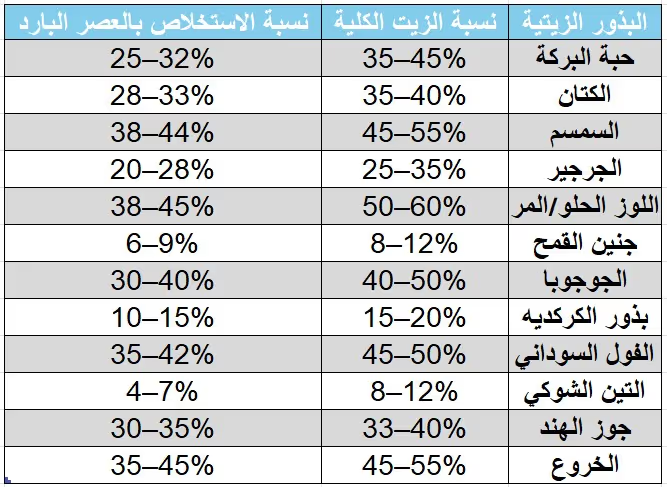
The percentage of oil in some oilseeds before and after the cold press:
After the extraction process, there is still (Oil Cake) rich in protein, fiber and minerals. It can be used to:
1. Feed industry; 2. Organic fertilizers; 3. cosmetics.
4. functional food industries.
In some cases, a second press can be performed to extract an additional amount of oil, but its quality is usually lower than the first press.
Cold pressed virgin oils are not only a healthy food, but represent an investment in the future of natural industries. To achieve the highest quality, strict technical standards must be adhered to at every production stage.
We recommend: - Quality control from seed to table.
Improve juicing and storage conditions.
- Raising awareness of the benefits of natural oils.
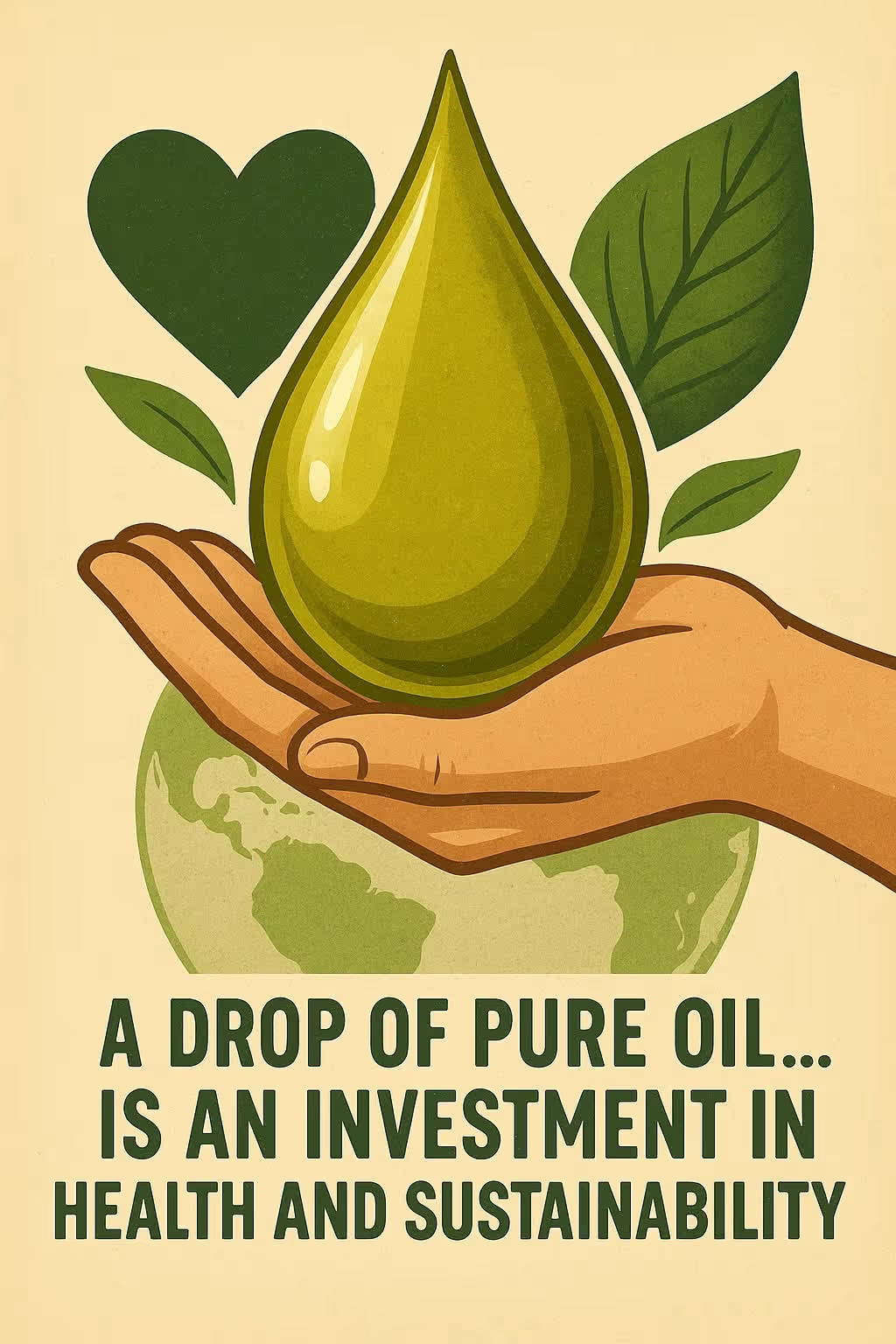
Every drop is pure... Investment in health and sustainability.
Note: Please note that extra virgin olive oil has special specifications and standards and has not been mentioned in this article due to its specificity and uniqueness in many matters. Prof. Adel Jabr has dedicated several in-depth articles about it on the “Oils and Fats in Arabic” website, most notably:
Extra virgin olive oil: therapeutic food with medical standards
Olive oil: the liquid gold between authenticity and fraud