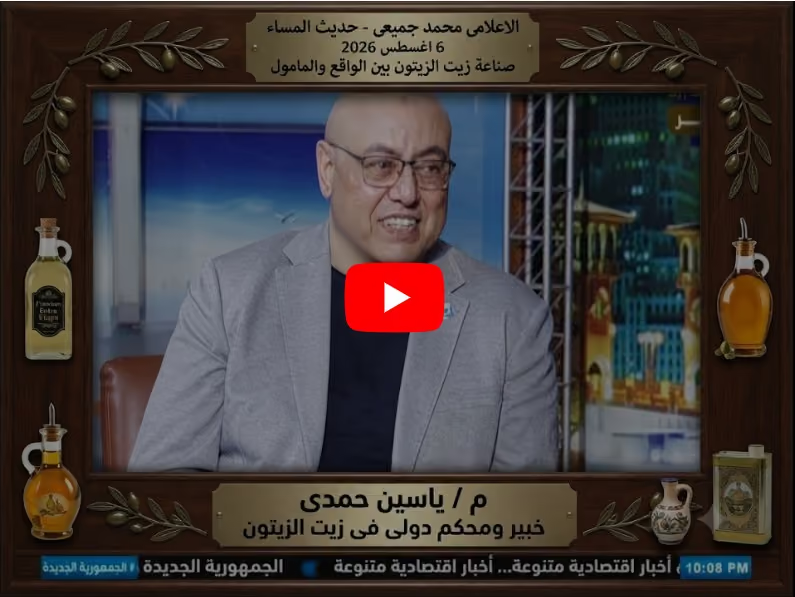
In a televised interview broadcasted on the "Hadeeth Al-Masaa" program on Egyptian TV, international olive oil expert, panel judge, and food oil technology consultant, Eng. Yasseen Hamdy, discussed the reality of the olive oil industry. He debunked the most common myths surrounding oil adulteration, daily consumption, and cooking practices.
1. Oils and Fats: Essential Components of the Food Pyramid
Eng. Yasseen Hamdy refuted the widespread belief that all oils and fats are harmful and should be completely eliminated from the human diet. He emphasized that the modern food pyramid indicates approximately 30% of daily dietary intake should consist of oils and fats to support cell walls, strengthen muscles, transport vitamins, and provide body energy.
He explained the chemical and physical differences between them:
- Oils: Liquid fats at room temperature due to their content of unsaturated fatty acids (monounsaturated or polyunsaturated).
- Fats: Solid fats at room temperature due to their saturated fatty acid content.
He stressed the importance of moderation and diversity in consumption, urging a complete avoidance of trans fats (industrially hydrogenated oils) due to their direct health risks.
2. Correcting Misconceptions About Olive Oil Adulteration
The international expert noted that olive oil is frequently targeted for adulteration due to its high nutritional and economic value combined with a lack of consumer awareness. He debunked several common false practices:
- The Color Myth: He confirmed that color is by no means an indicator of quality. International standards state that olive oil color ranges from "greenish-yellow" to "yellowish-green," depending on the olive variety, harvest timing, and geographical location.
- The "Fridge Test" Myth: He denied that olive oil solidifying in the refrigerator proves it is genuine, or that remaining liquid indicates it is adulterated. Solidification depends on the percentage of saturated fatty acids in the oil (typically ranging between 14% and 16%). He added that cheaper oils (such as palm olein) can be blended to solidify in the fridge without being olive oil.
- The Correct Evaluation Method: It relies on sensory tasting and smelling of the volatile aromatic compounds and polyphenols unique to olive oil, along with purchasing from trusted suppliers.
- The Meaning of "Cold Pressed": He clarified that cold pressing means extracting oil without raising temperatures to protect volatile compounds, polyphenols, and natural antioxidants from breaking down, even if it yields a lower quantity of oil compared to thermal extraction.
3. The Truth About Frying with Olive Oil and Reusing Cooking Oils
- Frying with Olive Oil: He corrected the misconception that olive oil cannot be used for frying, confirming that its flash point is high, reaching 230°C to 240°C, and it contains natural antioxidants that protect it from thermal oxidation. The only practical barrier to using it for frying is its high economic cost, not health reasons.
- Reusing Frying Oil: He explained that reusing oil depends on the type of food and oil cleanliness; leftover flour and breadcrumbs cause rapid carbonation and darkening of the oil.
- Tips for Home Cooks: To safely reuse oil (up to 3 or 4 times for foods without flour or breadcrumbs), the oil should be filtered with a fine strainer immediately after cooking to remove debris, cooled down, and stored in a sealed glass container inside the refrigerator.
4. The Importance of Flaxseed Oil and the Omega-3 to Omega-6 Balance
The interview highlighted the significant health benefits of flaxseed oil (Linseed Oil), which is rich in Omega-3. He explained the necessity of maintaining a healthy 1:1 balance between Omega-3 and Omega-6. He warned that modern lifestyles and the consumption of fast food have led to high Omega-6 levels relative to Omega-3, causing increased inflammation and weakened immunity.
 Advertise