
Lang
Coconut oil: a vegetable oil extracted from the flesh of the coconut palm fruit. A comprehensive reference covering specifications, fatty acids, production, and uses.
Cocos nucifera L.
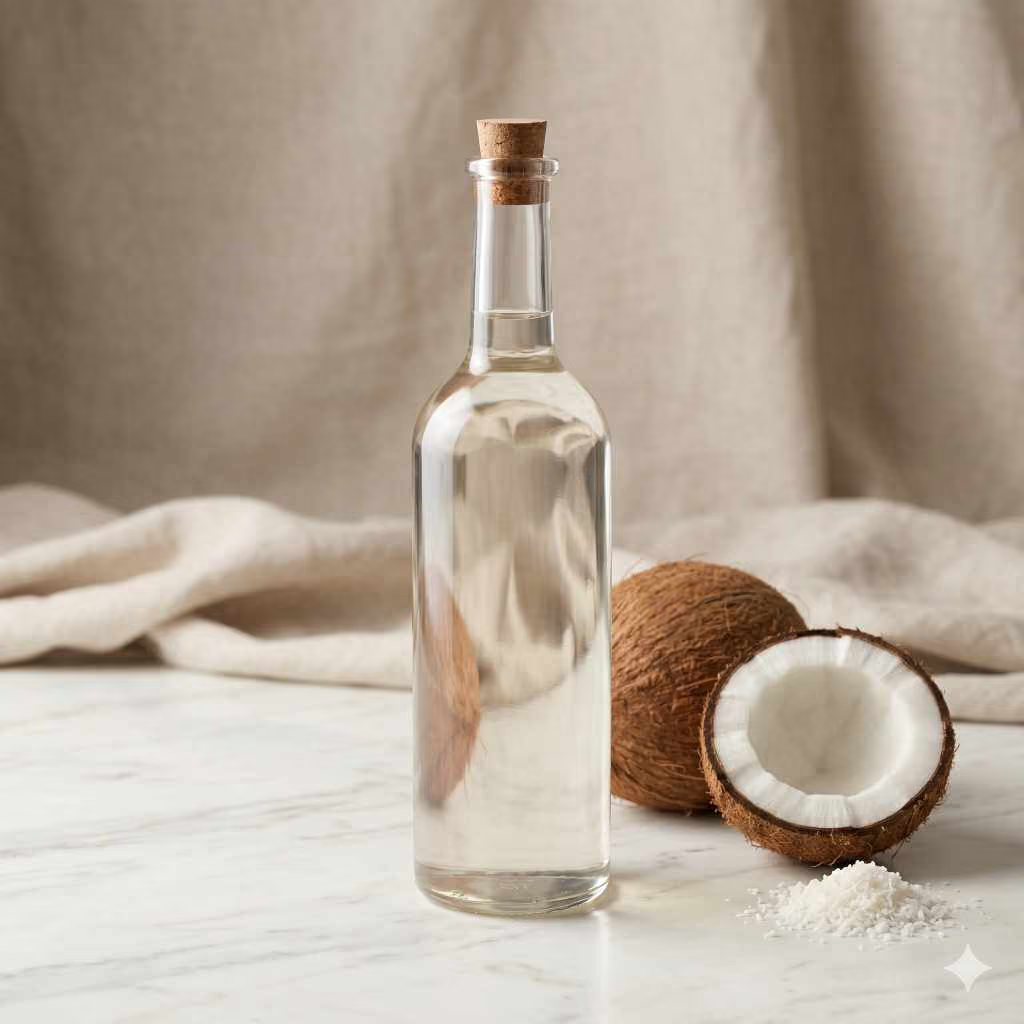
Coconut oil is a vegetable oil extracted from the flesh of the fruit of the coconut palm tree Cocos nucifera L., known as "copra" when dried. Copra contains 60-65% oil by weight, extracted by two methods: cold pressing for the virgin oil (Virgin Coconut Oil) that retains the coconut aroma, or refining (RBD) for the odorless, colorless industrial oil.
Coconut cultivation dates back to Southeast Asia and the Pacific islands, where for two thousand years it was a pillar of indigenous cultures. The tree spread along maritime trade routes to India, Africa, and Latin America. The Philippines, Indonesia, and India are the main producing countries historically, and its industry faces recent environmental pressures due to climate change and the aging of the trees.
Coconut oil is the highest of the vegetable oils in saturated fatty acid content (about 92%), but these are medium-chain acids (MCT): 47% lauric acid (C12:0), 18% myristic acid (C14:0), and 9% palmitic acid. This composition makes it highly resistant to oxidation and solid below 24°C, and gives it rapid energy-release properties. It does not contain omega-3 or omega-6 in significant amounts.
According to USDA data for the 2025/26 season, global production reached 3.71 million tons, or 1.6% of the vegetable oil market. A precise breakdown of producing countries is not available in USDA data because production is distributed across dozens of small countries, but the Philippines remains historically the leading producer, followed by Indonesia and India.
Virgin coconut oil is used in traditional cooking in Southeast Asia and South India, in the making of sweets and baked goods, and recently as an addition to coffee and smoothies for its promoted benefits. Industrially, it goes into the making of soap, shampoo, cosmetics, and skin and hair nourishment, and in the making of cocoa butter substitutes and baked-goods coatings as an alternative to cocoa butter.
HS Code
1513
Oil percentage in the seed/fruit
60-65%
Oil yield/hectare
700 kg/ha
Omega-6:Omega-3
—
2025/26 (April 2026 estimates)
Global Production
3.71
million tons
Global Consumption
3.59
million tons
Market Share
1.6
%
Source: USDA-FAS PSD Online
This oil conforms to the Codex Alimentarius standard for named vegetable oils, CXS 210-1999, which specifies fatty acid composition, and quality and authenticity criteria. The following cards present the specification for each variety of this oil.
Coconut oil is derived from the kernel of the coconut (Cocos nucifera L.).
Oleic acid (Omega-9)
5.0-10.0
Linoleic acid (Omega-6)
1.0-2.5
Linolenic acid (Omega-3)
n.d.-0.2
Palmitic acid
7.5-10.2
Stearic acid
2.0-4.0
Lauric acid
45.1-53.2
Erucic acid
n.d.
Total saturated
Total monounsaturated
Total polyunsaturated
Iodine value
6.3-10.6
Vitamin E (mg/kg)
n.d.-50
Caproic acid (C6:0): n.d.-0.7
Caprylic acid (C8:0): 4.6-10.0
Capric acid (C10:0): 5.0-8.0
Lauric acid (C12:0): 45.1-53.2
Myristic acid (C14:0): 16.8-21.0
Palmitic acid (C16:0): 7.5-10.2
Palmitoleic acid (C16:1): n.d.
Margaric acid (C17:0): n.d.
Heptadecenoic acid (C17:1): n.d.
Stearic acid (C18:0): 2.0-4.0
Oleic acid / Omega-9 (C18:1): 5.0-10.0
Linoleic acid / Omega-6 (C18:2): 1.0-2.5
Linolenic acid / Omega-3 (C18:3): n.d.-0.2
Arachidic acid (C20:0): n.d.-0.2
Gadoleic acid (C20:1): n.d.-0.2
Eicosadienoic acid (C20:2): n.d.
Behenic acid (C22:0): n.d.
Erucic acid (C22:1): n.d.
Docosadienoic acid (C22:2): n.d.
Lignoceric acid (C24:0): n.d.
Nervonic acid (C24:1): n.d.
Sterols (% of total):
Cholesterol: n.d.-3.0
Brassicasterol: n.d.-0.3
Campesterol: 6.0-11.2
Stigmasterol: 11.4-15.6
Beta-sitosterol: 32.6-50.7
Delta-5-avenasterol: 20.0-40.7
Delta-7-stigmastenol: n.d.-3.0
Delta-7-avenasterol: n.d.-3.0
Other sterols: n.d.-3.6
Total sterols (mg/kg): 400-1200
Tocopherols and tocotrienols (mg/kg):
Alpha-tocopherol: n.d.-17
Beta-tocopherol: n.d.-11
Gamma-tocopherol: n.d.-14
Delta-tocopherol: n.d.
Alpha-tocotrienol: n.d.-44
Gamma-tocotrienol: n.d.-1
Delta-tocotrienol: n.d.
Total tocopherols and tocotrienols (mg/kg): n.d.-50
Relative density: 0.908-0.921 (40°C)
Apparent density (g/mL): —
Refractive index: 1.448-1.450
Saponification value: 248-265
Iodine value: 6.3-10.6
Unsaponifiable matter (g/kg): ≤ 15
Melting point: —
δ¹³C ratio: —