 Advertise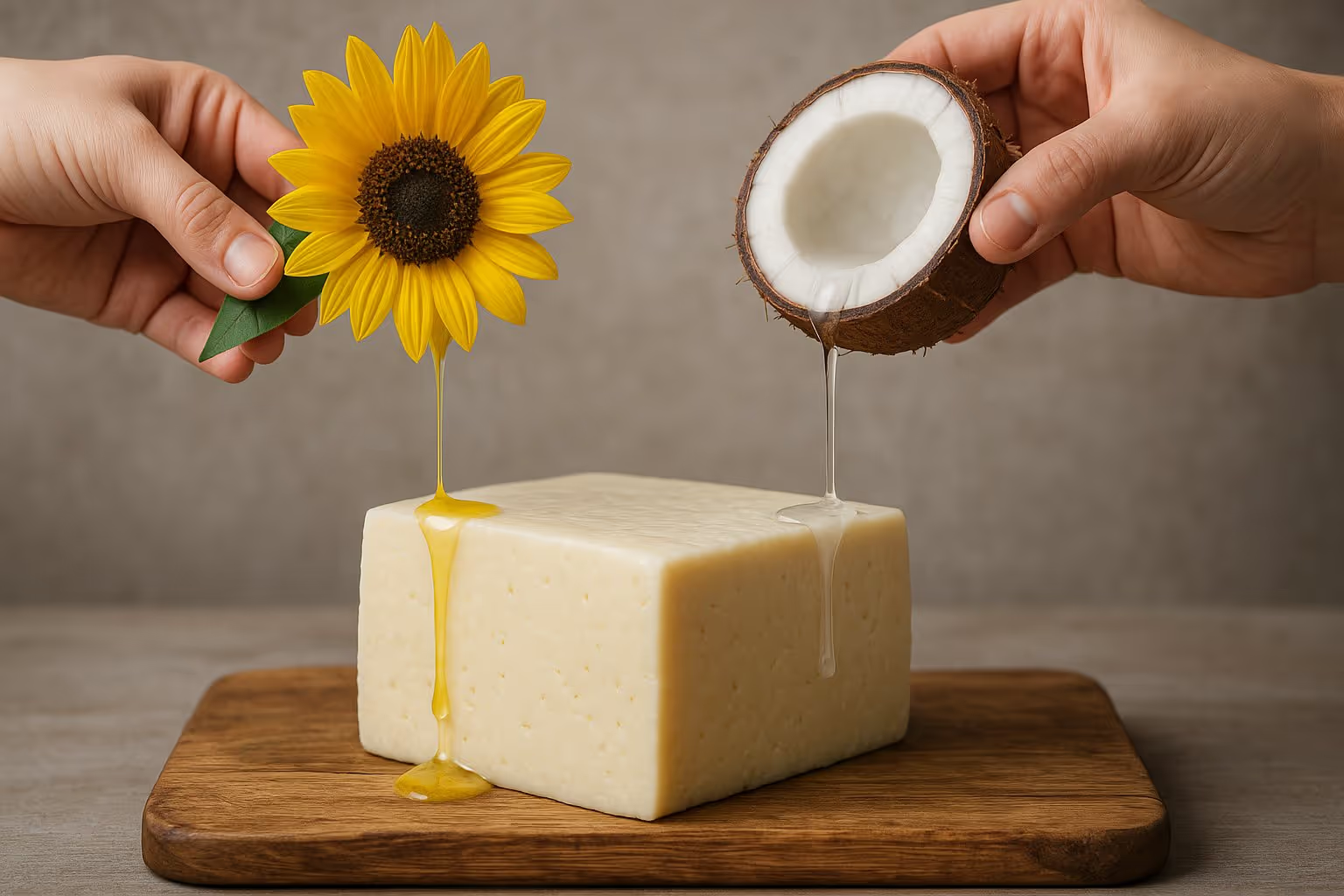
Note: This article was AI-translated from Arabic and is currently under manual review. The author is not responsible for any translation errors. Please refer to the original Arabic text for the most accurate and authoritative information.
Vegan cheese has become a popular choice for those who want to avoid dairy while still enjoying the taste and texture of traditional cheese. However, making vegan cheese that expands and melts and tastes like animal cheese is not easy. It requires a lot of scientific research and careful experiments. This is the challenge faced by researchers at the University of Guelph in Canada, and they have made remarkable progress in it.
To make cheese that mimics animal cheese, scientists use ingredients that behave like animal fats and proteins. Oils such as coconut oil are often used because it gives the cheese a rich creamy texture. But coconut oil has a high percentage of saturated fat, which is not healthy. Therefore, researchers have started testing blends that reduce the percentage of coconut oil and replace it with healthier oils such as sunflower oil.
They also tested different plant-based proteins as the basis for vegan cheese. These proteins act as supports that hold fat and other ingredients together. The team examined protein isolates extracted from peas, lentils and broad beans (fava) to study their effectiveness. They found that the interaction of protein with fat and starches determines the ability of cheese to melt, stretch and hold.
One of the main goals was to find a combination of protein and fat that would give vegan cheese the required firmness and functionality. Researchers have previously found that a combination of 25% coconut oil and 75% sunflower oil It works well when combined with a specific type of pea protein, producing a cheese that is firm, soluble, and stretchy like traditional cheese—properties that are important in applications such as pizza, sandwiches, and snacks.
In the new study, researchers tested three types of proteins: from peas (PP1), from fava (FP1), and from lentils. They used a concentration of 7.5% by weight for each, with the resulting cheese being tested using a combination of 25% and 100% coconut oil.
The results were surprising: cheese made with pea protein and 25% coconut oil reached a hardness of 80 N — very close to that of cheese made with 100% coconut oil (100 N). That means you don't need a large amount of coconut oil to get the desired texture. The pea protein version even outperformed or was equal to others in melting, stretching and controlling oil loss.
Reducing the percentage of coconut oil means reducing saturated fat. It helps to use sunflower oil In making cheese healthier without losing the smooth creamy texture that the consumer expects.
Marangoni said:
“Our goal is ultimately to improve nutritional value, increase protein content, and lower saturated fat content in cheese substitutes, but maintaining properties such as melting and stretching is very difficult.”
The team used advanced tools to test cheese behavior when heated, including viscosity and elasticity at temperatures up to 95°C — the usual cooking temperature. These experiments have helped to understand how each type of protein reacts to heat, which is crucial in cooking and food processing.
Results show that some proteins form better bonds with fats and starches, resulting in a more stable and effective cheese. The blend of pea protein with the oil mixture was the best in terms of texture and performance, which means it is closer to the taste and texture of animal cheese, and gives better health benefits and sustainability — especially when part of the coconut oil is replaced with sunflower oil.
Making cheese from plants has significant environmental benefits. It consumes less natural resources than raising livestock, and releases less carbon emissions, making it an environmentally friendly choice. Mixing oils with plant-based proteins also allows consumers to reduce saturated fat consumption without sacrificing flavor or texture.
However, creating vegan cheese that satisfies consumers is a major challenge. Marangoni said:
“The behavior of milk and meat proteins is relatively understandable, but we still lack sufficient knowledge of how plant proteins work, and there is a huge diversity of types of plant proteins.”
This study adds new knowledge to existing research and helps food manufacturers design vegan cheese that is healthier and closer to traditional cheese in taste and texture.
Thanks to these studies, the future of cheese may look very different: instead of high-fat dairy products and environmental impact, we'll soon enjoy a rich vegan cheese that stretches and melts and is better for our health and our planet.
The next phase of research is expected to include testing new types of plant-based proteins and refining oil blends more precisely. Researchers will also conduct additional studies on how vegan cheese interacts with different culinary recipes. As this field develops, we will see more vegetarian options available in the market with a taste and shape that is closer to traditional cheese.
Currently, these researches show that with the right ingredients and a scientific approach, vegan cheese can be delicious and nutritious at the same time — a win for taste, health, and the environment.
Source: AOL