
Lang
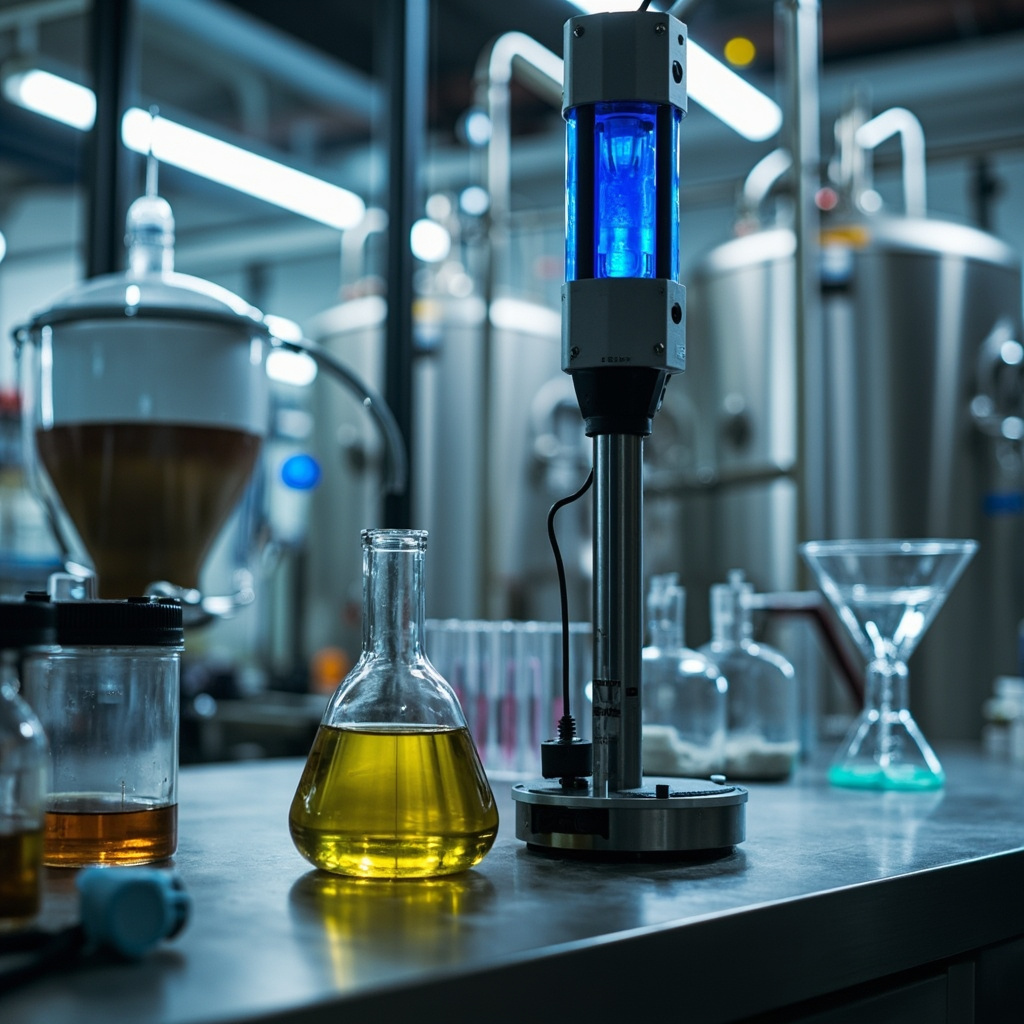
The Indonesian Nuclear Technology Polytechnic (Poltek Nuklir), operating under the National Research and Innovation Board (BRIN), has developed a new application of Cobalt-60 (Co-60) gamma irradiation technology designed to enhance biodiesel production from used cooking oil (UCO). The innovation targets two pressing needs: securing renewable energy supplies and converting a problematic waste stream into a value-added fuel.
Dhita Ariyanti, a lecturer at Poltek Nuklir, noted that the search for alternative energy sources has become urgent, driven by rising global energy consumption and the gradual depletion of fossil fuel reserves. In Indonesia, a country whose energy demand continues to expand and which remains heavily dependent on fossil fuels, this pressure directly complicates efforts to curb greenhouse gas emissions.
Used cooking oil, she explained, offers a particularly attractive feedstock. Typically discarded as household waste and a potential source of environmental pollution, UCO can be processed into biodiesel, transforming a liability into a commodity with tangible market value.
'Biodiesel offers several advantages over fossil fuels, including lower emissions and biodegradability. Furthermore, biodiesel can help mitigate the rise of atmospheric CO₂ levels,' she told BRIN's Public Relations team on Tuesday, 18 August 2026.
Dhita added that the choice of UCO as feedstock is justified on two counts: its abundance and the health hazards associated with its repeated use in cooking. Converting the oil into biodiesel therefore delivers a dual benefit, combining waste reduction with renewable energy production.
'Repeated use of cooking oil poses significant health risks. To address this issue, waste cooking oil can be repurposed as a feedstock for biodiesel production,' she said.
What sets the BRIN approach apart from conventional biodiesel manufacturing is the use of gamma rays emitted by a Cobalt-60 radioisotope source. The irradiation generates free radicals that boost molecular reactivity, allowing the transesterification process to proceed more rapidly and efficiently, without the need for additional chemical catalysts.
According to Dhita, experimental results show a consistent upward trend in biodiesel volume as the irradiation dose rises. Starting with 150 milliliters of feedstock, the team recorded a peak yield of 104.7 milliliters at a dose of 35 kilogray (kGy).
Fourier Transform Infrared (FTIR) spectroscopy analysis confirmed the formation of ester functional groups, a key indicator of biodiesel. Changes in the FTIR spectrum became more pronounced at doses of 20 kGy and 35 kGy, with peaks corresponding to the C-O, C=O, C-H, and O-H groups showing significant shifts in intensity and slight movement in position. According to Dhita, these findings demonstrate that gamma irradiation can boost biodiesel production without any additional chemical modification.
The researchers, however, urge scientific caution. The study remains preliminary, and the claim that irradiation accelerates transesterification still requires support from quantitative conversion data such as that obtained through gas chromatography (GC) or ¹H-NMR analysis.
'In future studies, the irradiation dose needs to be increased beyond 35 kGy. This is necessary to determine the threshold at which the benefits of irradiation are no longer optimal, without compromising biodiesel quality. Further research is also expected to provide a deeper understanding of the overall process,' Dhita concluded.
The innovation opens new opportunities for deploying nuclear technology in support of Indonesia's clean energy transition. Beyond offering a more sustainable solution for managing used cooking oil waste, gamma irradiation technology has the potential to enhance the efficiency of biodiesel production, positioning it as a future alternative for eco-friendly fuel supply.
The research was published in the international journal under the title 'Formation of Alkyl-Ester as Effect of Irradiation 60Co Gamma from Oil Waste: Preliminary Study as Candidate of Biodiesel', appearing in U.P.B. Scientific Bulletin, Series B, Volume 87, Issue 4 (2025).
The study is the product of international collaboration between BRIN's Nuclear Polytechnic, the Uzatom Atomic Energy Agency in Uzbekistan, and the University of Maiduguri in Nigeria. It was also supported by researchers from BRIN's Directorate of Laboratory, Research Facility, and Science and Technology (DPLFRKST).
Source: sawitindonesia.com