
Lang
Sesame seed oil: a traditional vegetable oil extracted from the seeds of the sesame plant. A comprehensive reference covering specifications, fatty acids, production, and uses.
Sesamum indicum L.
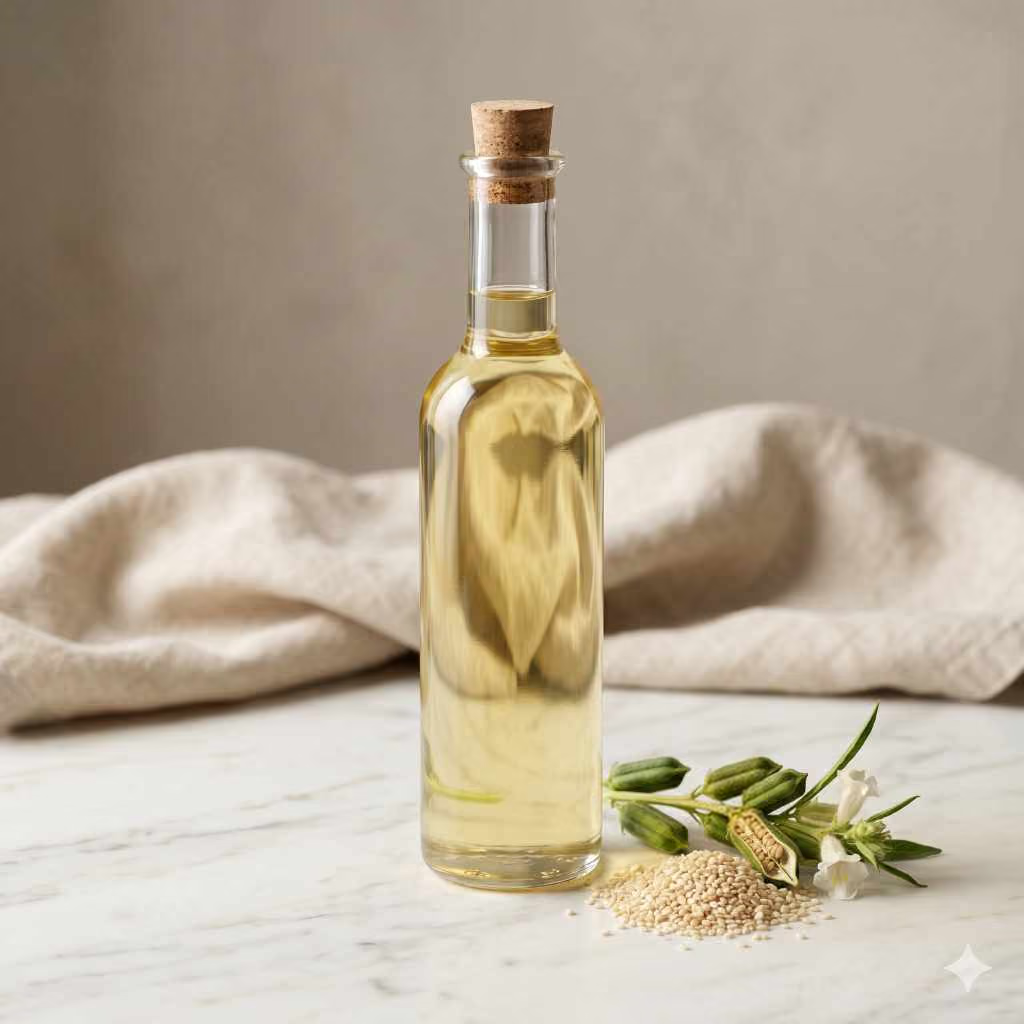
Sesame seed oil is a traditional vegetable oil extracted from the seeds of the sesame plant Sesamum indicum L., one of the oldest vegetable oils known to humankind. It is also known by several local names in the Arab world: gingelly oil, benne oil, and til oil. The seed contains 50-55% oil by weight, extracted by two methods: cold pressing of unroasted seeds (a light-colored oil), and pressing after roasting the seeds (a dark oil with rich, concentrated flavor).
Sesame cultivation dates back to Mesopotamia and the Nile basin more than five thousand years ago, and archaeological remains point to its use in Babylon and Pharaonic Egypt. Its cultivation found an ideal climate in India, Sudan, Ethiopia, Myanmar, and China, where heat and drought prevail. Sudan ranks first in the Arab world in sesame seed production.
Sesame oil has a balanced composition of oleic acid (39%), linoleic acid (41% omega-6), palmitic acid (10%), and stearic acid (5%). The omega-6:omega-3 ratio is about 137:1. It is distinguished by unique lignan compounds (sesamin, sesamol, and sesamolin) that act as strong natural antioxidants and give the oil a long shelf life compared with other oils.
USDA-FAS data are not available for sesame oil production, as it is a specialty oil, but India ranks first globally by a wide margin, followed by China and Myanmar. Sudan is the main producer in the Arab world, followed by Egypt and Turkey. The oil is governed by Codex Alimentarius standard CXS 26-1981, specific to sesame oil.
Cold sesame oil is used in salads, marinades, and everyday cooking, while roasted sesame oil is added at the end of cooking in Chinese, Korean, and Japanese cuisines for its distinctive flavor. In Arab cuisine, it goes into the making of tahini halva and the preparation of baked goods. Industrially, it goes into cosmetics and traditional soap-making, pharmaceuticals, and body massage oils.
HS Code
1515
Oil percentage in the seed/fruit
50-55%
Oil yield/hectare
350 kg/ha
Omega-6:Omega-3
137:1
This oil conforms to the Codex Alimentarius standard for named vegetable oils, CXS 210-1999, which specifies fatty acid composition, and quality and authenticity criteria. The following cards present the specification for each variety of this oil.
Sesame seed oil (sesame oil; gingelly oil; benne oil; ben oil; till oil; tillie oil) is derived from sesame seeds (seeds of Sesamum indicum L.).
Oleic acid (Omega-9)
34.4-45.5
Linoleic acid (Omega-6)
36.9-47.9
Linolenic acid (Omega-3)
0.2-1.0
Palmitic acid
7.9-12.0
Stearic acid
4.5-6.7
Lauric acid
n.d.
Erucic acid
n.d.
Total saturated
12.7-21.1
Total monounsaturated
34.4-46.1
Total polyunsaturated
37.1-48.9
Iodine value
104-120
Vitamin E (mg/kg)
330-1010
Caproic acid (C6:0): n.d.
Caprylic acid (C8:0): n.d.
Capric acid (C10:0): n.d.
Lauric acid (C12:0): n.d.
Myristic acid (C14:0): n.d.-0.1
Palmitic acid (C16:0): 7.9-12.0
Palmitoleic acid (C16:1): n.d.-0.2
Margaric acid (C17:0): n.d.-0.2
Heptadecenoic acid (C17:1): n.d.-0.1
Stearic acid (C18:0): 4.5-6.7
Oleic acid / Omega-9 (C18:1): 34.4-45.5
Linoleic acid / Omega-6 (C18:2): 36.9-47.9
Linolenic acid / Omega-3 (C18:3): 0.2-1.0
Arachidic acid (C20:0): 0.3-0.7
Gadoleic acid (C20:1): n.d.-0.3
Eicosadienoic acid (C20:2): n.d.
Behenic acid (C22:0): n.d.-1.1
Erucic acid (C22:1): n.d.
Docosadienoic acid (C22:2): n.d.
Lignoceric acid (C24:0): n.d.-0.3
Nervonic acid (C24:1): n.d.
Sterols (% of total):
Cholesterol: 0.1-0.5
Brassicasterol: 0.1-0.2
Campesterol: 10.1-20.0
Stigmasterol: 3.4-12.0
Beta-sitosterol: 57.7-61.9
Delta-5-avenasterol: 6.2-7.8
Delta-7-stigmastenol: 0.5-7.6
Delta-7-avenasterol: 1.2-5.6
Other sterols: 0.7-9.2
Total sterols (mg/kg): 4500-19000
Tocopherols and tocotrienols (mg/kg):
Alpha-tocopherol: n.d.-3.3
Beta-tocopherol: n.d.
Gamma-tocopherol: 521-983
Delta-tocopherol: 4-21
Alpha-tocotrienol: n.d.
Gamma-tocotrienol: n.d.-20
Delta-tocotrienol: n.d.
Total tocopherols and tocotrienols (mg/kg): 330-1010
Relative density: 0.915-0.924 (20°C)
Apparent density (g/mL): —
Refractive index: 1.465-1.469
Saponification value: 186-195
Iodine value: 104-120
Unsaponifiable matter (g/kg): ≤ 20
Melting point: —
δ¹³C ratio: —