Advertise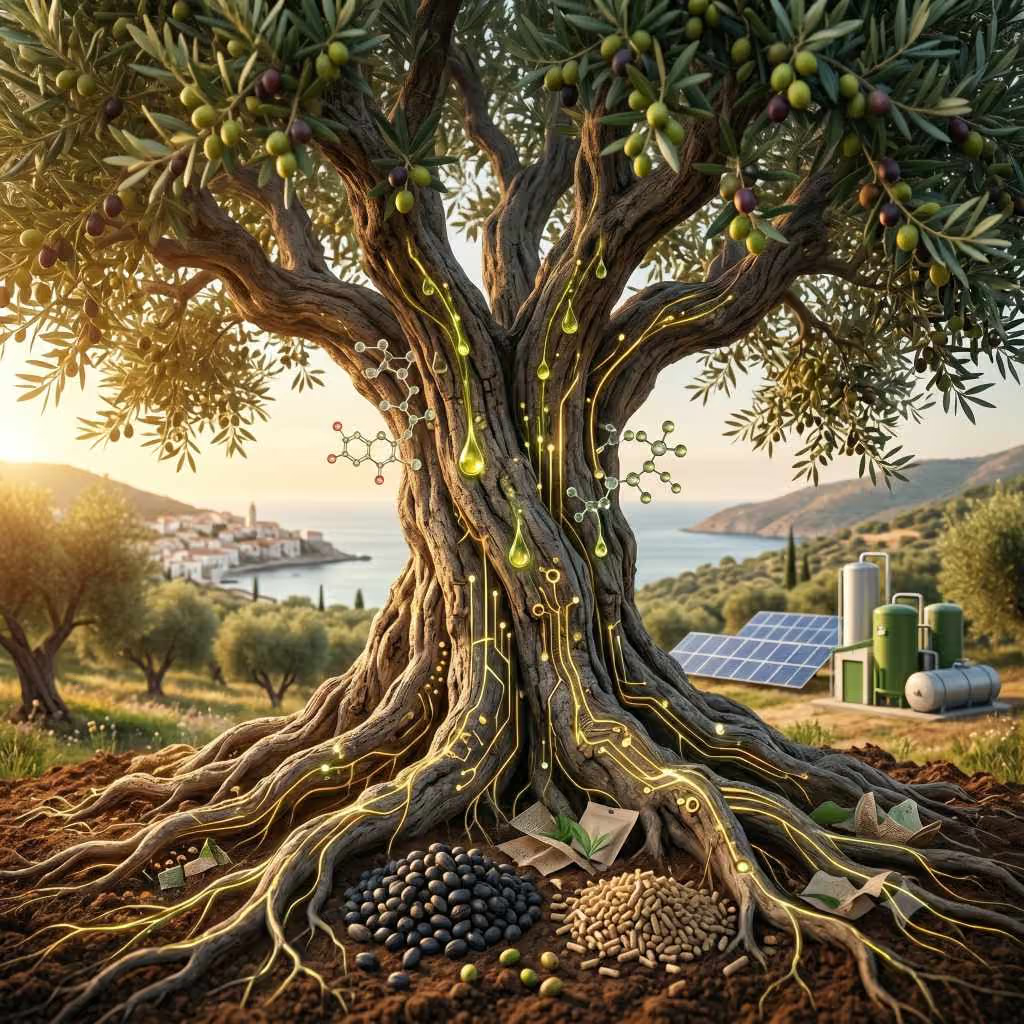
Note: This article was AI-translated from Arabic and is currently under manual review. The author is not responsible for any translation errors. Please refer to the original Arabic text for the most accurate and authoritative information.
Do you still think that olive oil is just a healthy oil drizzled over a salad bowl or added to Mediterranean dishes? The truth is that the quiet, golden bottle on your table only tells one chapter of a much larger story. The olive tree, which illuminated the lamps of the past, can today light a new path for the future—from human food and personal care products to animal feed, bioenergy, biodegradable materials, and advanced biotechnology applications.
Humans have known the olive tree since antiquity as food, light, traditional medicine, and a symbol of peace and blessings. Today, however, science has rediscovered this tree in a new language: the language of the circular economy, biochemistry, food safety, and green industries.
Hence, olive oil is no longer just a traditional agricultural product; it has become a model for what we can call an integrated bio-platform that produces food, supports health, serves industry, reduces waste, and protects the environment.
Some might think that the non-traditional uses of olives are still confined to laboratories, but the reality is that many olive products and derivatives have already entered the consumer's daily life, whether as dietary oil, supplements, care products, or auxiliary pharmaceutical products.
In health food markets and pharmacies, products based on olive leaf extracts or its phenolic compounds—such as polyphenols, oleuropein, and hydroxytyrosol—are widely available. These compounds receive significant scientific interest due to:
However, it is important to put things in perspective; while these compounds may hold nutritional and functional value, they are not a substitute for medical treatment, nor should they be turned into exaggerated marketing promises. The true value of any dietary supplement is not based on a shiny name alone, but on the quality of extraction, product purity, safe dosage, and compliance with regulatory frameworks.
Olive derivatives hold an important place in the world of cosmetics, skincare, and haircare—not just because of the appealing marketing image of the word "natural," but due to actual properties related to hydration, biocompatibility with the skin, and the presence of certain antioxidant compounds.
Therefore, we find olive oil or its derivatives in:
There is a huge difference between simple folk usage and advanced cosmetic manufacturing. The latter does not settle for adding olive oil merely as a marketing name on the label; it focuses on active ingredient concentration, formula stability, safety, and suitability for the skin type and purpose of use.
The utilization of the olive tree does not stop at human food or care products; it extends to animal nutrition as well. After appropriate processing, certain olive by-products (such as pomace/jift, olive cake, and pruning leaves) can be used in ruminant diets or as functional feed additives, taking into account fiber percentages, phenolic compounds, digestibility, and the overall nutritional balance of the ration.
The importance of this application lies in linking sustainability with food chain safety. An agricultural waste product that once posed an environmental burden can be transformed, through scientific guidelines, into an auxiliary feed resource that contributes to reducing waste and improving resource efficiency. This must be conducted under strict scientific assessment to ensure it is completely safe for the animal, and consequently, safe for humans consuming its milk or meat.
Olive oil and some of its derivatives have entered medical or paramedical over-the-counter (OTC) products in certain cases, such as:
An Important Message: Olive oil and its derivatives can be helpful and beneficial ingredients in some formulations, but they do not constitute an absolute cure or a substitute for consulting a physician when a disease, inflammation, deep wound, or chronic skin condition is present. Science places natural ingredients in their correct context: a good raw material that requires proper formulation, safety testing, quality control, and disciplined marketing claims that do not exceed scientific evidence.
In the world of oils and fats, the value of an oil is not determined merely by being a source of energy, but by its type of fatty acids, its content of bioactive minor compounds, and its method of production and storage. Extra virgin olive oil is characterized by:
This composition grants it nutritional and functional value, and a relatively better stability against oxidation compared to oils higher in polyunsaturation, which explains its inclusion in a number of dietary, cosmetic, and auxiliary pharmaceutical applications.
There is a vast difference between an extra virgin oil stored properly and an oil exposed to light, heat, and air. Quality is not determined by color or price alone; it begins with the fruit, harvest timing, and milling methods, extending further to packaging, storage, transportation, and display. Important signs to look for include: the oil type and grade, production and expiration dates, origin data, and proper dark packaging that protects the oil from light. Protecting olive oil is not a luxury, but an essential part of maintaining its nutritional, sensory, and functional value.
For thousands of years, the olive tree occupied a special place in Mediterranean civilizations. Olive oil was used for food, lighting lamps, making ointments and perfumes, and traditional applications related to health, beauty, and social or religious rituals. Today, science returns to this ancient expertise to explain and develop it. What used to light lamps in the past has today entered research into bioenergy, sustainable materials, biotechnology, and green industries.
The modern view of the olive industry has completely shifted. Olives signify an entire ecosystem that includes fruits, leaves, pits, pomace, olive cake, mill wastewater, and pruning residues. Every single part can be transformed into a valuable asset:
Waste is no longer the end of the production cycle, but the beginning of a new cycle of value. In the olive sector, what was previously considered an environmental burden has today become a potential raw material for multiple industries:
The olive tree reveals a crucially important lesson in science and sustainability: value is not only in what we see, but in what we can discover and manage intelligently.
Its true value is no longer confined to the amount of oil extracted from the fruit, but in investing in every part of the tree and every secondary product of the manufacturing process. Here, olives transform from an agricultural crop into an integrated economic, environmental, and industrial model.
Perhaps the deepest message this "green gold" offers us is that the future of food and industry will not depend solely on increasing production, but on good resource management, reducing waste, transforming waste into opportunities, and linking agriculture with science, industry, and the environment. The oil that lit the lamps of the past can today light a new path toward a more sustainable, aware, and innovative future.