Advertise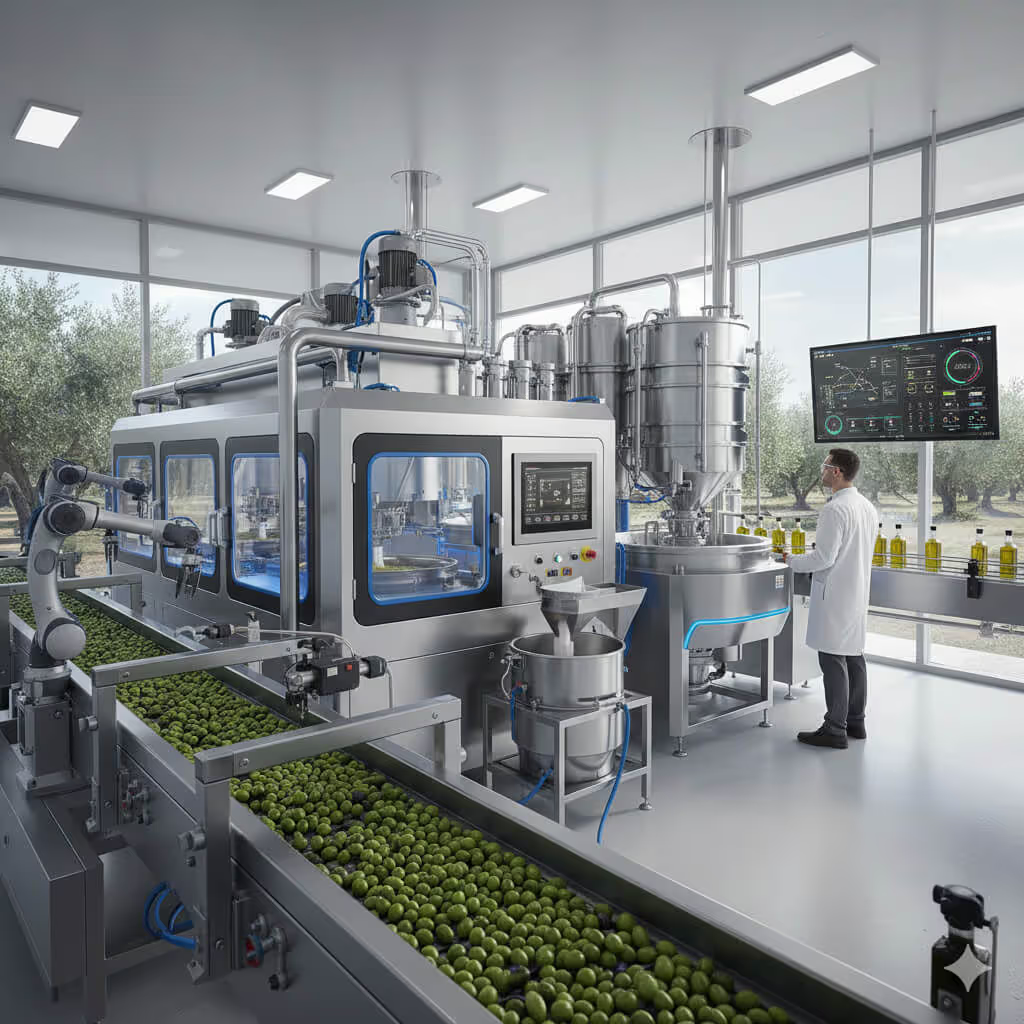
Note: This article was AI-translated from Arabic and is currently under manual review. The author is not responsible for any translation errors. Please refer to the original Arabic text for the most accurate and authoritative information.
With the beginning of the olive harvest season and the afternoon in the world, and as part of our quest to answer a question How do you choose the right olive press? We made a trip to Spain, specifically to the city of Jaen (Jaén) in the Andalusia region, to follow the latest scientific findings of the modern methods of the era. We were accompanied on our trip by our friend Haj Sayed Abu Taleb to learn about the latest global developments in olive oil extraction.
We visited more than one olive press in the city of Úbeda, where we discussed with contemporary owners the methods of equipment selection, extraction methods, operating conditions, and storage methods. We noticed that there are many controls that are practiced due to experience, habit and the practical basis for the quality of olives. We also found that mechanical centrifugal extraction is the most widespread method. Although some contemporaries have developed cooling and vacuum methods after the grinding process, they are few. We will address this topic in detail in another article. The vast majority rely on mechanical centrifugal extraction.
We noted that the olive oil sector in Spain focuses on improving the mechanical extraction process with two main objectives:
Careful management of operating parameters and conditions, such as time, temperature, oxygen and auxiliary materials during the most important stages of the process (crushing and stirring), has a significant impact on improving processing methods to obtain high-quality extra virgin olive oil. In recent years, several research studies have been conducted that have led to new innovations in the extraction process in an attempt to control the enzymatic activity of endogenous olive enzymes.
Some studies have focused on the use of Talc powder (hydrated magnesium silicate)It is a physical aid that is allowed in the EU because no chemical or biochemical changes have been detected due to its use in the extraction process, which preserves extra virgin olive oil (EVOO) as a natural oil extracted only using physical and mechanical technology.
Talcum powder helps increase oil production, especially when oil is extracted from olive fruits that have been over-watered or very ripe olives. It is worth noting that the ideal humidity of water in olive fruits before the press is between 45% and 50%. Natural talc can affect the water content of olive paste during the kneading phase (Malaxation) and promote the decomposition of oil emulsions in water, improving the final separation step in a horizontal centrifuge (decanter) or vertical centrifuge (sorter). The extraction rate after using talcum powder has increased by 2% to 4%, depending on the content of fruit water in olives.
The activity of other auxiliary substances added during the kneading phase was also examined, such as the addition of enzyme compounds or the use of sodium chloride, calcium carbonate and silica to maintain the quality of olive oil. The use of auxiliary materials that are alternative to talcum powder is not allowed in the EU in the mechanical extraction of olive oil, in accordance with the definition of the grade of excellent olive oil.
Mr. Juan, the author of one of the contemporary, stated that they tried adding an enzyme formula consisting of (pectinase, pectin methyl esterase, and polygalactoronase) in addition to talcum powder while kneading olive paste in order to evaluate its effect on oil extractability and quality characteristics. A quantitative and qualitative assessment was made of hydrophilic phenols and volatile compounds that affect the main health and sensory properties of high-quality olive oil.
For the first time at the industrial level, the addition of a combination of the enzyme complex and talcum powder resulted in:
This makes a qualitative leap in increasing the efficiency of the extraction process and reducing waste in waste while maintaining high quality. However, this experiment has not been circulated so far because it requires special and variable controls and standards, depending on the type of press, the type of fruit, the time of harvest, the water content in the fruits, and other changing conditions.
After what we saw, Haj Sayed Abu Taleb decided to buy a two-phase (2-phase) olive press after visiting contemporary manufacturing companies and following up on the modern development in the use of refrigeration and vacuum. It will also study the cost of using talcum powder in the kneading phase, while analyzing the percentage of water in the fruits before pressing in order to produce a distinctive and high-quality olive oil. It seeks to transfer all this development to Egypt in order to achieve leadership in the production of high-quality olive oil in an advanced press.