 Advertise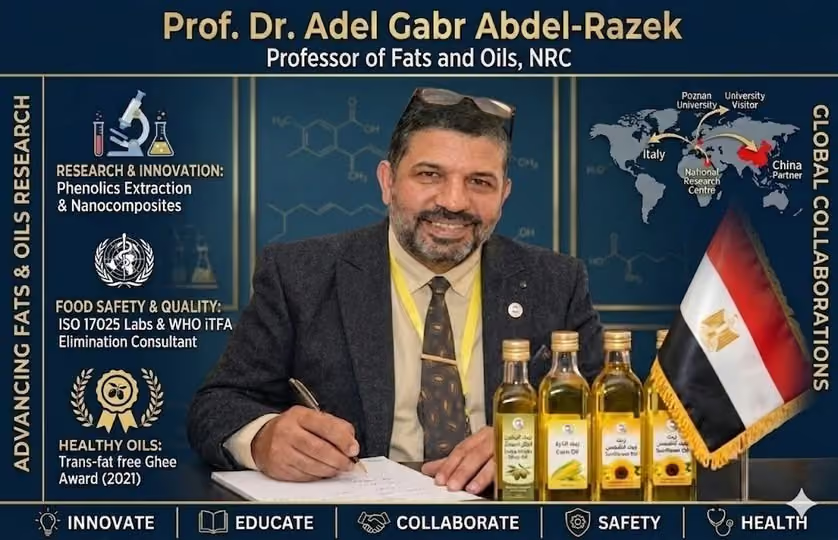
Note: This article was AI-translated from Arabic and is currently under manual review. The author is not responsible for any translation errors. Please refer to the original Arabic text for the most accurate and authoritative information.
While the previous two episodes 1 and 2 mapped the emergence and development of lipid science, this episode focuses on the architects of this intellectual edifice; the scientists who transformed fats from a familiar substance into a well-established scientific field, and from a subject of mere use into one of discovery, interpretation, and development.
When Fat Becomes Science… And When Observation Transforms into a Civilization of Knowledge
Oils and fats are not merely substances used in food or industry; they represent an entire world of chemistry, biochemistry, technology, medicine, and economics. Behind this world stand great names who not only understood these substances but redefined them, unveiled their secrets, and opened vast new avenues in food, medicine, and public health.
This article is not just a presentation of the biographies of great scientists; it is a journey through the scientific history of oils and fats, revealing how “grease” transformed from a familiar substance into a precise science, and how scientists sparked major revolutions from small questions, the impact of which is still evident in laboratories, factories, clinics, and public health policies. It is also a clear call that the advancement of this sector can only be achieved through science, and it will only be complete through genuine engagement with scientists, experts, specialists, and practitioners in the field of oils, fats, and their derivatives.
When we reflect on the path of progress in any serious industry, we find that the real difference is not made by desire alone, nor by enthusiasm alone, nor even by the abundance of material resources alone, but above all, it is made by Science. And science here is not merely general information or scattered knowledge; rather, it is a methodology for understanding, precision in interpretation, an ability to diagnose, skill in analysis, courage in development, and a determination that decisions be based on knowledge, not conjecture, and on solid expertise, not fleeting estimation.
In the field of oils, fats, and their derivatives, this truth is even more pronounced. This sector is no longer a traditional arena where industrial intuition or general experience suffice; instead, it has become a highly complex and specialized domain. It involves the intricate interplay of fatty acid chemistry, glyceride structure, crystallization behavior, hydrogenation mechanisms, oxidative stability, textural properties, preventive nutrition considerations, safety and quality requirements, market demands, and sustainability challenges. Therefore, any company, institution, factory, or research entity aspiring to genuine development cannot merely possess production lines, laboratories, or marketing ambitions; fundamentally, it needs a strong team connected to science, and stable bridges with scientists, specialists, experts, practitioners, and implementers in this field.
Engaging with scientists is not an institutional luxury, nor is it a superficial addition to improve image; rather, it is at the core of strength. How many product problems have found their solution in precise chemical interpretation? How many quality setbacks were due to a lack of deep scientific understanding? And how many development opportunities were lost because an organization failed to open its doors to specialized expertise that could have saved years of trial and error? Conversely, how many organizations have advanced by combining conscious management, practical experience, and scientific vision, enabling them to develop better products, build stronger teams, and move with greater confidence in a rapidly changing market?
Therefore, reviewing the history of the scientists who built lipid science is not merely a tribute to the past, but a lesson for the present and a message for the future. Those who established this science did not succeed through improvisation, but through methodology; they did not open the doors of progress through wishful thinking, but by earnestly embracing the principles of knowledge. And whoever today wishes to advance the oils and fats sector, develop their research, strengthen their company's team, or enhance the quality of their products, must start here: From science, from its people, and from genuine engagement with specialists capable of transforming knowledge into value, expertise into development, and vision into impact.
In public consciousness, fats are often perceived as a food substance, a number in a lab analysis, or a factor linked to heart health and metabolism. However, this common perception only scratches the surface of the story. Fats are not merely a food ingredient or a subject for laboratory tests; they represent an entire scientific realm, shaped over centuries by meticulous curiosity, patient observation, and laboratory work that didn't just examine the material's surface but penetrated its structure, reactions, vital functions, and industrial and medical applications.
What makes the history of lipid science unique is that it wasn't born overnight, created in a single lab, or founded by one scientist; instead, it evolved through accumulation. It began with a simple chemical inquiry into a hidden component in oil, then expanded to explain saponification, then to understanding fatty acids and glycerides, then to comprehending cholesterol pathways within cells, then to discovering cholesterol-lowering medications, and finally to linking the quality of dietary fats to overall health and cardiovascular prevention.
Therefore, the history of fats is not merely the history of an inert substance, but rather the history of profound questions: What is fat made of? How is it constructed? How does it transform? How does the body produce it? How does its balance become disrupted? And how does it evolve from a dietary component into a key for understanding disease, treatment, and prevention?
In this article, we delve beyond mere prominent names in the history of chemistry and medicine, focusing instead on the minds that propelled fats from the realm of traditional use into the frontiers of modern science; from grease to structure, from structure to metabolic pathways, from pathways to medication, and from medication to public health policies.
Carl Wilhelm Scheele is recognized as one of the first to truly unlock the understanding of fats' chemical composition when he first isolated glycerol, drawing attention to the "sweet principle" inherent in fatty substances. While this discovery might appear, on the surface, to be merely an addition to the list of known compounds, it was, at its core, the first clear thread leading to an understanding of the structure of natural fats.
Glycerol was not merely a byproduct or a substance with a distinct taste; it later became clear that it forms the structural backbone of many natural fats. Understanding it paved the way for comprehending glycerides themselves, along with their associated chemical phenomena and industrial applications. Therefore, Scheele didn't just discover a substance; he unveiled the first scientific gateway into the world of fats.
This achievement shines even brighter when we recall that Scheele was not a researcher narrowly focused on this single area, but rather an encyclopedic chemist with a broad perspective. His story thus serves as an early example of how a significant discovery can originate from a precise scientific eye, discerning profound meaning from a seemingly minor observation.
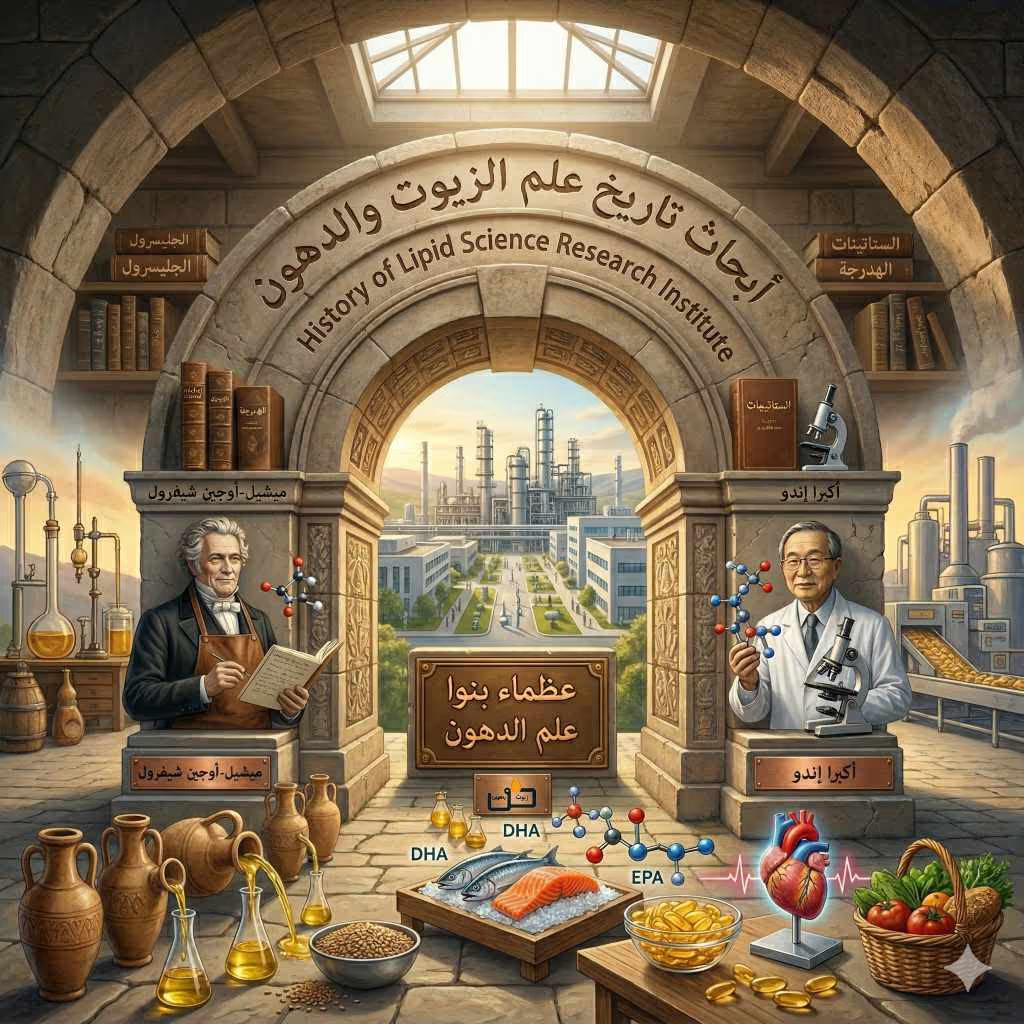
If Scheele provided the initial key, it was Michel-Eugène Chevreul who gave this field its rigorous scientific structure. He demonstrated that fats are not a mysterious, homogeneous substance, but rather compounds that can be analyzed, understood, and broken down into their fundamental components. Through his pioneering work, the understanding that fats are glycerides of organic acids became firmly established, and that saponification is not merely an industrial phenomenon known through experience, but a precisely explainable chemical process.
Under his influence, names that would later become fundamental to this science entered its lexicon, such as oleic acid, stearic acid, and other fatty acids that formed the alphabet of modern lipid chemistry. Herein lies his true greatness: Chevreul was not merely a discoverer of certain acids or an explainer of specific reactions, but one of those who completely reordered the landscape, transforming fats from a mere utilitarian substance into a thoroughly understood one.
Chevreul endowed lipid science with its language, boundaries, and foundational concepts. Therefore, his inclusion in the history of this science is not a mere documentary luxury, but an epistemological necessity; without his work, this field would have remained confined to general descriptions and unstructured practices for much longer.
Once the structure of fats became clearer, Marcellin Berthelot posed the question that would shift science from understanding to creation: If fats are compounds with a known structure, why couldn't they be reconstructed in the laboratory?
Here, Berthelot's significance became evident as one of those scientists who weren't content merely explaining nature's creations but sought to emulate and reconstruct them. His work marked a pivotal scientific and intellectual moment, as he demonstrated the possibility of artificially synthesizing glycerides, confirming that understanding structure not only leads to explanation but also to the capacity for construction.
This shift carried profound scientific implications, contributing to the liberation of organic chemistry from outdated notions that drew a sharp line between what life produces and what the laboratory can create. Consequently, lipid science transitioned from the stage of analysis to that of synthesis, and from the realm of description to the realm of capability.
In this context, Berthelot represents not just a brilliant name in the history of chemistry, but the pivotal moment when science recognized that fats were not merely a subject for understanding, but also for design and reformulation. This step would later influence the development of fat industries, functional materials, and numerous applications in food and industry.
At the turn of the 20th century, lipid science moved from the analytical laboratory to the arena of major industry, and Wilhelm Normann was one of the most prominent figures to drive this transformation. His name became associated with the development of oil and fat hydrogenation, a process that allowed the conversion of liquid unsaturated oils into more solid and stable substances, thus opening the door for the expansion of margarine, shortening, and other modern industrial fat product industries.
The industrial impact of this achievement cannot be overstated. Hydrogenation was not merely a limited technical solution; it was a tool that reshaped how the food industry approached texture, stability, shelf life, and economic cost. From this point, fats entered a new phase: they were no longer just substances extracted from nature, but became materials whose properties could be modified to serve clear technological and industrial purposes.
However, Normann's story is incomplete without its other side. What seemed in his time to be an ingenious and highly beneficial invention later became the subject of widespread health criticism when the link between some partial hydrogenation applications and the formation of trans fats was revealed. Thus, his biography gains additional value, reminding us that a scientific achievement can be great in its historical context, only for subsequent generations to uncover its health or regulatory limitations.
In this sense, Normann stands in the history of lipids not merely as an inventor, but as a symbol of a phase where this science transitioned from understanding matter to engineering its properties, with all the industrial gains and subsequent health questions that entailed.
While some scientists create major turning points, others build the foundational reference structure upon which science relies for a long time. This is what Thomas Percy Hilditch represented in the history of lipids. His name became associated with a comprehensive understanding of the chemical composition of natural fats and oils, becoming a classic reference in this field, particularly through his works that compiled scattered scientific material and linked natural lipid sources with their precise composition.
Hilditch was not the author of a single discovery that quickly shines in historical narratives, but he played a deeper and more established role: that of the scientist who mapped out the entire field. He provided researchers with a broad reference framework for understanding the distribution of fatty acids and glycerides in plant and animal sources, and helped transform scattered knowledge into an organized structure suitable for teaching, research, and comparison.
Therefore, his value is not measured by a single event, but by his cumulative impact on the maturation of the field itself. He provided lipid science with its broad reference, elevating the field from a stage of partial results to one of comprehensive systematic vision.
By the mid-20th century, the central question in lipid science had changed. The focus was no longer limited to what fats are composed of, but rather became: How does the body produce them? How does it regulate them? And how do they interact within its bioeconomy?
In this context, the work of Konrad Bloch and Feodor Lynen marked a qualitative leap in understanding cholesterol and fatty acid metabolism. They uncovered fundamental mechanisms and regulations in this area, moving lipid science into the heart of functional biochemistry. Fats, in light of their work, were no longer static entities, but became a continuous movement: synthesis, conversion, regulation, and dysfunction.
The importance of this shift lies in its connection between biochemistry, disease, and treatment. By understanding the pathways, it became possible to consider points for pharmacological intervention, rather than merely observing and describing. Thus, Bloch and Lynen gave lipid science its cellular biochemical dimension, linking matter with its function and dysfunction.
Then came another crucial milestone with Joseph L. Goldstein and Michael S. Brown, who revolutionized the world's understanding of cholesterol disorders by revealing the role of LDL receptors and the mechanisms of cholesterol regulation within the cell. Thanks to their work, high cholesterol was no longer just a number in an analytical report or a vague effect of intertwined dietary and genetic factors, but became a precise cellular issue that could be explained in light of specific receptors and organized regulatory and response mechanisms.
Their research demonstrated how the LDL receptor participates in the cellular uptake of cholesterol and how its genetic disruption leads to severe metabolic imbalances. From this, the study of certain rare genetic conditions became an entry point to understanding a general biological law affecting millions of people.
What Goldstein and Brown contributed was not merely an addition to the cholesterol file, but an elevation of this file to a higher level of precision; from description to explanation, from observation to mechanism, and from general clinical concern to specific cellular understanding.
If his predecessors had mapped the biological landscape of cholesterol, Akira Endo was the one who transformed this understanding into a historic pharmacological turning point. He started with a remarkably clever scientific idea: that nature, particularly fungi and microorganisms, might harbor compounds capable of inhibiting central enzymes in cholesterol synthesis. Through diligent research into thousands of microbial isolates, he identified the compounds that paved the way for the emergence of statins.
Here began a new era in the history of lipids and cardiovascular medicine. Statins were not merely cholesterol-lowering drugs; they were a practical manifestation of the maturation of lipid science itself: when science precisely understands a biological pathway, it can intervene pharmacologically in a targeted and effective manner.
Endo's greatness also lies in the nature of the vision that guided him. He did not view nature merely as a repository of substances, but as a partner in generating solutions. From this, his name became synonymous with the beginning of one of the most important pharmacological classes in modern medicine.
In the 1970s, the names of Hans Olaf Bang and Jørn Dyerberg emerged in one of the most captivating and expansive chapters of lipid science. Their population observations and interest in dietary patterns in certain polar communities led them to open the file on long-chain marine fatty acids, foremost among them EPA and DHA, a topic that would later become one of the most prominent subjects in preventive nutrition and biochemical research.
The value of this stage lies in its addition of a new dimension to lipid science: a dimension connecting traditional diets in specific communities with public health questions and biological mechanisms. From then on, lipids were no longer a subject confined to the laboratory, but also became a subject for population observation, epidemiological interpretation, and dietary application.
While omega-3 research has evolved significantly since then, and some initial interpretations have been reviewed and refined, Bang and Dyerberg's historical credit remains steadfast: they moved this topic from the periphery of observation to the center of global scientific attention, and opened a wide door for investigating the relationship between triglycerides, inflammation, and cardiovascular health.
Ancel Keys represented the crucial transition of lipid science from the laboratory and clinic to the realm of public health. His name is associated with the Seven Countries Study, one of the most famous epidemiological studies in the history of nutrition and heart disease. It helped establish the idea that the quality of dietary fats is not a minor detail in the diet, but a factor that can impact cardiovascular disease rates across communities.
He also played a prominent role in highlighting the Mediterranean dietary pattern in modern scientific literature, transforming it from a mere cultural dietary observation into a model of global research and health interest. From then on, discussions about fats were no longer limited to their chemical structure or biological pathways, but expanded to encompass lifestyle, diet, prevention, and health policies.
Ancel Keys made the topic of fats a societal issue par excellence. Thanks to him, fats were no longer a subject solely for chemists and doctors, but became part of the language of public health and the global discussion on food and modern diseases.
Prof. Dr. Adel Gabr Abdel Razek Professor and Head of the Oils and Fats Department at the National Research Centre, specializing in the research and development of oils, fats, and their derivatives. He is a member of Euro Fed Lipid, Vice President of the Egyptian Society for Food Safety, a board member of the Scientific Society for Food Industries, a regional advisor for the World Health Organization (WHO), a member of the technical committees at EOS, NFSA, and EGAC, and an expert and consultant at the Industrial Modernization Centre. (2)
When we reflect on this continuous history, we realize that the science of oils and fats was not built all at once, nor did it ascend to its current standing by chance. Instead, it was founded on accumulation, respect for scientific inquiry, and the interplay between understanding and application. From glycerol to fatty acids, from saponification to glycerides, from hydrogenation to industrial technology, from cholesterol to receptors and enzymes, from statins to prevention, and from omega-3 to public health; we clearly see that every stage of this science was the fruit of a searching mind, a tested experiment, and a methodology that persevered to reach its goal.
The most important conclusion is that anyone who wishes to advance the oils and fats sector, develop their research, strengthen their company's team, or enhance the quality of their products, has no path other than seriously embracing the principles of science. There is no true development without research, no solid quality without understanding, and no competitive ability without genuine collaboration with scientists, specialists, experts, practitioners, and implementers. The strength of any institution in this field is not measured solely by its equipment, production lines, or marketing ambitions, but also by its connection to scientific minds, its ability to transform specialized knowledge into practical solutions, research experience into industrial value, and academic vision into a tangible impact on the market, product, and quality.
We need a new institutional culture that makes the researcher a partner in development, not just a name called upon when necessary; that makes the expert an integral element in development, not merely a superficial addition; and that treats scientific research as a strategic investment, not a burden that can be postponed. When this culture takes shape, it becomes possible for teams to strengthen, R&D programs to improve, product quality to rise, and the horizons of innovation in the field of oils, fats, and their derivatives to expand.
Therefore, the call today is not just to admire the history of scientists, but to emulate their methodology: to ask sincerely, to research meticulously, to develop through partnership, and to connect industry with science, application with knowledge, and ambition with methodology. This is the most worthy path for a stronger future for this sector, and for a more established Arab presence in research, development, and production.