 Advertise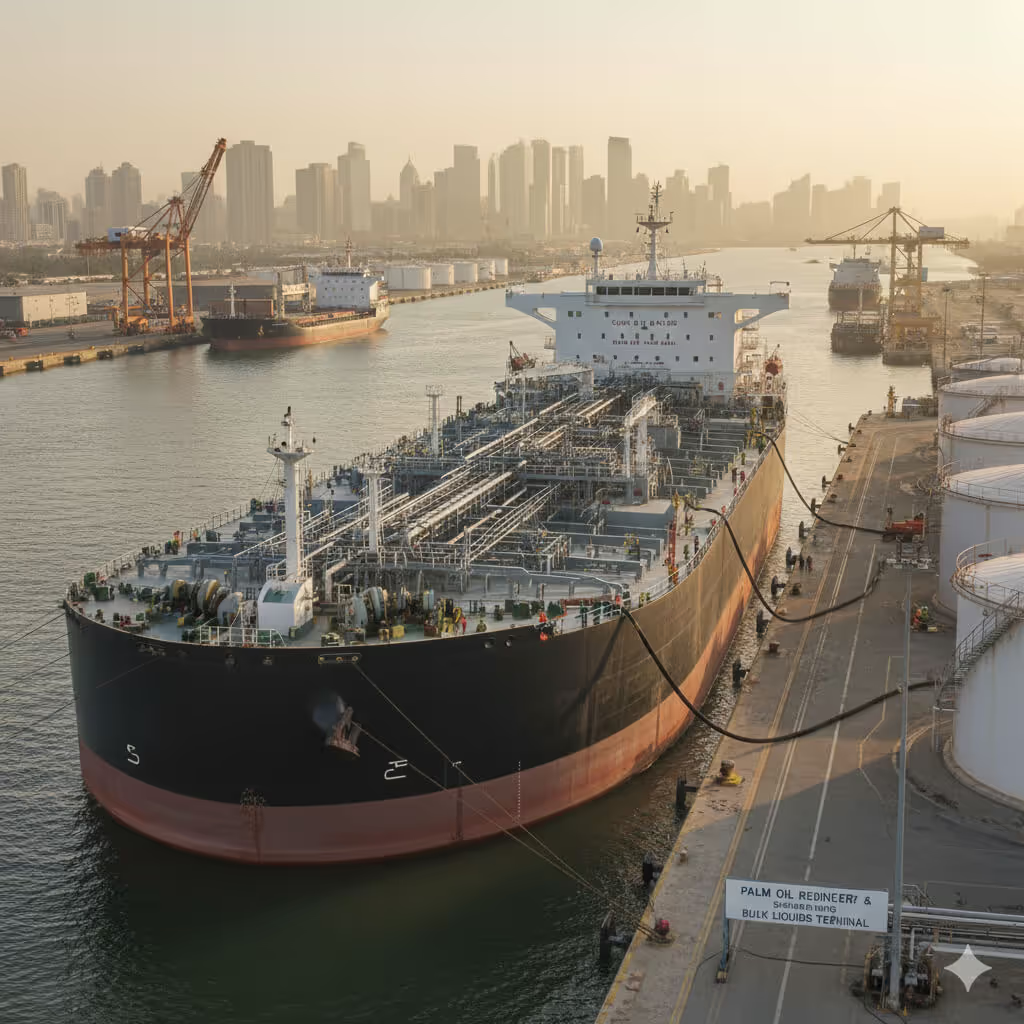
Note: This article was AI-translated from Arabic and is currently under manual review. The author is not responsible for any translation errors. Please refer to the original Arabic text for the most accurate and authoritative information.
When you follow the news releases for prices palm oil , or sunflower oil , or soy oil Next to the price, you often find three small letters such as FOB or CIF. These letters are not just minor details, they are the key to understanding the true cost of your shipment and determining your responsibilities as an importer or exporter in the world of oils and fats.
In this article, we'll decode these International Business Terms (Incoterms) to help you make more accurate decisions in your next trades.
This is one of the most common terms in the oil business. When you see a price like “Malaysian palm oil 950 dollars per ton FOB Port Klang”, it means that the $950 price covers costs up to a specific point only.
What does it mean?Simply put, the seller's (exporter) liability ends completely once the shipment of oil is loaded onto the ship that you (the buyer) booked at the designated port of shipment (such as Port Klang in Malaysia).
In short: The FOB price does not include the cost of the oil sailing to you.
Let's say you find another price: “Sunflower oil 1100 dollars per ton CIF Alexandria”. This price is higher, because it includes more services than the seller.
What does it mean?Here, the seller is obliged to cover more costs. He not only delivers the shipment on board the ship, but also pays the costs of shipping and buys an insurance policy to cover the shipment until it reaches your country's port (Alexandria port in our example).
An important technical point: Although the seller pays insurance and shipping, Risk transfer point (Risk Transfer) from the seller to you occurs as soon as the oil is loaded onto the ship at the port of origin, just like FOB.
Understanding these terms is necessary to calculate The final cost (Landed Cost) A ton of oil.
The next time you read the Oil and Fat Price Bulletin, you'll know exactly what the quoted price means, and you'll be able to calculate your costs more accurately, ensuring you achieve the profit margin you plan for.