
Lang
Peanut oil: a vegetable oil extracted from the seeds of the peanut plant. A comprehensive reference covering specifications, fatty acids, production, and uses.
Arachis hypogaea L.
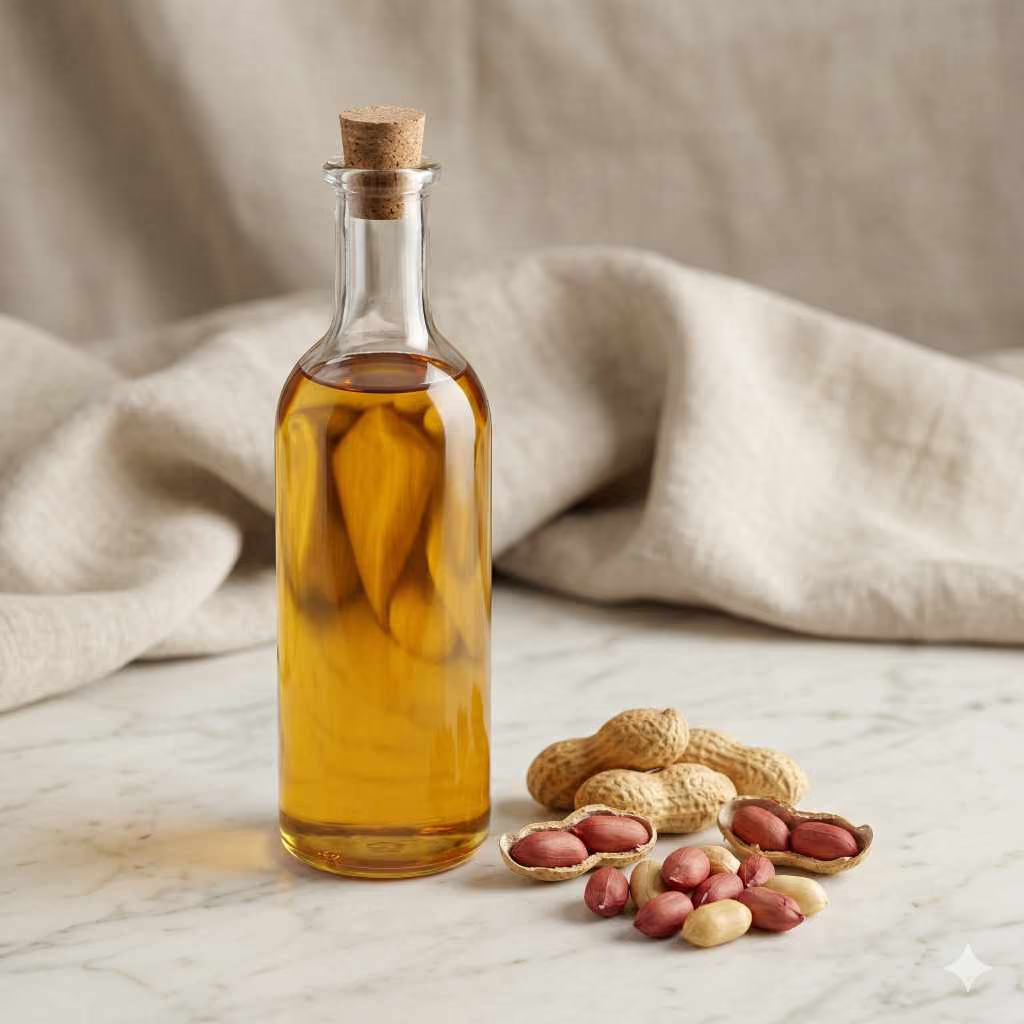
Peanut oil is a vegetable oil extracted from the seeds of the peanut plant Arachis hypogaea, and is one of the important vegetable oils in Asia and emerging economies. The seed contains 45-55% oil by weight, extracted by several methods: cold pressing for the virgin oil that retains the distinctive nutty flavor, or solvent extraction and refining for industrial and commercial uses.
The peanut is native to South America, specifically the Andes region. Its cultivation spread to Africa and Asia through Portuguese and Spanish trade in the sixteenth century, and it found ideal soil and climate in China and India. Today China leads global production by a wide margin, while India consumes most of its production locally.
The chemical composition of peanut oil is distinguished by its moderate content of oleic acid (40-65% depending on the variety), linoleic acid (18-38%), and palmitic acid (8-14%). The omega-6:omega-3 ratio is about 200:1, very high. It also contains a high proportion of arachidic acid (C20:0), from which the plant's English name (Arachis) was derived. The oil has a high smoke point (about 230°C in refined oil) and good resistance to oxidation.
According to USDA data for the 2025/26 season, global production reached 6.29 million tons, or 2.7% of the vegetable oil market. China leads production with 3.10 million tons, followed by India with 1.32 million tons, then the United States, the European Union, and Turkey.
Peanut oil is widely used in deep frying, especially in Asian and African cuisines, for its high heat tolerance. It is also preferred in preparing Chinese and Indian dishes for its distinctive flavor. Industrially, it goes into the making of soap, cosmetics, and pharmaceuticals, and is used as a carrier oil for injectable medical preparations.
HS Code
1508
Oil percentage in the seed/fruit
45-55%
Oil yield/hectare
650 kg/ha
Omega-6:Omega-3
200:1
2025/26 (April 2026 estimates)
Global Production
6.29
million tons
Global Consumption
6.22
million tons
Market Share
2.7
%
Source: USDA-FAS PSD Online
This oil conforms to the Codex Alimentarius standard for named vegetable oils, CXS 210-1999, which specifies fatty acid composition, and quality and authenticity criteria. The following cards present the specification for each variety of this oil.
Arachis oil (peanut oil; groundnut oil) is derived from groundnuts (seeds of Arachis hypogaea L.).
Oleic acid (Omega-9)
35.0-80.0
Linoleic acid (Omega-6)
4.0-43.0
Linolenic acid (Omega-3)
n.d.-0.5
Palmitic acid
5.0-14.0
Stearic acid
1.0-4.5
Lauric acid
n.d.-0.1
Erucic acid
n.d.-0.6
Total saturated
Total monounsaturated
Total polyunsaturated
Iodine value
77-107
Vitamin E (mg/kg)
170-1300
Caproic acid (C6:0): n.d.
Caprylic acid (C8:0): n.d.
Capric acid (C10:0): n.d.
Lauric acid (C12:0): n.d.-0.1
Myristic acid (C14:0): n.d.-0.1
Palmitic acid (C16:0): 5.0-14.0
Palmitoleic acid (C16:1): n.d.-0.2
Margaric acid (C17:0): n.d.-0.1
Heptadecenoic acid (C17:1): n.d.-0.1
Stearic acid (C18:0): 1.0-4.5
Oleic acid / Omega-9 (C18:1): 35.0-80.0
Linoleic acid / Omega-6 (C18:2): 4.0-43.0
Linolenic acid / Omega-3 (C18:3): n.d.-0.5
Arachidic acid (C20:0): 0.7-2.0
Gadoleic acid (C20:1): 0.7-3.2
Eicosadienoic acid (C20:2): n.d.
Behenic acid (C22:0): 1.5-4.5
Erucic acid (C22:1): n.d.-0.6
Docosadienoic acid (C22:2): n.d.
Lignoceric acid (C24:0): 0.5-2.5
Nervonic acid (C24:1): n.d.-0.3
Sterols (% of total):
Cholesterol: n.d.-3.8
Brassicasterol: n.d.-0.2
Campesterol: 12.0-19.8
Stigmasterol: 5.4-13.2
Beta-sitosterol: 47.4-69.0
Delta-5-avenasterol: 5.0-18.8
Delta-7-stigmastenol: n.d.-5.1
Delta-7-avenasterol: n.d.-5.5
Other sterols: n.d.-1.4
Total sterols (mg/kg): 900-2900
Tocopherols and tocotrienols (mg/kg):
Alpha-tocopherol: 49-373
Beta-tocopherol: n.d.-41
Gamma-tocopherol: 88-389
Delta-tocopherol: n.d.-22
Alpha-tocotrienol: n.d.
Gamma-tocotrienol: n.d.
Delta-tocotrienol: n.d.
Total tocopherols and tocotrienols (mg/kg): 170-1300
Relative density: 0.909-0.920 (20°C)
Apparent density (g/mL): —
Refractive index: 1.460-1.465
Saponification value: 187-196
Iodine value: 77-107
Unsaponifiable matter (g/kg): ≤ 10
Melting point: —
δ¹³C ratio: −13.71 to −16.36