 Advertise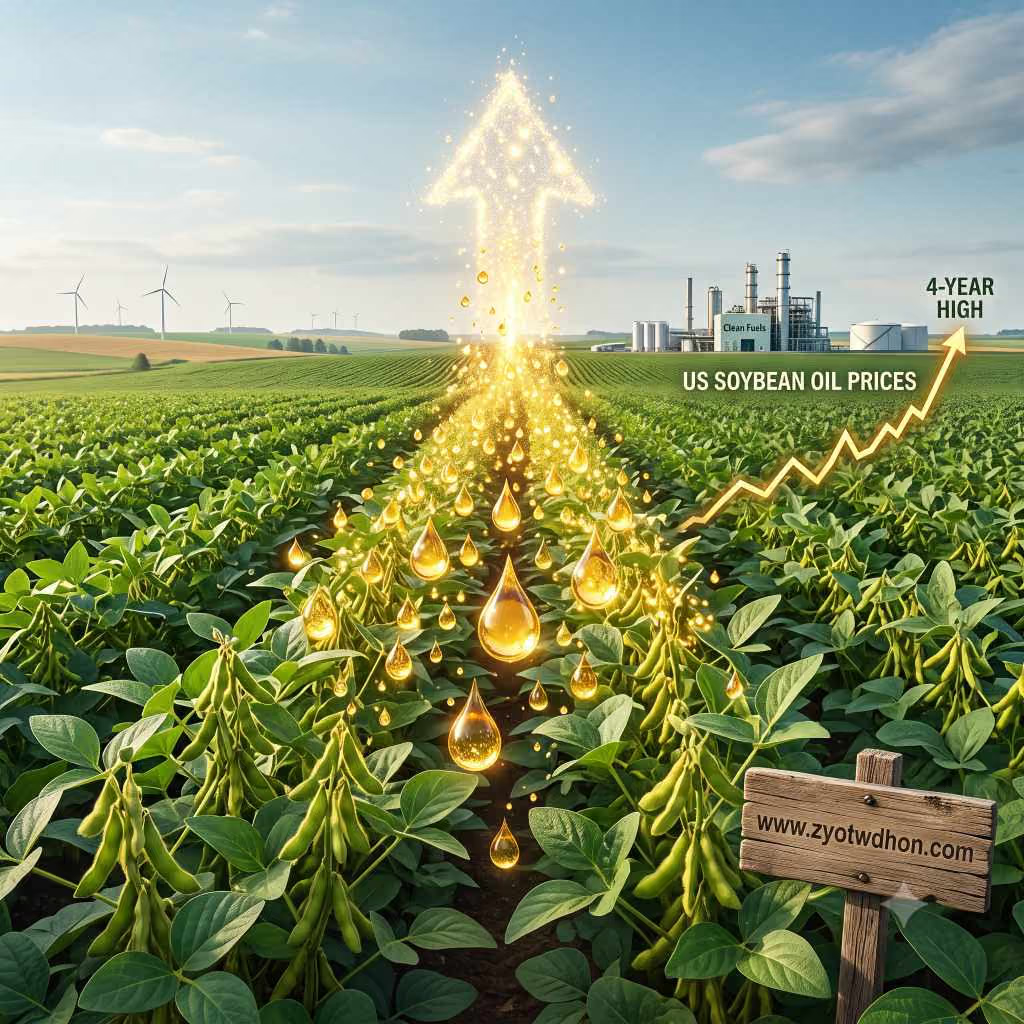
Driven by an unprecedented surge in biodiesel demand, soybean oil prices reached their highest level in more than four years this month, fundamentally restructuring markets for American agricultural producers. This historic market movement is largely stimulated by the federal Renewable Fuel Standard’s volume obligations mandated for 2026 and 2027, which have catalyzed record-breaking production volumes and triggered massive new infrastructure investments across the sector.
The ramifications for the broader agricultural landscape have been profound. Soybean prices recently climbed past the $11 per bushel threshold for the first time in two years. A prominent example of the sector's rapid infrastructure expansion is a newly operational processing plant located in Gilman, Illinois, which now handles a daily volume of 300,000 bushels, providing an entirely new commercial outlet for roughly 7,000 regional farms. Additional processing facilities of similar scale are currently under active development across the country.
Data indicates that domestic biodiesel refineries operated at an astonishing 375% of their standard capacity throughout the spring season. Furthermore, the production of renewable diesel alongside sustainable aviation fuel (SAF) reached unprecedented, all-time historic highs during May. This compounding manufacturing boom is aggressively drawing supplies from a diverse array of agricultural feedstocks, including domestic soybean oil, distillers' corn oil generated by ethanol facilities, recycled commercial cooking oil, and various animal fats.
Despite this robust economic expansion, the green energy boom is encountering significant legal challenges. Traditional oil refiners and a coalition of environmental advocacy groups, spearheaded by the Center for Biological Diversity, are currently challenging the Environmental Protection Agency’s (EPA) renewable volume requirements in federal court, alleging that the mandates have been legally established at unsustainably high levels.
Conversely, the Clean Fuels Alliance America is actively intervening to defend the established federal standard. Kurt Kovarik, the organization's vice president of federal affairs, issued a stern warning regarding the litigation, stating that if the litigants manage to destabilize the Renewable Fuel Standard, the economic consequences will ultimately be borne by farmers, local rural communities, and everyday consumers. Currently, the clean fuels industry successfully supplies 10% of the entire on-road diesel demand in the United States, a market share that continues to steadily expand as more production capacity comes online.
Source: Max Armstrong - Farm Progress