 Advertise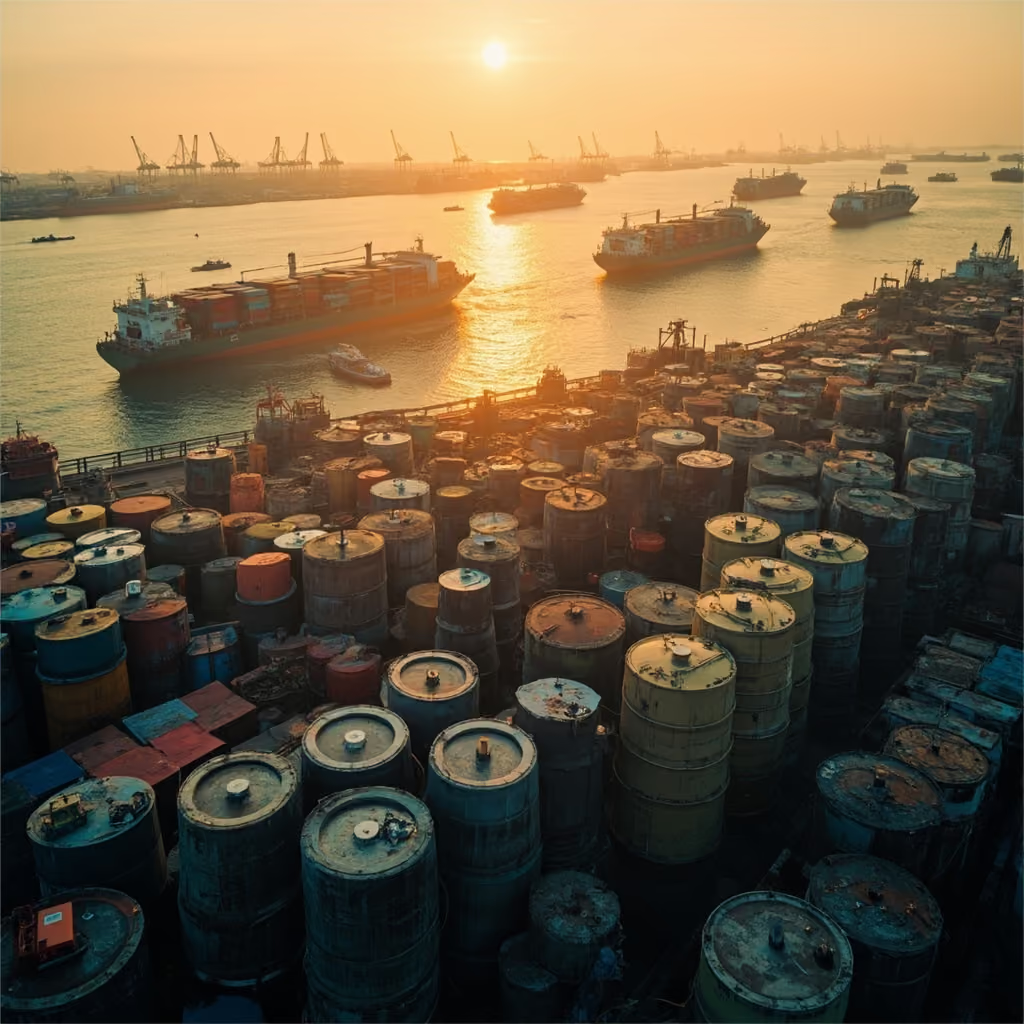
Russia's ability to export vegetable oils is increasingly challenged by recent drone attacks on port infrastructure in the Azov-Black Sea region, a critical conduit for its agricultural shipments. The disruptions have led to the suspension of operations at EFKO's export terminal in Taman, which boasts an annual handling capacity of 1.5 million tons, pending damage assessments and repair work. Approximately 60% of Russia's total vegetable oil exports typically transit through these southern ports.
Despite these operational hurdles, Russian vegetable oil exports showed robust growth earlier in the year. Data from 'OleoScope' indicates that total exports for January–July increased by 6% to 4.18 million tons. Sunflower oil exports saw a 7% rise, reaching 2.85 million tons, while rapeseed oil shipments also climbed by 7% to 925 thousand tons. In contrast, soybean oil exports experienced an 11% decline, totaling 361 thousand tons during the same period. India, Turkey, and Iran remained the primary destinations for Russian sunflower oil.
However, market observers anticipate a significant downturn in exports for July and August. 'SovEcon's analysis suggests that July's sunflower oil exports dropped by a steep 53.9% compared to June. Furthermore, August shipments are projected to fall by another 40% year-on-year, with some analysts forecasting August exports to be as low as 100–150 thousand tons.
Industry experts believe that efforts to reroute exports through alternative pathways, such as the Baltic or Caspian ports, will only partially mitigate the losses. Elevated insurance premiums and increased freight rates have driven up logistics costs considerably. For instance, container shipments from Baltic ports to India now incur an additional cost of about $700–800 per container when compared to similar routes originating from the Black Sea. Adding to these challenges, several shipping companies have already adjusted their schedules due to heightened security risks.
Another strategy involves expanding rail exports utilizing flexitank containers, a shift that commenced in the spring, redirecting some cargo to Russia's northwestern and Far Eastern ports. Nevertheless, industry representatives caution that establishing new logistics chains demands substantial investment, considerable time, and will result in significantly higher transportation costs.
Analysts also express skepticism regarding the feasibility of diverting large export volumes to China via the Far East. While China is a major global importer of vegetable oils, its market preference heavily favors soybean and palm oil, with sunflower oil constituting only a relatively minor share of its consumption. Given the considerably longer transport route and intense market competition, experts deem it improbable that Russia can fully replace its traditional Azov-Black Sea export channels with shipments to Asian markets.
Source: UkrAgroConsult