 Advertise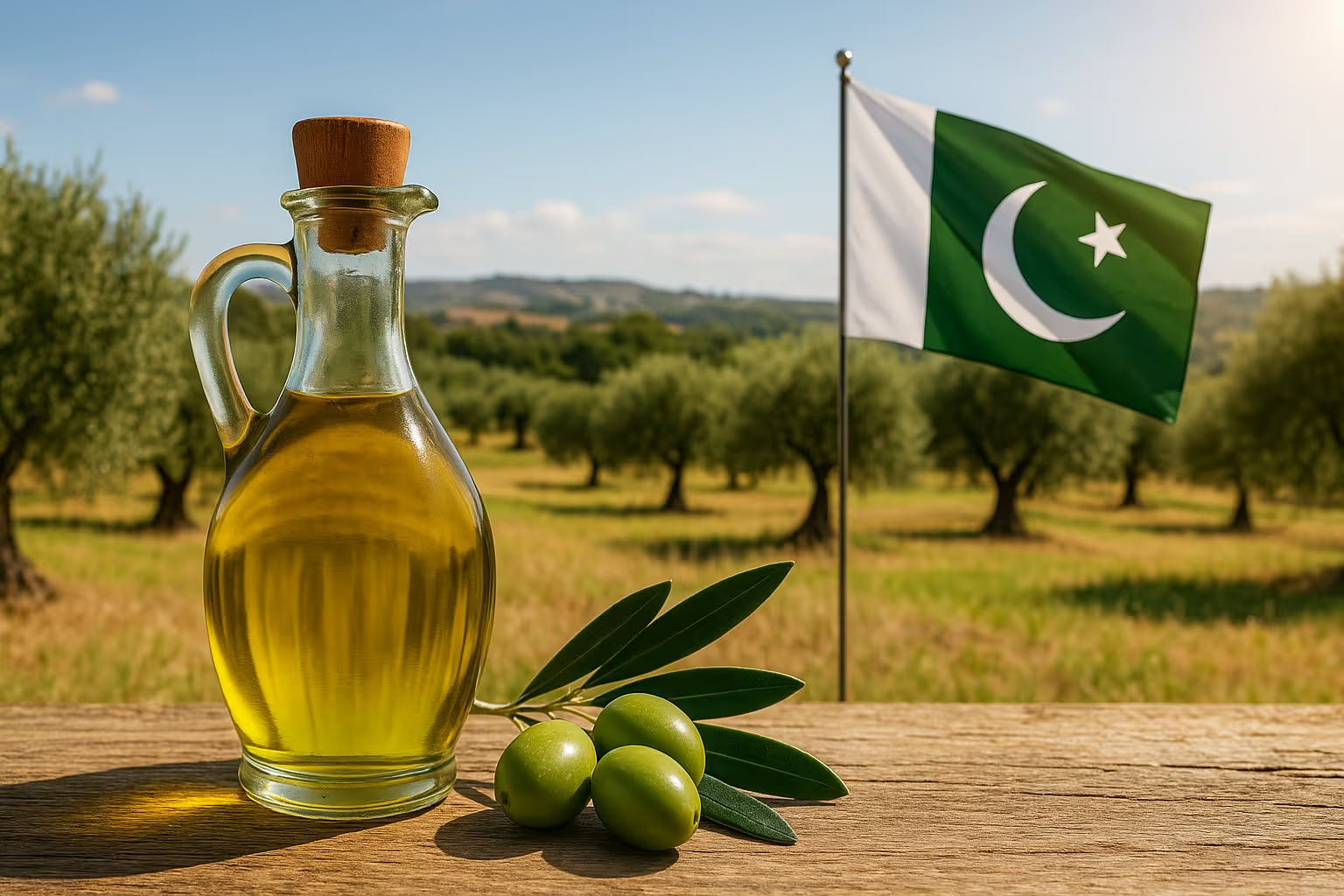
Pakistan is making steady progress towards self-sufficiency in olive oil and aims to become an exporting nation within the next five to seven years, according to Dr Muhammad Tariq, National Project Director at the Ministry of National Food Security and Research, speaking on Friday.
Tariq said Pakistan has the potential to become a global competitor across the olive value chain, noting that the country currently imports more than 2 billion rupees' worth of olive oil annually — a figure the government is seeking to significantly reduce through domestic production.
Tariq heads the ministry's "Promotion of Commercial Olive Cultivation in Pakistan" project, explaining that the national olive planting programme has established around 6.9 million olive trees through national and regional initiatives across 60 districts, involving more than 11,400 farmers since its launch in 2014.
Backed by public-private partnerships, international agencies, and a "farm-to-table" strategy, the project has introduced modern nursery management and sustainable irrigation systems across 5,594 acres.
In addition, 51 oil extraction units have been installed nationwide with support from national, regional and international institutions, alongside post-harvest infrastructure such as fruit processing facilities, weather stations and quality testing laboratories.
A major breakthrough came in 2022, when Pakistan shifted from importing saplings from Mediterranean countries to domestic propagation, reducing reliance on foreign supply and strengthening local capacity. Since then, more than 238 training programmes have been held, benefiting over 16,000 participants who gained skills in orchard management, oil extraction and capacity building.
Tariq noted that these efforts are beginning to pay off, with Pakistani olive oils earning international recognition. The "LO-Loralai Olives" brand, produced in Balochistan, won a silver award at the New York International Olive Oil Competition 2025, one of the sector's most prestigious contests.
Pakistan has also been granted observer status at the International Olive Council, paving the way for deeper integration into the global olive industry.
Tariq added that the global olive oil market, valued at $15.2 billion in 2024, is expected to surpass $18 billion by 2027, driven by rising health awareness and the growing popularity of the Mediterranean diet. He believes increasing demand for organic and functional foods presents a timely opportunity for emerging producers like Pakistan to expand their presence in international markets.
Tariq described what he called Pakistan's "olive revolution" as a transformation of barren land into golden orchards — from the rugged highlands of Balochistan to the fertile plains of Punjab. He said: "Unused land has now become a productive agricultural system supporting thousands of livelihoods."
With more than four million hectares suitable for olive cultivation, long-term projections suggest the sector could contribute around 7.6 billion rupees annually to the national economy. Economic models also forecast a 50% reduction in olive oil imports alongside a notable rise in exports between 2019 and 2023.
He confirmed that the National Olive Policy and Action Plan is currently under review to formalise this progress, noting that the olive sector has seen remarkable entrepreneurial growth, expanding from just a handful of projects to more than 85 start-ups nationwide.
These ventures produce extra virgin olive oil, pickles, jams, cosmetics, soap and dietary supplements, contributing to rural job creation, agribusiness diversification and greater consumer health awareness.
Tariq also pointed to untapped potential in carbon credits, pomace oil and other olive derivatives, which could further boost farmers' profitability.
He concluded by highlighting the environmental and health benefits, noting that olive trees contribute to carbon sequestration and climate resilience, while increased olive oil consumption could help lower public healthcare costs.
Source: APP