 Advertise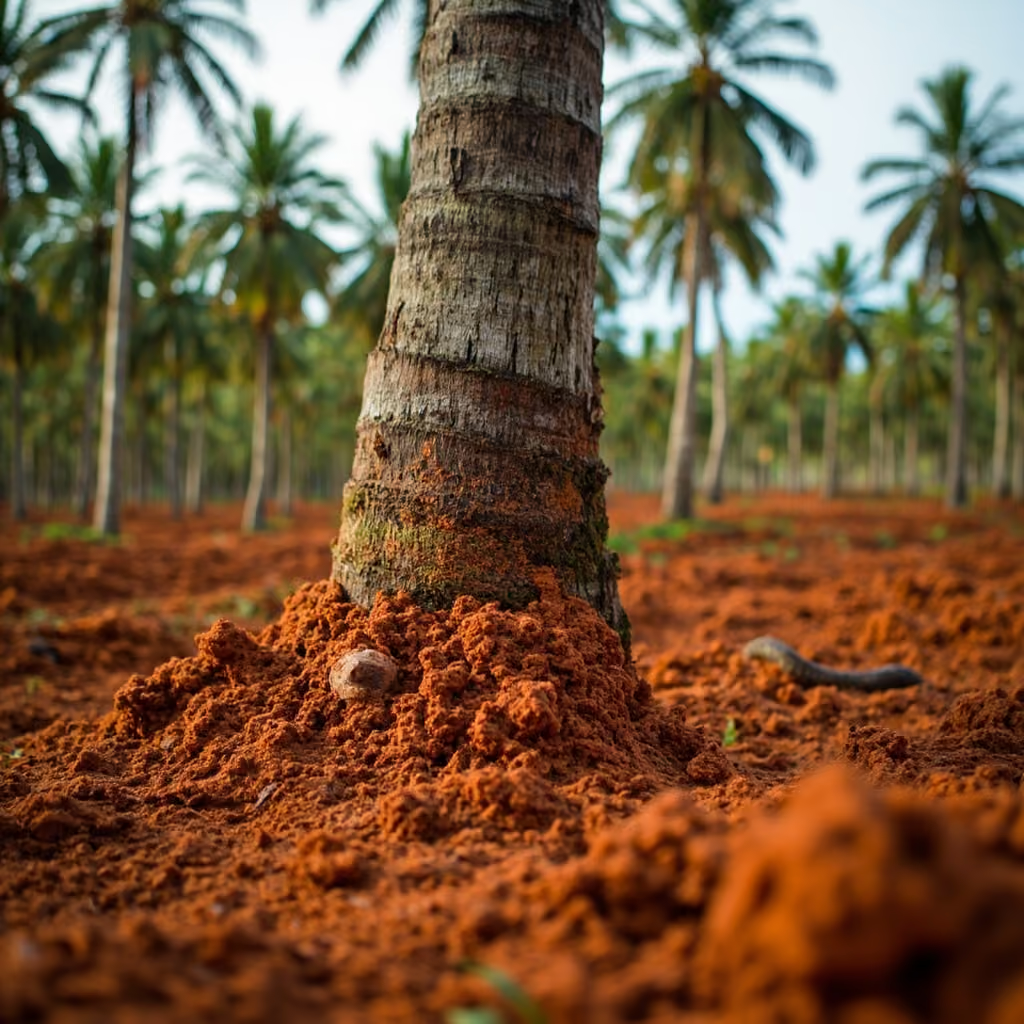
Palm oil growers in Sabah, Malaysia's largest crude palm oil-producing state, are increasingly reducing fertilizer application due to escalating costs, a decision expected to significantly impact future yields. This trend, driven by financial pressures, raises concerns across the industry, from independent smallholders to large estates.
Gino Lo, a 37-year-old smallholder in Sandakan, has cut fertilizer use on his 80-acre oil palm plantation by a quarter since March. Lo, who manages approximately 4,400 oil palms, reduced his annual application from about 12kg to 9kg per palm. 'This will affect the yield. We will have lower yield because of the reduction in fertilizer,' he stated.
Another grower, 49-year-old Sahdin Lias from Kinabatangan, faces a different challenge. While not intentionally cutting quantities on his 30-acre plantation (about 1,650 palms), he can no longer afford to buy sufficient fertilizer at once to maintain his regular application schedule. Lias noted that the price of one frequently used fertilizer product has surged from RM2,100 to RM2,400 per metric tonne, forcing him to purchase only one tonne at a time. 'There isn’t enough money to buy everything at once anymore. As small farmers, we have no choice,' he explained.
Ahmad Zachry Anifah Aman, president of the Malaysian Estate Owners’ Association (MEOA), warned that the initial signs of under-fertilization typically appear nine to twelve months after a reduction, manifesting as lower average bunch weights. The long-term impact can deepen significantly, leading to bunch abortion the following year and fewer female flowers, which would ultimately reduce the number of harvestable bunches approximately two years later. He illustrated this by noting that 'the impact of decisions taken in 2026 may only be seen in 2027 and 2028.' A substantial fertilizer cut of around 40% could diminish yields by 20% or more over the subsequent 18 to 24 months.
Fertilizer costs constitute about 30% of an estate’s total production expenses. MEOA members in Sabah have also reported freight costs escalating by 20% to 30%, adding further strain. Zachry highlighted another operational challenge: port congestion and shipment delays in Sabah, which can disrupt fertilizer schedules even for estates planning full application. In a dry year, a late fertilizer round can be almost entirely wasted, underscoring the critical importance of timely application alongside quantity.
Steve Lee, founder of fertilizer manufacturer Baja Harapan, underscored that prolonged under-fertilization could have consequences extending well beyond a single harvest cycle, potentially impacting oil palms for two to three years. Lee explained that Sabah's fertilizer producers are heavily reliant on imported raw materials, such as nitrogen-based inputs from countries including Egypt, and ammonium chloride from Vietnam and China. This dependence exposes them to global supply disruptions, higher freight costs, and volatility in commodity prices. Despite supply having largely stabilized after earlier disruptions, prices remain elevated. 'The supply is there now, but the price is still high,' Lee confirmed.
Datuk Syaheddrul R Joddari, chairman of the East Malaysia Planters Association and general manager of the Sabah Land Development Board, pointed out that smaller operators and independent growers are particularly vulnerable due to their limited purchasing power compared to larger plantation groups. Bigger companies are generally better positioned to negotiate long-term supply arrangements and absorb temporary cost increases. He emphasized that 'reducing fertilizer usage may provide temporary cost savings, but it often leads to lower yields and reduced productivity over subsequent years.'
While relatively firm crude palm oil prices have provided some buffer against rising input costs, Syaheddrul cautioned that if fertilizer expenses remain high, growers must prioritize nutrient-use efficiency, precision agriculture, and more sustainable fertilizer management practices.
Sabah is Malaysia’s leading crude palm oil producer, contributing 4.27 million tonnes, or 22.1% of the national output, in 2024. The state cultivated approximately 1.48 million hectares of oil palm in 2025, with over 30,000 smallholders managing more than 191,000 hectares of this land.
Source: The Star