 Advertise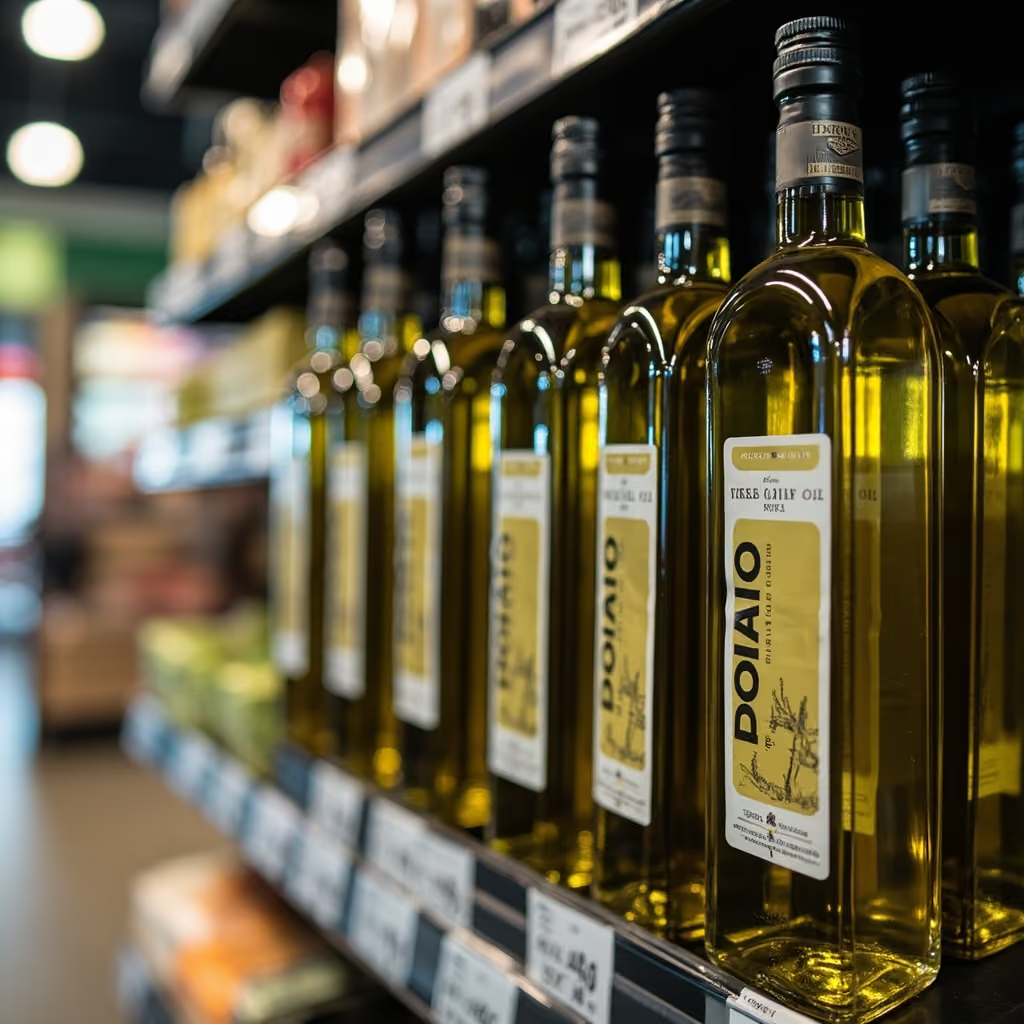
UK consumer price data reveals that the cost of olive oil has more than doubled over the past five years, underscoring the profound impact of inflation on household budgets. This sharp increase in olive oil prices stands out as the steepest rise among household goods tracked since 2021, as UK households continue to grapple with significant cumulative inflation, even as the headline rate remains below its 2022 peak.
Consumer price inflation began its acceleration in August 2021, reaching 3.2 per cent, and subsequently climbed into double digits before peaking at 11.1 per cent in October 2022. Annual inflation has since eased to 2.9 per cent in July, though this remains above the Bank of England's 2 per cent target. Cumulative inflation over the last five years now stands at 27.5 per cent.
Other food categories have also experienced substantial price hikes. Edible offal has seen a 76 per cent increase over five years, while beef, eggs, and chocolate have all risen by more than 50 per cent. These increases are largely attributed to Russia's full-scale invasion of Ukraine in 2022, which has driven up fertiliser and feed costs.
The Ukraine crisis, along with this year's turmoil in the Strait of Hormuz, has also kept energy costs elevated. Gas prices are up by 87 per cent over the period, and electricity is 46 per cent higher.
Beyond supermarket shelves, the cost-of-living squeeze extends to other areas, according to AJ Bell. Car insurance, for instance, is 76 per cent higher than in 2021, a rise driven by a shortage of parts following Covid, an increase in car thefts, and more expensive repairs linked to advanced vehicle technology.
Laura Suter, Director of Personal Finance at AJ Bell, stated that many everyday expenses remain significantly above pre-crisis levels and continue to strain family finances. She also noted that mortgage costs have surged by an 'eye-watering' amount, even though they are excluded from the main consumer price inflation measure.
Andrew Montlake, Chief Executive of mortgage broker Coreco, described the shift in mortgage costs over the past five years as extraordinary. He highlighted that borrowers could secure mortgage rates below 1 per cent five years ago, whereas the best deals are now above 4 per cent, adding more than £500 per month to a £300,000 repayment mortgage.
Cumulative retail price inflation (RPI), which includes mortgage costs, has risen by 36 per cent, a faster rate than the CPI measure. However, statisticians have long criticised the model behind RPI. AJ Bell's analysis further indicates that only 13 of the 192 CPI categories have seen a price decrease since 2021, primarily led by sound and vision equipment, personal computers, and information processing accessories, partly reflecting quality adjustments used by the Office for National Statistics.
Source: Traders Union