
Lang
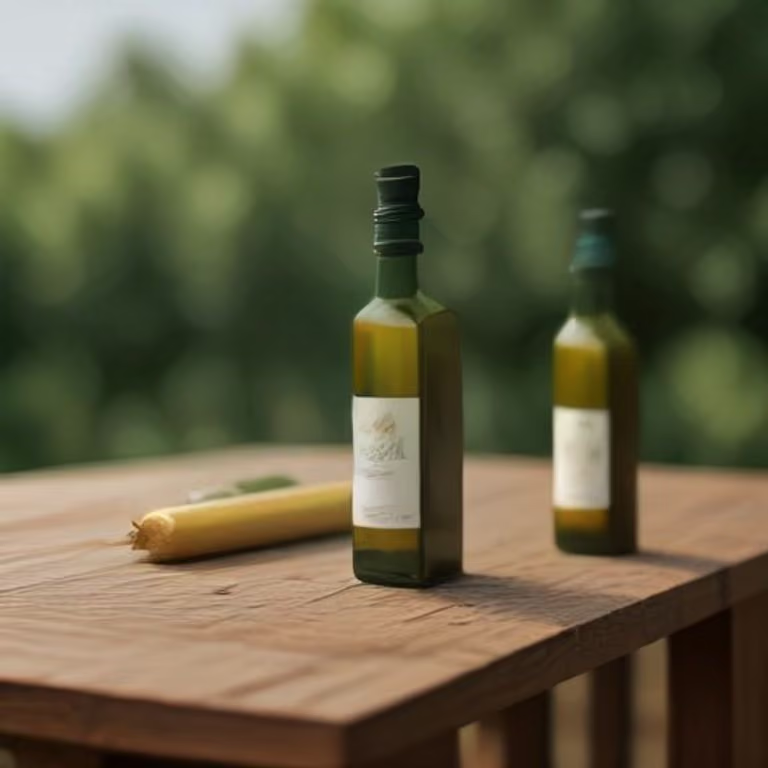
Pakistan's nascent olive oil industry stands at a pivotal moment, with its ambitious growth and export potential jeopardized by significant gaps in quality control, certification, and regulatory frameworks. While successive governments have enthusiastically promoted olive cultivation as a strategic move to reduce the nation's substantial annual edible oil import bill, industry stakeholders now emphasize that future success hinges less on expanding plantations and more on establishing a robust national policy.
The country's reliance on imported edible oils, costing an estimated $5-6 billion annually, has long positioned olive cultivation as a viable alternative, given its ability to thrive on marginal lands and offer high value. Over the past decade, federal and provincial initiatives have led to the planting of millions of olive trees across thousands of acres, particularly in Potohar, Khyber-Pakhtunkhwa, and Balochistan, with Pakistan's potential olive-growing zone spanning nearly 10 million acres. The ongoing OliveCulture Scale-Up Project, supported by the Italian Agency for Development Cooperation (AICS) and implemented by CIHEAM Bari, is further bolstering the olive value chain from 2024 to 2027.
However, industry participants, including Dr. Qurat-ul-Ain Irfan, founder of Meshak Farms, warn that the absence of an enforceable implementation framework is stifling progress. 'Anyone can market any product as olive oil. Labels may be approved, but there is little monitoring of what is actually inside the bottle,' Irfan stated, highlighting the widespread issue of adulteration. This lack of oversight extends to routine laboratory testing, nationally recognized quality grades, and consumer awareness, making it difficult for legitimate producers to distinguish premium extra virgin olive oil from inferior or blended products. Irfan stressed, 'There should be standardisation and consumers should know whether they are buying premium extra virgin olive oil, blended oil or another edible oil altogether. Without standards, everyone is judged by the same parameters.'
Producers who invest in olive orchards face unique challenges, primarily the extended period required to achieve substantial returns—often 10 to 15 years for optimum production. Irfan argues that such growers, who contribute to foreign exchange savings and export potential, deserve targeted government incentives akin to those offered to other sectors. Meshak Farms itself exemplifies this long-term commitment, having been established on virgin land in Mardan using imported Arbequina saplings, drip irrigation, and modern management practices guided by CIHEAM Bari expertise to produce premium extra virgin olive oil.
Irfan, who also leads a pharmaceutical firm exporting to the UK and EU, applies the same rigorous standards of traceability, lab testing, and quality assurance to her olive oil production. She believes that significant international demand exists, provided Pakistan can consistently meet global benchmarks. An Italian firm, for instance, expressed willingness to source Pakistani olive oil if facilities secure internationally recognized certifications like ISO 14000 and maintain consistent quality.
Industry experts observe that global shifts, including climate change impacts, ageing orchards, and declining productivity in traditional Mediterranean regions, are compelling international buyers to diversify their supply chains, creating a timely opportunity for emerging producers like Pakistan. Yet, without a credible regulatory framework, these export aspirations remain tenuous. Stakeholders call for the government to implement mandatory grading standards, enhance testing laboratories, establish robust traceability systems, streamline certification procedures, and launch public awareness campaigns promoting the health benefits of authentic local extra virgin olive oil.
'Currently the government is helping growers in this field, but the scope should now be expanded to where prices of olive oil in Pakistan should start reducing. Like all other sectors, this sector is also paying taxes, in fact 25% sales tax. The challenge is no longer proving that olives can grow. The bigger test is whether policy can keep pace with an industry that believes it is ready to compete beyond the country's borders,' Irfan concluded, underscoring the urgency of comprehensive policy reform.
Source: The Express Tribune