
Lang
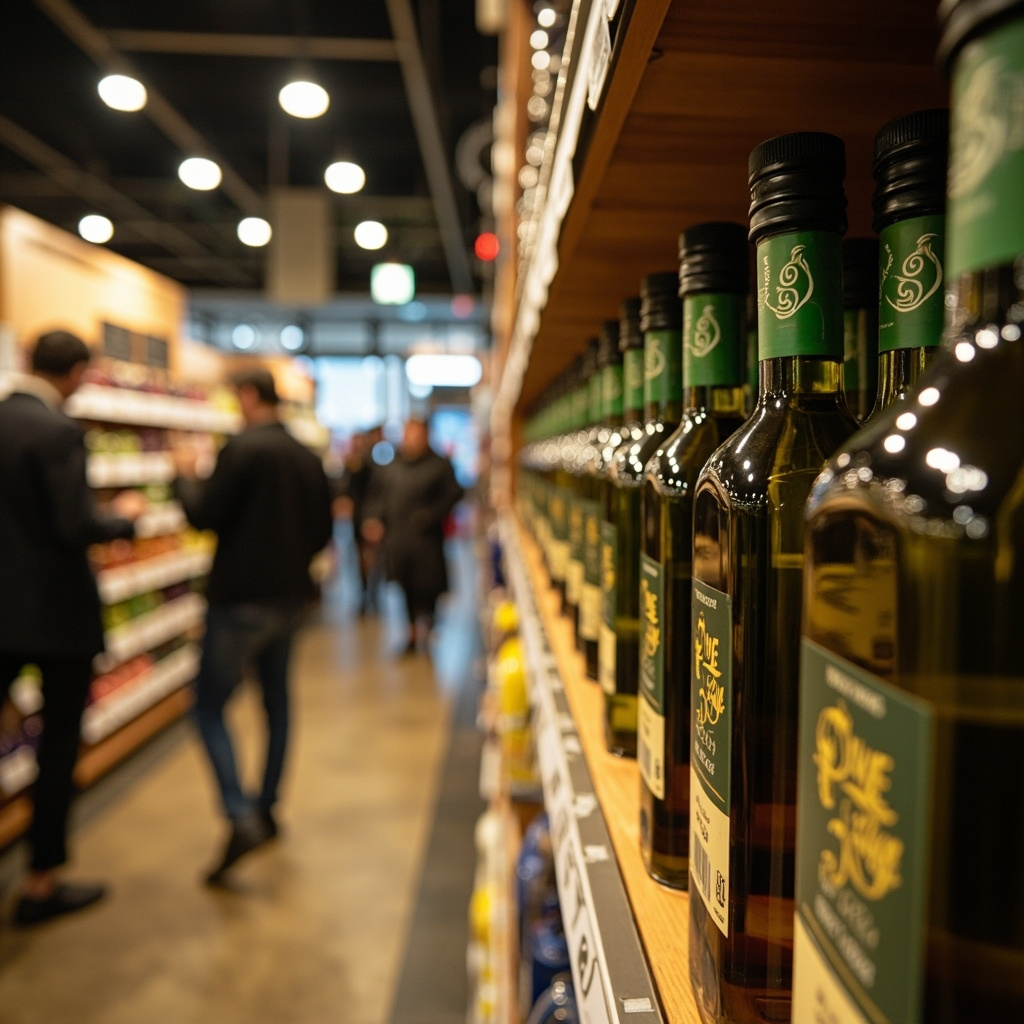
Deoleo, the world's largest olive oil producer, is set to significantly expand its retail footprint in India as demand for the category continues to grow beyond its traditional niche consumer base.
Founded in 1930 and headquartered in Madrid, Deoleo operates across 68 countries on five continents. Its global portfolio includes Bertolli, Carapelli, Carbonell and Figaro, while in India the company is represented by Figaro, Bertolli and Figaro Baby.
The Spanish company currently reaches more than 3,000 Indian cities through over 500 distributors and close to 250,000 retail outlets, with distribution spanning general trade, modern retail and e-commerce. Its channel mix is balanced, with general trade accounting for 45 percent, modern trade 25 percent, and e-commerce 30 percent.
'Accessibility is essential for sustained growth, and hence distribution expansion remains a key pillar of growth,' said Vishal Sarin, General Manager - India at Deoleo.
The Indian olive oil category is currently estimated at around Rs 880 crore, with a three-year compound annual growth rate (CAGR) of approximately 8 percent. Sarin pointed to changing consumer economics as a key driver of premium-category adoption, noting 'a greater willingness to trade up when consumers see a clear quality and value proposition.'
Demographic shifts are reinforcing the opportunity. According to Deoleo, India's middle class has grown from around 20 percent of the population in 2020 to approximately 31 percent today, and is projected to reach around 40 percent over the next five years, representing close to 600 million consumers. The company's core consumer segment is women aged 25 to 55 years, with a concentration in Tier I and emerging Tier II cities.
In its India portfolio, Deoleo offers three brands: Figaro, described as the leadership brand in India; Bertolli, its global leading olive oil brand; and Figaro Baby, which extends the Figaro proposition into baby care. For institutional customers, the company provides formats and variants suited to different requirements, including multi-purpose, extra virgin and extra light olive oils. Sarin noted: 'For institutional partners, the focus is on the right product formats, variants, consistent quality and dependable supply, backed by Deoleo's global expertise in olive oil.' According to the company, Figaro has been present in Indian households for more than four decades, with family members remaining an important source of brand awareness. 'Repeat consumption is an important part of our business, but with Figaro there is also something deeper at play: generational trust,' Sarin said.
Beyond retail, Deoleo also operates through the HORECA segment, where hotels, restaurants and catering currently contribute around 1 percent of its overall business. Sarin described the channel as strategically relevant because it provides access to professional users and out-of-home consumption occasions. 'We are continuing to explore the right partnerships and opportunities to grow this channel over time,' he said.
The next phase of Deoleo's retail strategy centres on doubling its physical distribution footprint. From the current base of close to 250,000 retail touchpoints, the company plans to reach around 500,000 within four years. In 2026 alone, Deoleo intends to add approximately 50,000 touchpoints, a 20 percent increase in physical reach, with Tier I and Tier II markets expected to account for a significant part of this expansion.
'Our strength is the width of our distributor and retail network, and we plan to significantly expand this footprint over the coming years,' Sarin said.
Technology is playing a growing role in this expansion. The company has developed a demand-capture application that provides outlet-level visibility into orders, recent sales trends and billed product lines, converting this information into recommendations around priority SKUs. Its data analytics team combines regional insights and outlet-level performance data to identify underserved markets, distribution gaps and expansion opportunities. The company has also digitised the onboarding process for outlets, dealers and pay-out partners, streamlining documentation and payment workflows.
On the marketing side, Deoleo is using category, consumer and market-level data to shape media plans and improve relevance. The company has experimented with interactive formats, including augmented reality-enabled print advertising and customised in-content advertising.
The broader strategy reflects a shift from simply increasing product availability to understanding the specific needs of different retail outlets and consumer groups. With the Indian olive oil category growing at an 8 percent three-year CAGR, Deoleo's priority is now clear: expand physical reach, sharpen retail execution and strengthen access across India's evolving consumption markets.
Source: Indian Retailer