 Advertise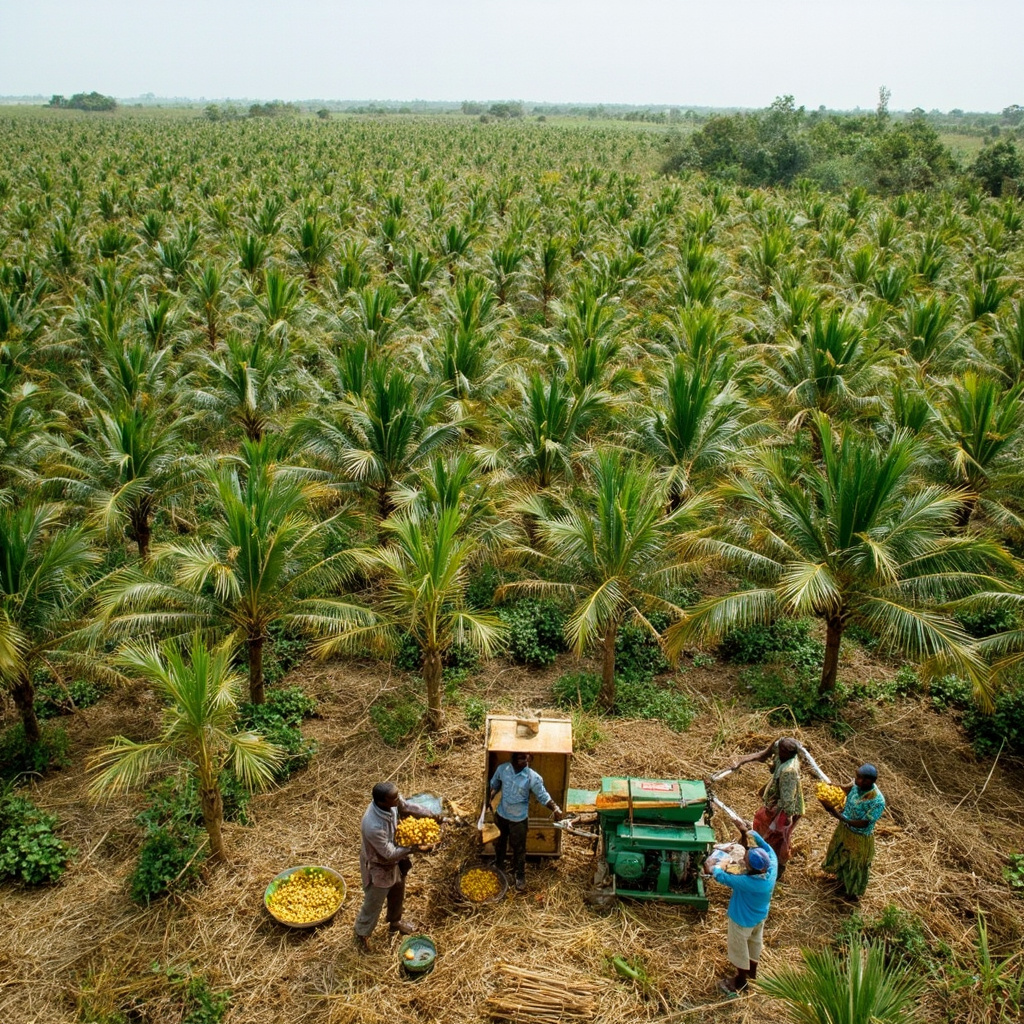
Nigeria's palm oil industry is currently navigating a significant productivity crisis, leading to a widening chasm between domestic supply and demand. Key stakeholders have identified several core impediments to growth, including suboptimal yields, inefficient processing methodologies, the widespread presence of ageing plantations, complex land acquisition hurdles, and prohibitive financing costs.
Annually, Nigeria expends an estimated $500 million to $600 million on importing over one million metric tons of crude palm oil. Industry figures, speaking to Daily Independent, underscore the critical necessity for Nigeria to swiftly address the sector's inherent structural weaknesses to curtail its dependence on imports and facilitate substantial investment. The recent implementation of stringent export controls and centralization policies by Indonesia, the world's leading palm oil exporter for strategic commodities, has further exacerbated Nigeria's vulnerability due to its reliance on external supplies, particularly as local producers continue to contend with low productivity and supply constraints. Stakeholders also emphasized the crucial role of the 2026–2050 National Oil Palm Development Strategy, describing it as an essential blueprint for repositioning the industry.
Alphonsus Inyang, National President of the National Palm Produce Association of Nigeria (NPPAN), affirmed that the strategy's approval by Senator Abubakar Kyari, Minister of Agriculture and Food Security, and Senator Abdullahi, Minister of State for Agriculture, lays a vital foundation for advancing the sector. Inyang pressed the Federal Government to initiate urgent implementation once the strategy is officially launched by the president, asserting that 'no sector can prosper without a roadmap.' He believes that effective execution could reinstate Nigeria's prominence in the global palm oil arena, recalling that the nation once commanded up to 60 percent of the worldwide industry approximately five decades ago. Among immediate interventions, he highlighted the importance of making planting materials and other essential inputs readily available to smallholder farmers. Inyang suggested that the government should provide these resources to at least two million smallholders, enabling each farmer to cultivate one hectare over a five-year period, thereby boosting domestic production and reducing the national import bill.
Austine Gbenga Adeniba, Chief Operating Officer at Eliakim Integrated Services Ltd, attributes Nigeria's palm oil deficit primarily to the low productivity of its smallholder farmers, who contribute approximately 80 percent of the country's total output. He contrasted this with major corporate entities like Presco and Okomu, which achieve yields comparable to international standards, while most smallholders rely on semi-wild groves. Adeniba noted that smallholders typically yield only one to three tons of Fresh Fruit Bunches per hectare, a stark contrast to the 20 to 25 tons per hectare achieved in Malaysia and Indonesia.
He identified inefficient extraction and significant post-harvest losses as paramount challenges. Most smallholders, he pointed out, still employ archaic processing techniques, including digester-screw presses and traditional manual pits. Consequently, extraction rates hover around 10 to 12 percent, significantly lower than the 20 to 23 percent achieved by modern industrial mills. This inefficiency, Adeniba explained, results in roughly 40 percent of the oil remaining unextracted in waste fibre, translating to the loss of hundreds of thousands of tons of oil each season from already cultivated and harvested trees. To counter this, he advocated for the mechanization of smallholder processing infrastructure, proposing a co-funded equipment grant scheme to replace manual pits with small-scale motorized digester-presses and hydraulic oil presses. He estimated that increasing smallholder extraction rates from 11 percent to 18 percent could instantly add hundreds of thousands of tons of crude palm oil to the domestic supply utilizing existing harvests.
Another critical challenge is Nigeria's ageing and low-yielding tree stock. Adeniba stated that millions of oil palm trees across the nation's palm belt have either surpassed their peak productive age of 25 years or comprise unselected, low-yielding Dura varieties. Smallholders, he observed, often lack the necessary capital and short-term income safety nets required to replace these older trees and endure the three to four years it takes for new, high-yielding Tenera hybrid seedlings to mature.
Land acquisition also presents a significant hurdle for large-scale investment. Commercial palm oil production, Adeniba elucidated, necessitates contiguous land tracts ranging from 5,000 to 10,000 hectares or more to justify the substantial capital expenditure required for modern crude palm oil mills. However, securing such expansive land under the Land Use Act is fraught with complexities, including intricate state bureaucracies, multiple community compensation demands, and overlapping customary land rights, all of which deter both domestic expansion and foreign direct investment.
The extended gestation period of oil palm, coupled with soaring interest rates, further complicates financing. Adeniba highlighted that the crop demands three to four years before its first harvest and approximately seven years to reach peak commercial yields, while commercial bank interest rates frequently exceed 25 percent. He therefore urged the provision of 'patient capital' featuring multi-year grace periods, proposing a National Oil Palm Expansion Facility to be channeled through development finance institutions such as the Bank of Industry and Development Bank of Nigeria. This facility, he suggested, should offer single-digit interest loans below 10 percent, complete with a four-year moratorium on principal repayments to better align financing terms with the oil palm's biological growth cycle.
Stakeholders also put forth an anchor-outgrower model centered around centralized processing mills. Adeniba recommended that state governments in Edo, Ondo, Cross River, Akwa Ibom, Imo, and Delta establish specialized land banks specifically zoned for oil palm production. Under this proposed model, corporate processors would establish industrial mills, while surrounding smallholders would be organized into structured outgrower schemes. Farmers would receive certified Tenera seedlings, fertilizers, and technical extension services from the anchor companies in exchange for guaranteed Fresh Fruit Bunch off-take agreements. Stakeholders further called for increased production and distribution of improved planting materials. Adeniba proposed public-private partnerships involving the Nigerian Institute for Oil Palm Research (NIFOR) seed gardens to commercialize and widely distribute sprouted Tenera nuts, thereby enabling private nurseries across palm-producing states to access certified, high-yielding planting materials.
To ensure a stable market for local producers, border enforcement and tariff harmonization were also identified as essential measures. Adeniba advocated for stringent origin tracking and quality checks at ports and borders to prevent the entry of unrefined or substandard palm oil through informal land borders. He asserted that shielding local producers from 'dumped' and low-grade imported oil would provide investors with the price predictability necessary to commit capital to long-term plantation investments.
For immediate impact, stakeholders suggested subsidized motorized mini-mills, more robust actions against border leakages and the dumping of unrefined products, and the rapid distribution of NIFOR Tenera hybrid seeds. Medium-term proposals included the establishment of Special Agricultural Processing Zones, single-digit patient capital facilities, and structured outgrower frameworks linked to anchor mills. These interventions, they emphasized, must synergize immediate measures to extract more oil from existing harvests with long-term reforms aimed at expanding plantations and enhancing productivity. Inyang reiterated that the implementation of the 2026–2050 National Oil Palm Development Strategy remains paramount to achieving these objectives. With appropriate interventions, stakeholders are confident that Nigeria can resolve its structural production constraints, reduce its dependence on imported palm oil, and regain its competitive edge in an industry where it once held a dominant position. Source: Independent Newspaper Nigeria