 Advertise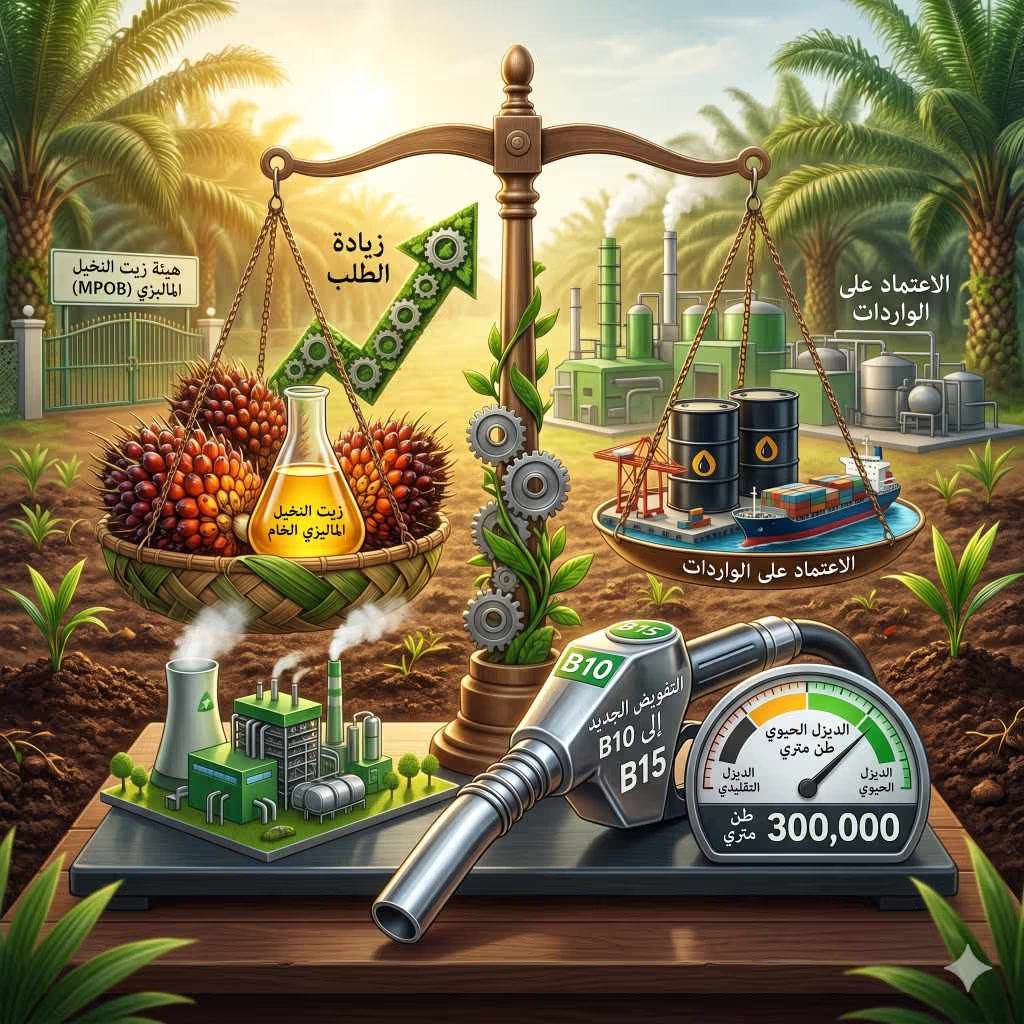
The Malaysian Palm Oil Board said Malaysia's consumption of palm oil-based biodiesel is set to rise by more than 300,000 metric tonnes a year, as the country joins Indonesia, the world's top producer, in raising biofuel blending rates to reduce reliance on energy imports.
On Tuesday, the Malaysian government said it would increase the mandatory biodiesel blend from 10%, known as B10, to 15%, without specifying a timeline. It will begin with a 12% blend, incurring no additional production costs and using only existing biodiesel blending facilities.
Malaysia, the world's second largest palm oil producer, currently mandates B10 for the transport sector, although a 20% mandate is implemented in the Federal Territory of Labuan, Langkawi island and the state of Sarawak, excluding the town of Bintulu.
In an emailed response to Reuters on Thursday, Malaysian Palm Oil Board director-general Ahmad Parveez Ghulam Kadir said the move from B10 to B12 is expected to lift biodiesel consumption by an additional 130,000 tonnes a year, while the subsequent expansion to B15 is estimated to boost consumption by around 204,000 tonnes a year.
He said: "The new mandate will benefit the national economy by easing dependence on imported fossil fuels, supporting the crude palm oil price and reducing the burden on diesel users."
Ahmad Parveez added that the biodiesel mandate will cover diesel sold at retail stations and other subsidised sectors, noting that the government may consider future expansion to the industrial sector, subject to policy decisions aligned with the national interest.
He explained that the gradual increase in domestic biodiesel consumption is expected to have only a marginal effect on palm oil exports, as Malaysia's crude palm oil production capacity remains robust, stressing that "total export volumes are expected to remain largely stable".
Malaysia produced 20.28 million tonnes of crude palm oil last year, with palm oil exports totalling 15.27 million tonnes.
Source: The Star