
Lang
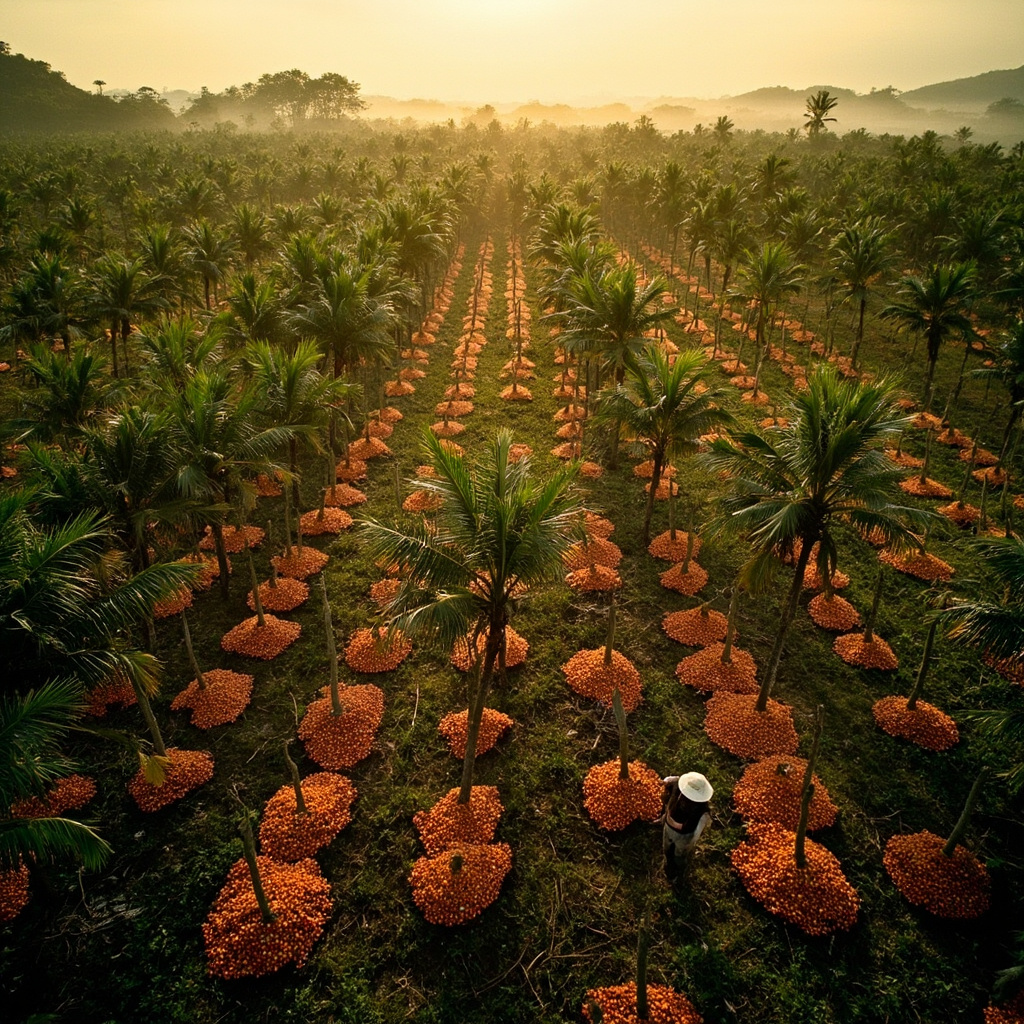
Malaysia's oil palm industry is heading into a period of mixed fortunes as the European Union Deforestation Regulation (EUDR) takes effect, according to UOB Kay Hian (UOBKH) Research.
The regulation will apply to large and medium operators from December 30, 2025, while smaller enterprises will fall under its scope by mid-2027.
On the positive side, Malaysia is uniquely positioned in the global palm oil trade because its Malaysian Sustainable Palm Oil (MSPO) certification is the only national sustainability scheme formally recognised by the European Union. This gives Malaysian plantation companies a potential edge in capturing a larger share of the contracting EU palm oil market, particularly in food-grade applications and oleochemicals, where verified traceability has become a baseline requirement.
However, Malaysia is currently classified as a 'standard risk' country under the EUDR framework, meaning its shipments will be subject to 3% annual compliance checks. This adds costs and scrutiny relative to competitors rated as 'low risk'.
The research house noted that the implications for the oil palm industry are significant. EU imports of palm oil have already fallen to 2.85 million tonnes in marketing year 2025/26, down 5% year-on-year, although most of that decline stems from biofuel exclusion policies rather than the EUDR itself.
The remaining demand pool, UOBKH observed, is smaller but far more tightly monitored. Compliant Malaysian cargoes could therefore command a price premium. Larger integrated planters such as SD Guthrie Bhd, Kuala Lumpur Kepong Bhd (KLK), and IOI Corp Bhd are well placed to absorb the compliance burden, while smaller and less traceable producers may struggle.
UOBKH highlighted the National Traceability System, which integrates e-MSPO, GeoSAWIT and SIMS, as central to Malaysia's push for eventual 'low risk' status.
Beyond Europe, the research house suggested that the same verification standards could eventually be adopted by buyers in Japan, South Korea and China. If that materialises, compliant Malaysian cargoes would enjoy wider market premiums, while non-compliant supply, especially from smallholders, could be squeezed out of the market.
This would likely reshape trade flows and consolidate market share among larger Malaysian planters with strong sustainability credentials.
UOBKH Research maintained an 'overweight' call on the plantation sector, underpinned by structural demand growth from regional biofuel mandates such as Indonesia's B50 policy. Its crude palm oil (CPO) price forecasts stand at RM4,500 per tonne for 2026 and RM4,400 per tonne for 2027.
The research house's top sector picks are SD Guthrie (buy, target price RM7.65), reflecting its strong RSPO coverage and sustainability track record, and KLK (buy, TP RM24.65), for its production growth and earnings recovery potential. IOI Corp also stands out with 100% traceability, with UOBKH placing a buy call on the stock at a target price of RM5.15 per share.
Source: The Star