 Advertise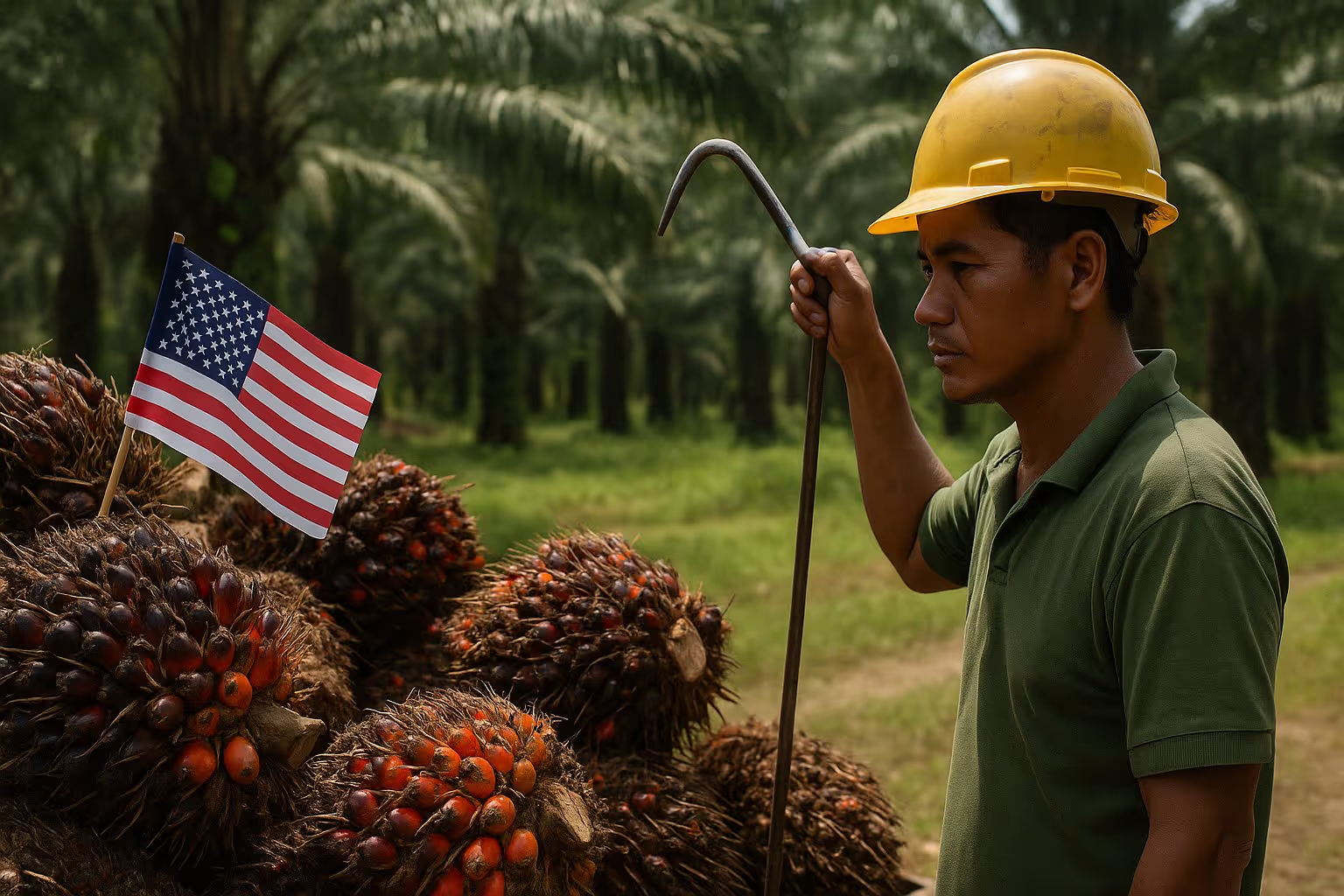
Malaysian Palm Oil Board (MPOB) chairman Datuk Mohamad Helmy Othman Basha stressed the need to diversify palm oil export markets to reduce dependence on any single export destination, amid tariff challenges imposed by the United States.
Mohamad Helmy said the United States’ 24% tariff on Malaysian palm oil exports represents a major challenge for the sector and could negatively affect export volumes and the interests of many industry players.
He added: “Although the duties may lead to lower exports to the US market, the greater negative impact will be on the United States itself because of limited alternatives to palm oil. Other oils cannot easily replace palm oil in US industries, meaning higher costs may ultimately affect American consumers.”
He made the remarks in his opening address at the 2025 Programme Advisory Committee (PAC) meeting, where he also emphasized the Malaysian government’s continued commitment to protecting the palm oil industry’s interests in the face of trade barriers.
Mohamad Helmy said the government is exploring all possible avenues, including diplomatic efforts and the use of international trade agreements, to ease the impact of these tariffs and ensure continued growth and sustainability for the palm oil sector.
He noted that the Ministry of Plantations and Commodities is actively working with its counterparts in ASEAN countries to formulate a coordinated regional response.
He added that Prime Minister Datuk Seri Anwar Ibrahim had emphasized the importance of ASEAN unity in addressing such trade barriers, calling for open supply chains and collective action.
During the meeting, MPOB also announced strengthened research efforts through the launch of a new focus area titled Technology and Socio-Economics (TSE) under PAC 2025.
This new focus aims to address the broader economic and social dimensions of palm oil industry development alongside existing technical and scientific pillars.
MPOB’s research and development activities had previously focused on five main areas: productivity improvement, climate-change adaptation, milling, processing and mechanization, food safety and nutrition, and value addition.
Mohamad Helmy also pointed to yield stagnation as a key issue for discussion at the meeting.
He said: “Although production has increased over the years, yields have remained stagnant. By December 2024, oil palm trees older than 25 years accounted for around 9.3%, equivalent to 520,067 hectares.”
He said the time has come to apply advanced biotechnology tools, breeding technologies, and cloning techniques to increase yields.
He also stressed that the health impact of saturated and aromatic mineral oil hydrocarbons in food products remains a matter of debate.
He noted that Malaysia had faced three shipment rejections of palm oil by two European countries because of these compounds.
He said: “Since most palm oil is used in food manufacturing, it is essential to act urgently to address the presence of these compounds in the value chain, especially at processing sites.”
The PAC meeting is held annually over four days and brings together industry stakeholders, academic experts, and specialists from local and international institutions.