 Advertise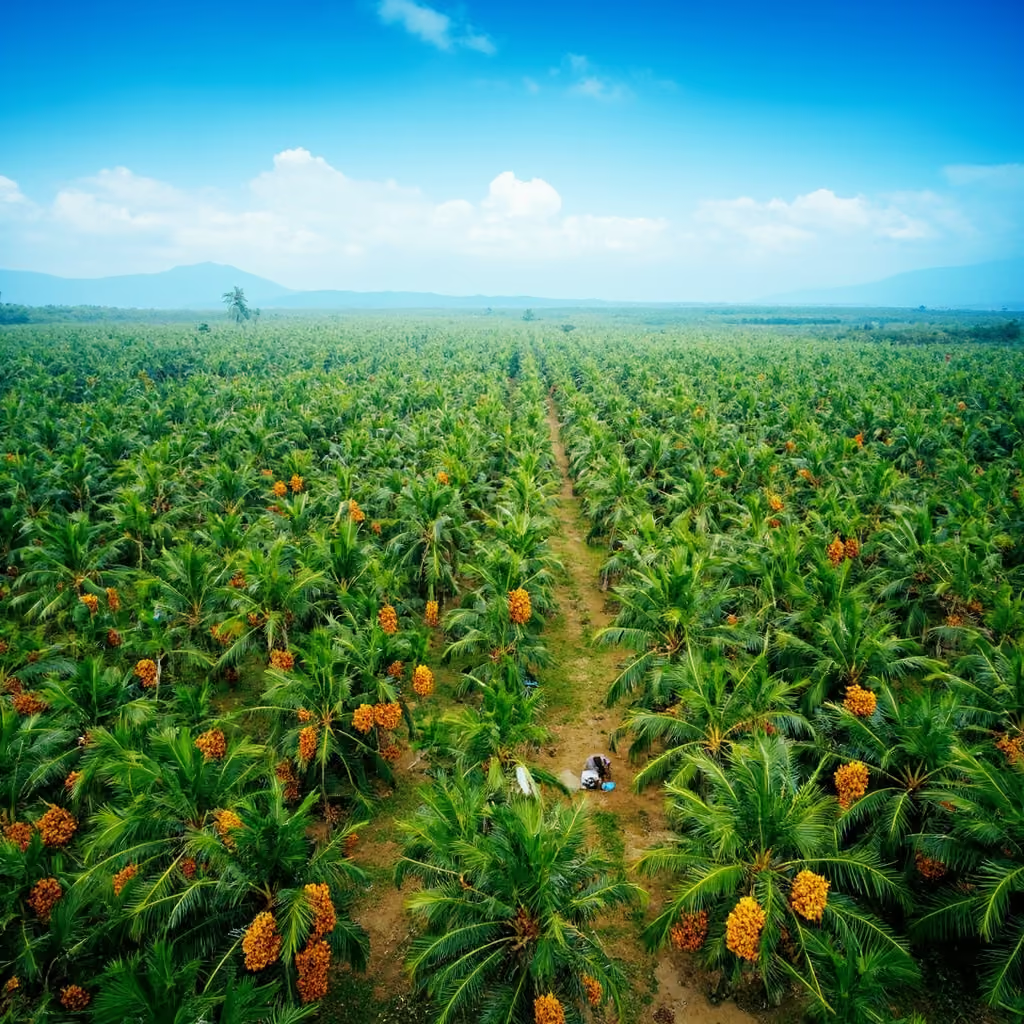
Indonesia, the world's second-largest rubber supplier, is experiencing a significant agricultural transformation as a growing number of smallholder farmers convert their rubber plantations to oil palm. This strategic pivot, driven by compelling economic incentives, poses potential implications for the global rubber supply chain, a critical commodity used across industries from automotive to healthcare.
Sumaryono, a 45-year-old Indonesian smallholder, exemplifies this trend. Three years ago, he invested his life savings of approximately US$2,200 to replace his 10-hectare rubber plantation with oil palm trees. He explains the shift, stating, 'Harvesting is done twice a month, we sell the fresh fruit bunches, and get cash. It doesn't need constant daily supervision like rubber.' Sumaryono manages his plantation in the Banyuasin regency of South Sumatra province, historically Indonesia's top rubber-producing region.
Farming rubber is notably more challenging than oil palm, according to Kevan Mitchell, director of Rubber Services Singapore 1877 (RSS1877). Rubber trees require five to seven years to become productive and necessitate tapping for sap every other day, a process increasingly hampered by a decline in skilled tappers. Official data from Indonesia's agriculture ministry reveals a 17 per cent reduction in land area for rubber plantations over the last five years, shrinking from 3.8 million hectares in 2021 to an estimated 3.1 million hectares by 2026. Correspondingly, production has plummeted from over three million tonnes in 2021 to a projected two million tonnes this year.
Arif Susanto, head of the rubber farmer association Apkarindo, estimates that in South Sumatra alone, up to 500,000 hectares may have already transitioned from rubber to oil palm. He pinpoints the primary catalyst as 'prices.' While rubber prices have seen some recovery in the past two years, they experienced a prolonged slump after reaching a record high in 2011. In contrast, palm oil prices, despite their inherent volatility, surged to unprecedented levels during the pandemic and continue to benefit from robust biofuel mandates.
Kastolani, 63, who converted seven of his 11 hectares to palm oil over the past two years after four decades of growing rubber, corroborates this, saying farmers are converting 'because they see better returns from palm oil.' He cited issues like ageing trees and labour shortages, alongside more favourable palm oil prices, as key factors. Indonesia, the world's largest producer of palm oil, has seen its successive governments actively promote the industry, which now contributes 8.3 per cent to the country's exports and 3.5 per cent to its gross domestic product.
Widyantoko Sumarlin from the Indonesian Rubber Association (Gapkindo) confirms that the conversion trend has accelerated significantly over the past seven to ten years. This acceleration is largely attributed to a sharp increase in fresh fruit bunch prices for palm oil, while rubber prices have largely stagnated. He also identified biodiesel demand as a contributing factor. The agriculture ministry acknowledges that falling rubber prices have indeed fuelled this transition. Heru Tri Widarto, secretary-general of the Directorate General of Estate Crops, stated that 'The government is seeking to boost the rubber sector's competitiveness, while urging farmers to consider the long-term economic and sustainability impacts of converting plantations.'
The global implications of this shift are palpable, particularly for the tyre industry, which consumes approximately 50 per cent of Indonesia's natural rubber output. A Michelin expert, who requested anonymity due to not being authorised to speak to the media, confirmed a significant drop in Indonesian natural rubber production over the last five years. The expert noted that 'The share of sourcing from Indonesia has declined due to limited availability, although the country remains a strategic and important supplier.'
Market analysis by Farah Miller, CEO of Helixtap Technologies, indicates a recent market reversal where Indonesian SIR20 has traded at parity with, and occasionally at a premium to, Thai STR20. This is a notable change from the past year, when Thai material consistently held a higher price point. This shift suggests that buyers may have less flexibility to substitute Thai rubber for any shortfall from Indonesia. While Indonesia's decline has been partially offset by increased volumes from other regions, notably West Africa, with Ivory Coast picking up some market share. This increased activity in African cargoes is also influenced by the European Union's deforestation-regulation deadline set for December 2026.
Source: The Business Times