 Advertise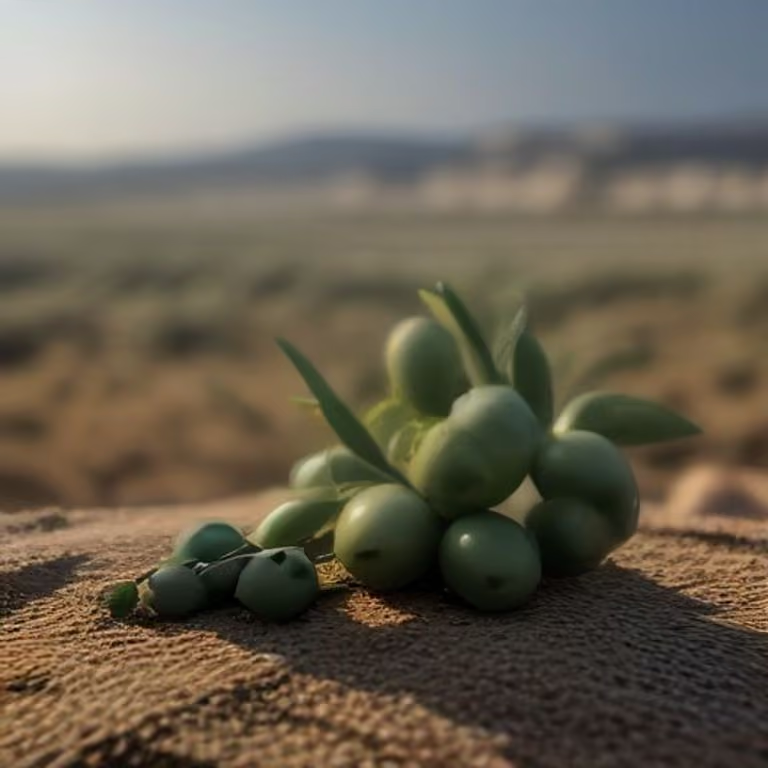
Europe's agricultural sector is grappling with unprecedented challenges as extreme heatwaves, prolonged drought, and widespread wildfires severely impact crop yields, signaling an impending rise in food prices across the continent. Farmers are issuing stark warnings of significant slumps in production, affecting a broad spectrum of foodstuffs from staple grains to fresh produce, with olive oil particularly vulnerable to further price hikes.
Olive groves, crucial for the region's culinary output, have been profoundly affected as the ongoing climate crisis pushes temperatures to record highs. This widespread distress across Greece, Italy, and Portugal, where groves have either burned or suffered from smoke, ash, and poor air quality, is expected to drive the cost of olive oil even higher, building on already elevated price levels. Industry experts, including Sarah Vachon, founder of Citizens of Soil, anticipate a price surge this autumn, citing 'reduced edible fruit availability'. Walter Zanre, head of Filippo Berio's UK operations, notes that while Spain, Europe's largest olive oil producer, has seen more normalized temperatures, drought conditions are causing trees to shed fruit, leading to an earlier harvest which could significantly impact 2024 production volumes and market prices. Prices for a one-litre bottle of extra virgin olive oil in UK stores, for example, already average above £7 and have recently begun to climb again in recent months. Beyond direct damage, the extreme weather has also led to an increase in pests, diseases, and severe storms, impacting overall fruit size and quality.
The repercussions extend far beyond olive oil. In France, the vegetable growers' association Légumes de France reports losses of thousands of tonnes of products, including salad leaves, carrots, leeks, garlic, and onions, valued at tens of millions of euros. Production for some crops is projected to be halved due to insufficient rainfall. French wine regions, such as Champagne, Bordeaux, and Burgundy, are experiencing stunted grape growth, threatening smaller crops and prompting what producers in Champagne expect to be their earliest harvest ever, potentially around August 15 – a full month ahead of typical schedules from decades past. Grape yields in Champagne are anticipated to be approximately 10% lower than last year.
Spain's Ministry of Agriculture forecasts a significant drop in the country's 2026-27 cereal crop, projecting a decline from 24 million tonnes last year to just over 18.5 million tonnes, a prediction made even before recent wildfires exacerbated the situation. This reduction occurs despite Spanish farmers' adaptations to hot, dry conditions through specific crop varieties and reliance on irrigation. Across the European Union, harvest predictions have been downgraded for several key commodities: sunflowers, vital for cooking oils, are down by 7%; grain maize by 6%; and potatoes and soya beans by 3%. The ASAJA agricultural trade body in Spain detailed direct fire damage to orchards, vineyards, and greenhouses, affecting citrus fruits, avocados, almonds, and vegetables, while water stress and extreme temperatures have further impaired tomato and maize production. The primary concern, according to ASAJA, is 'higher production costs' rather than restrictions on international trade.
Amidst this widespread agricultural distress, some regions have shown greater resilience or even positive outcomes. Romania, for instance, has benefited from increased rainfall, while Italy's wheat crop has demonstrated robust performance. Turkey stands out as a 'major positive exception', where a cool and wet spring contributed to record-high winter crop yields, with favorable prospects also anticipated for summer crops. Italy is similarly noted as 'one of the more positive stories' for wheat production used in flour for cakes and biscuits, with the European Commission forecasting a 10% increase in Italian output, supported by improved yields. Romania's maize harvest is predicted to reach 8.2 million tonnes this year, surpassing an official estimate of 7.75 million for 2025, following several years of drought.
Jason Bull, managing director of UK food importer Eurostar Commodities, explains that repeated heatwaves have accelerated the ripening and harvesting of winter crops across Europe, shortening the critical grain-filling period and potentially reducing grain size, quality, and overall yields. While winter harvests are progressing reasonably in many countries, summer crops face a 'much more serious threat' from drought, depleted soil moisture, and heat during flowering. He highlights that irrigated crops are generally performing better than rain-fed ones, but rising water demand and potential irrigation restrictions introduce additional risks. The UK itself has faced ongoing droughts impacting its harvest, leading wholesalers to procure staple items like iceberg lettuce and broccoli from Spain and other international sources amidst warnings of domestic shortages.
Source: The Guardian