 Advertise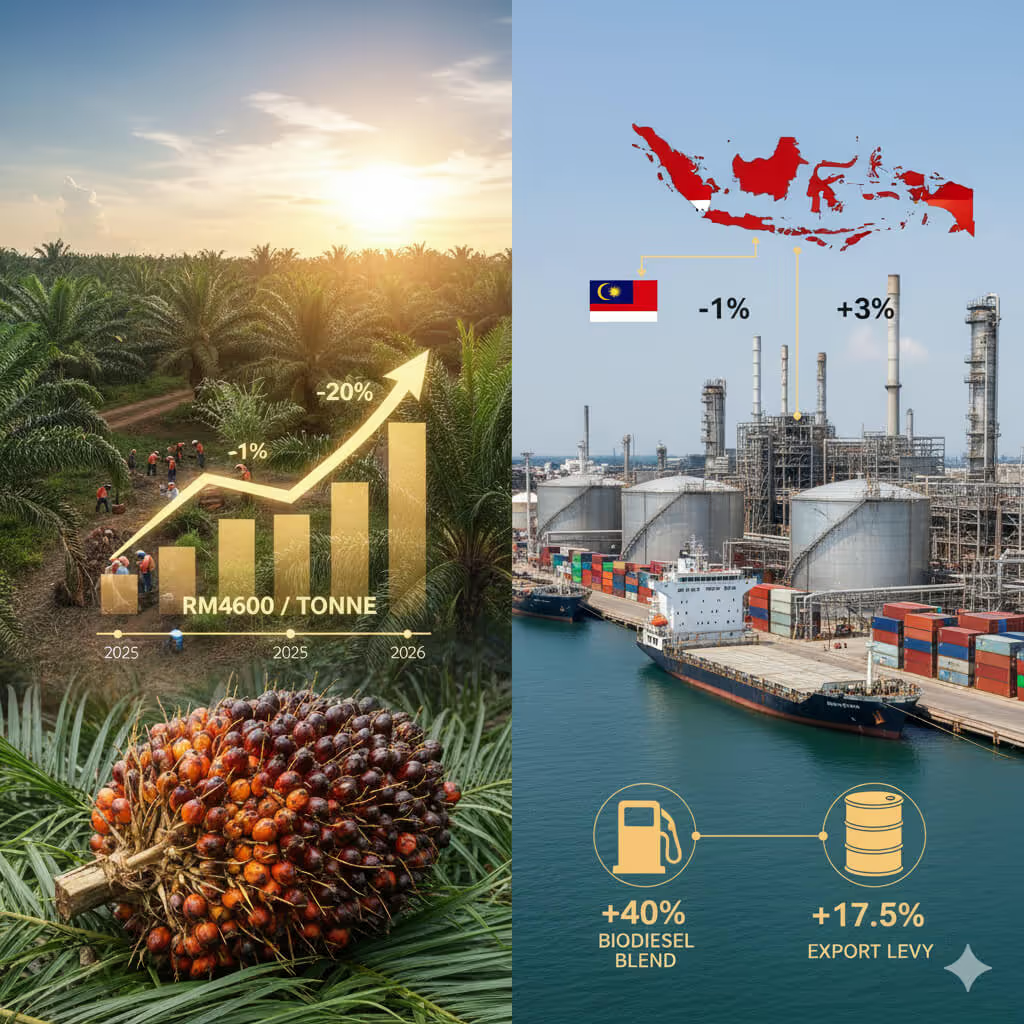
Crude palm oil prices are expected to stay firm, trading between 4,300 and 4,600 ringgit per tonne in the first half of 2026. The forecast, issued by Glenauk Economics, is underpinned by a significant delay in the peak production season, with yields not expected to start declining until December 2025 and January 2026.
The benchmark crude palm oil futures contract on Bursa Malaysia Derivatives closed at 4,115 ringgit per tonne last Monday.
In a report cited by CIMB Securities, Glenauk Economics warned that potential heavy rainfall in northern Peninsular Malaysia could cause a sharp drop in fresh fruit bunch yields, given the difficulty of accessing plantations and the disruption to harvesting activities.
While short-term volatility remains linked to shifts in Indonesia's biodiesel policy, Glenauk maintained that "palm oil fundamentals remain strong."
Production Outlook:
The delayed production peak and low closing stocks are key factors behind Glenauk's more bullish crude palm oil price outlook, which exceeds CIMB Securities' in-house estimates of 4,330 ringgit per tonne for 2025 and 4,200 ringgit per tonne for 2026.
Glenauk said it "expects a limited pullback in crude palm oil and anticipates prices rising in early 2026, supported by tight supply, resilient biodiesel demand, and continued government support."
This environment is expected to be positive for Malaysian plantation companies, which stand to benefit from strong prices and potentially stronger earnings, but could be neutral to somewhat negative for Indonesian players given the anticipated increase in export levies.
CIMB Securities recommends a "buy" call on IOI Corp Bhd, SD Guthrie Bhd, Ta Ann Holdings Bhd and Hap Seng Plantations Holdings Bhd, given their limited exposure to Indonesia and their leverage to Malaysian crude palm oil prices.
On the policy front, Glenauk expects Indonesia to maintain its B40 biodiesel mandate in the first half of 2026, before transitioning to B45 by the second half of the year. To help fund the programme, export levies are expected to rise by 5 to 7.5 percentage points, bringing total levies to 15%-17.5%, between November 2025 and January 2026.
Currently, 23% of Indonesia's crude palm oil output is used for biodiesel production under the B40 mandate. That share could rise to 41% under a full B50 rollout, which would consume around 21 million tonnes of crude palm oil — a 25% increase on current requirements.
Source: The Edge Malaysia