 Advertise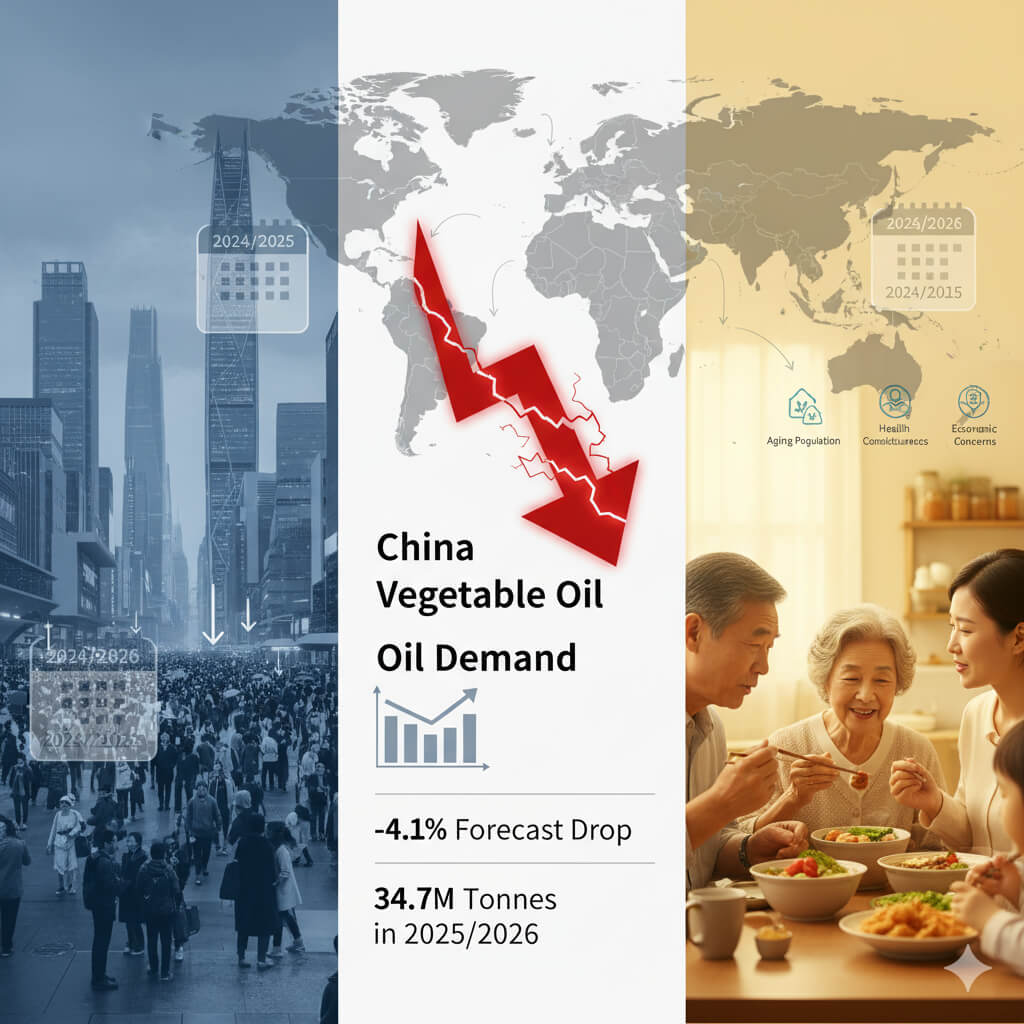
Beijing, China — China’s total demand for edible vegetable oils is expected to decline by 4.1% in 2025–2026 to 34.7 million tonnes, according to a report from the US Department of Agriculture (USDA).
The USDA report, China: Oilseeds and Products Update, issued on September 26, said several key factors are contributing to the forecast. These include lower dining out because of economic concerns, rising consumer health awareness, and a shrinking and ageing population.
The latest forecast would be 1.9% below the 2024–2025 estimate of 35.36 million tonnes.
Slower Economic Growth and Its Impact on Consumption
According to China’s National Bureau of Statistics (NBS), the country’s GDP grew by 5.3% in the first half of 2025. Although food service revenue in the first half of 2025 reached CNY 2.75 trillion, or $387 billion, up 4.3% year on year, monthly growth slowed to 0.9% in June.
Stricter government rules on official dining are expected to affect the hotel, restaurant, and institutional (HRI) sector, reducing vegetable oil consumption in that segment.
Demographic Changes Limit Consumption
China’s population has declined over the past three years. According to the China Population Report 2024, the population fell for the third consecutive year, with a net decrease of 1.39 million people compared with 2023.
Although about 9.54 million babies were born in China in 2024, up 5.7% from the previous year and marking the first increase in births in nearly ten years, demographic conditions remain challenging.
In addition, USDA’s Foreign Agricultural Service (FAS) noted that China’s population is ageing. According to NBS data, people aged 60 and above accounted for 18.7% of the total population in 2020, rising to 22% in 2024.
The report noted that older consumers generally consume smaller amounts of vegetable oils, offsetting the upward consumption trend caused by urbanization and per capita GDP growth.
Health Advice and Its Impact on Consumption Patterns
The USDA said that as per capita vegetable oil consumption has risen, Chinese nutritionists and related organizations have urged consumers to be cautious about increasing vegetable oil intake.
At the same time, the report said China’s bakery industry has grown over the past few years and appears to be the main driver of vegetable oil use.
Other Vegetable Oil Consumption Forecasts
The August CASDE report forecasts vegetable oil consumption at around 34.11 million tonnes in 2025–2026, down from 34.85 million tonnes in the previous year.
Vegetable oil consumption for feed use in 2025–2026 was maintained at 1.3 million tonnes, unchanged from 2024–2025.
China’s August Agricultural Supply and Demand Estimates (CASDE) forecast vegetable oils for feed and other uses at 2.54 million tonnes, slightly above 2.50 million tonnes in the previous year.
Lower prices for key feed ingredients, including soybean meal and corn, are expected to slow growth in vegetable oil use for feed.
Impact of Palm Oil Prices on Imports
The USDA also lowered its estimates and forecasts for industrial palm oil use because of lower imports following higher palm oil prices. The report said slower production growth and higher domestic consumption in Indonesia and Malaysia have pushed palm oil prices higher.
According to USDA sources, the decline in total vegetable oil consumption, including palm oil, may be linked to lower demand for used cooking oil exports.
Vegetable oil imports in 2024–2025 were reduced to 6.4 million tonnes from 9.7 million tonnes in the previous report, based on a significant decline in palm oil and sunflower oil imports.
The forecast for vegetable oil imports in 2025–2026 stands at 6 million tonnes. The report said vegetable oil import volume is limited by sufficient domestic oilseed crushing and weak consumption.