 Advertise
Note: This article was AI-translated from Arabic and is currently under manual review. The author is not responsible for any translation errors. Please refer to the original Arabic text for the most accurate and authoritative information.
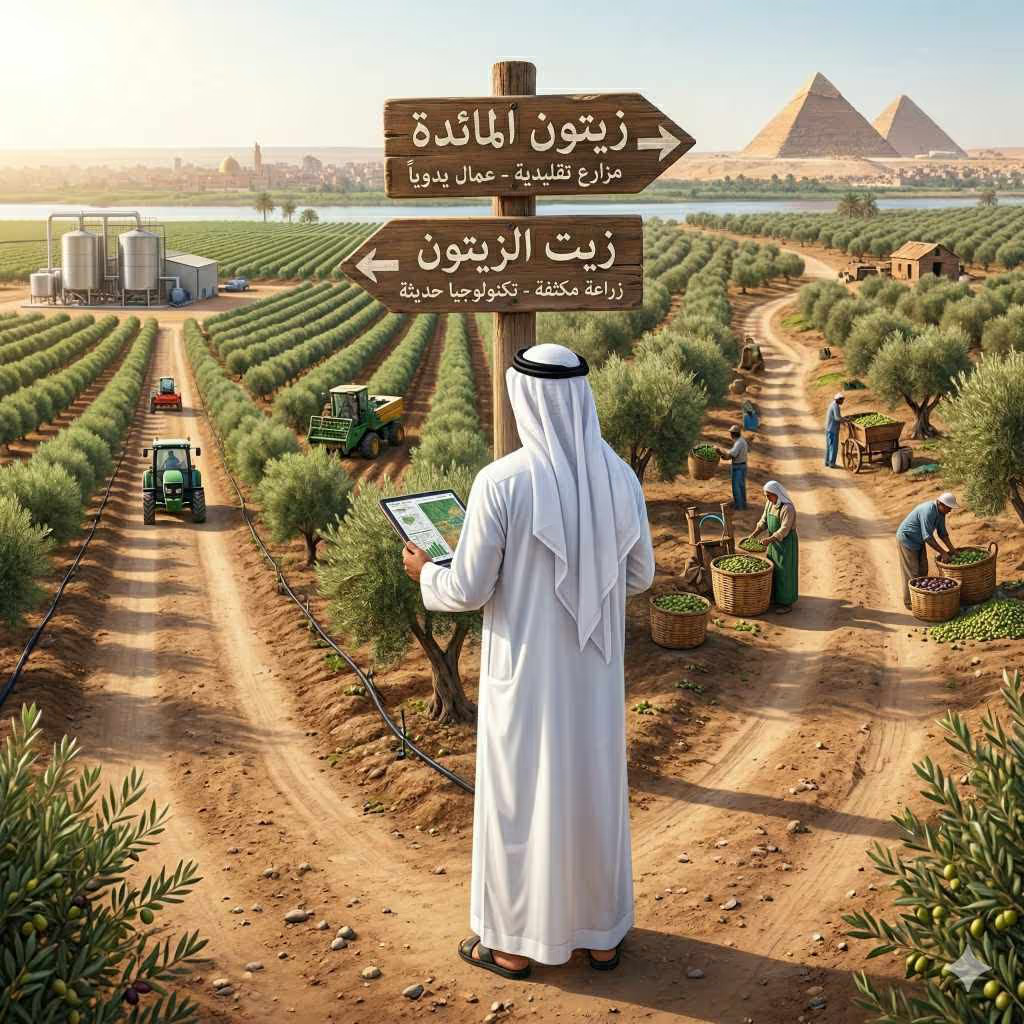
The Arab investor stood Abu Abdullah before his team of agricultural consultants, having just completed a long journey of procedures and facilities provided by Egypt to investors in the agricultural sector.
Abu Abdullah sat at the head of the table, a large screen displaying Egypt's agricultural map before him. The team of consultants entered with confident strides, each carrying files and tablets.
Abu Abdullah said, "I want to start an olive cultivation project in Egypt… but I'm still undecided: should I go for table olives or oil olives?"
The team leader smiled and said, "Let's start from the beginning… from Egypt itself."
The first consultant opened a slide showing global data and said, "Egypt isn't just a country that grows olives; it's the world's leading producer of table olives. This means the local market is strong, exports are thriving, and demand continues to rise. Varieties like Toffahi, Azzizi, Kalamata, Agizi, and Dolci aren't just good varieties; they are globally sought after for pickling."
Another consultant interjected, saying, "And most importantly… the return cycle for table olives is faster. You plant today… and start reaping profits in a relatively short period."
Abu Abdullah then asked, "Excellent… but what about oil olives?"
The screen lit up with an image of intensive olive groves in Spain, Italy, and Tunisia. The third consultant said, "Oil olives are a different story. The world is seeing a significant increase in demand for extra virgin olive oil, especially in Europe, the Gulf, and the United States."
He then presented figures illustrating:
He added, "But to achieve high profitability, you need intensive or high-density cultivation. This is where global varieties like these come in:"
Abu Abdullah asked: "Does this type require a greater investment?" The consultant replied: "Yes, but it's a long-term investment... and its returns grow over time."
The team sat around the table, and the discussion began to take a more serious turn:
"Here's the bottom line:"
A quick comparison of the two options:
| Factor | Oil Olives | Table Olives (Pickling) |
|---|---|---|
| Current Profitability | Medium | Higher and faster |
| Global Demand | Continuously increasing | Very strong |
| Required Investment | Higher (modern technologies) | Medium |
| Suitability | Modern and intensive farms | Traditional and small farms |
| Varieties | Koroneiki - Arbequina - Arbosana | Tuffahi - Azizi - Kalamata - Agizi - Dolce |
Then the team leader added: "Some investors choose the smart solution: Allocating part of the land for table olives and another part for oil olives; to achieve a balance between quick profit and future investment.
Abu Abdullah smiled and said: "Now… the picture is completely clear. Let's start planning."
Through this discussion, Abu Abdullah realized that successful agricultural investment doesn't depend solely on the type of tree, but on vision, objective, and strategy. And Egypt, with its rich agricultural history and global position in olive production, remains one of the best destinations for agricultural investment in the region.