Advertise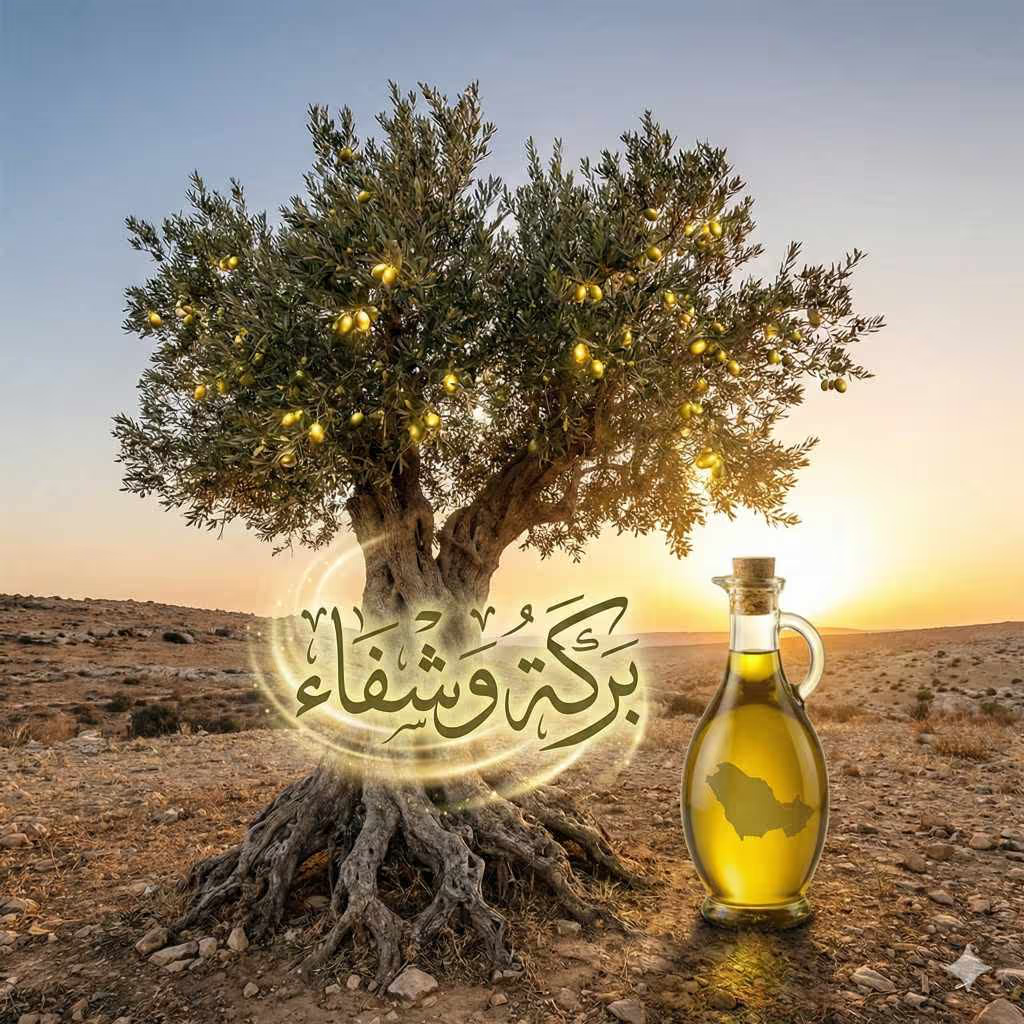
Note: This article was AI-translated from Arabic and is currently under manual review. The author is not responsible for any translation errors. Please refer to the original Arabic text for the most accurate and authoritative information.
During a family gathering, we were watching a TV program by Dr. Abd El-Baset Mohamed El-Sayed about Prophetic Medicine and herbal remedies. The discussion was about olive oil and honey. A statement caught my attention, mentioning that the Arab region is blessed by the Almighty. This was evident from the number of phenolic compounds in olive oil grown in the Arab region, which reaches 60 components, while the number of components in any other region decreases to 40 components.
This prompted me to search for the origin of this blessing, and the starting point was the Quranic verse:
﴿وَشَجَرَةً تَخْرُجُ مِن طُورِ سَيْنَاءَ تَنبُتُ بِالدُّهْنِ وَصِبْغٍ لِّلْآكِلِينَ﴾ (Surah Al-Mu'minun: 20)﴿وَٱلتِّينِ وَٱلزَّيۡتُونِ (1) وَطُورِ سِينِينَ (2)﴾ (Surah At-Tin)
By "Tur Sinin" is meant Mount Sinai, which is the mountain where God spoke to Moses (peace be upon him). The olive tree that grows in this blessed region produces oil with different characteristics than any other region in the world. Why? Let's find out together.
The question in general: Does the location where olive trees are grown directly affect the number and quality of phenolic compounds in olive oil? Indeed, climatic factors, soil type, and regional weather conditions contribute to the formation of these compounds, as they are influenced by the oil's quality and ripeness, temperatures, pruning, and agricultural practices.
Key influencing factors include:
The variation of these factors from one region to another leads to differences in the oil's chemical composition, and consequently, variations in the proportion of phenolic compounds, which are indicators of quality and health.
Olive trees in the Arab region (e.g., Egypt, Syria, Jordan, Tunisia, Palestine, Saudi Arabia, and Libya) often contain higher concentrations of phenolic compounds (antioxidants) and a greater number of phenolic compounds, reaching up to 60 phenolic compounds, compared to their European counterparts, which reach up to 40 phenolic compounds and in lower concentrations.
This is mainly due to harsh climatic conditions, as drought and high temperatures lead the tree to secrete more of these compounds to protect its fruits, especially in traditional, long-lived varieties.
The increase in phenols (polyphenols) in olive oil, especially in extra virgin olive oil, is of great importance to humans, offering numerous benefits that are discovered day by day, including:
While Europe (Spain and Italy) produces the largest quantities of olive oil globally, Arab olive oil, with its phenolic content (which gives the oil a strong aroma), boasts very high health and nutritional quality.