Advertise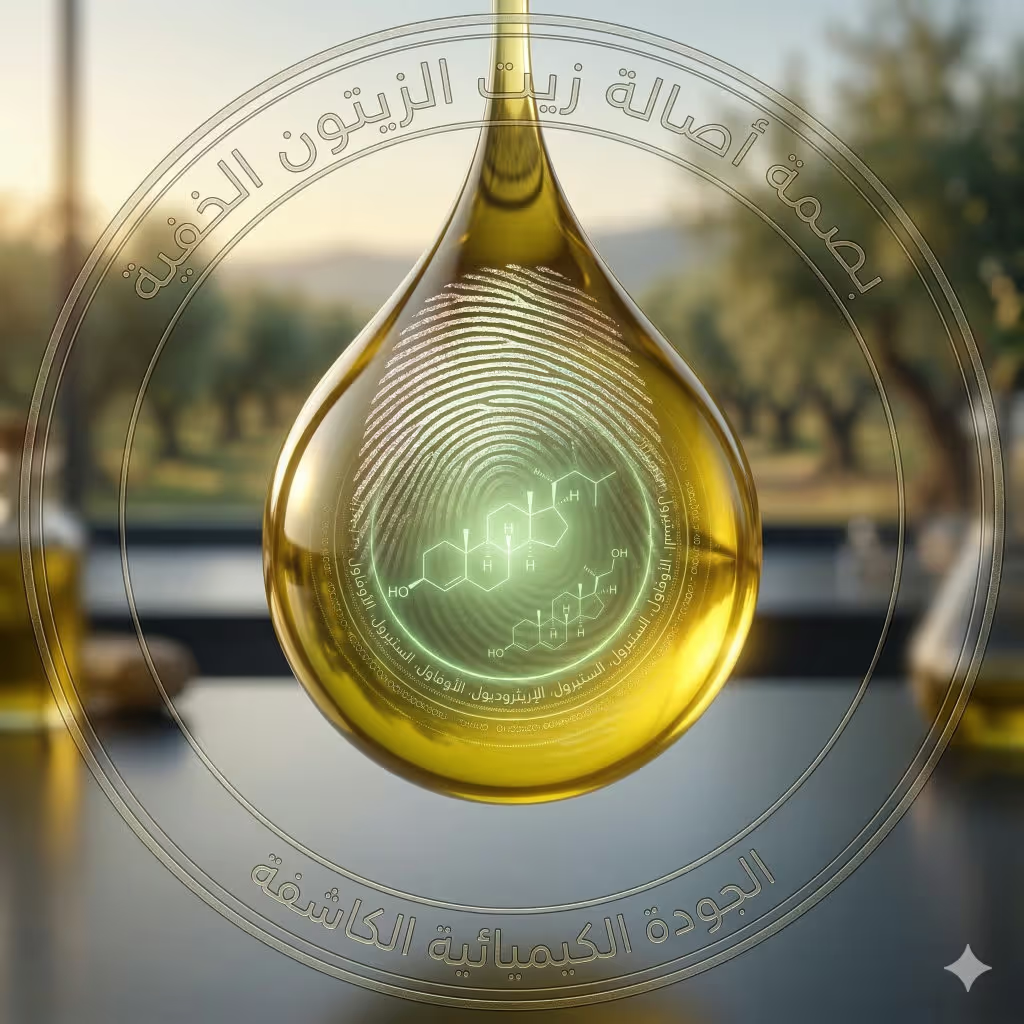
Note: This article was AI-translated from Arabic and is currently under manual review. The author is not responsible for any translation errors. Please refer to the original Arabic text for the most accurate and authoritative information.
Every time Haj Hussein considers buying olive oil for repackaging at his factory, he finds himself puzzled. So, he decided to ask the companies he buys from. This conversation revealed a secret many don't know:
Haj Hussein: "I have a puzzling question. Whenever I buy olive oil, they tell me: 'first cold press,' 'extra virgin,' and so on. But how can I really know if the oil is authentic and not adulterated?"
Engineer Ahmed (from Al-Khair Olive Oil Production Company): "That's an important question. Smell and taste are important, but there are precise laboratory tests that reveal the truth. The most important of these are sterol, erythrodiol, and oleanolic acid analysis. Many people don't know about these tests, but they are among the strongest indicators of oil quality."
Haj Hussein: "This is the first time I've heard of these tests... So, can they detect if the oil is mixed with other oils?"
Engineer Ahmed: "Yes, with great accuracy. These compounds have internationally defined ratios, and any deviation immediately reveals adulteration. Because olive oil is a high-value food product, and with the spread of adulteration, it has become essential to rely on precise chemical analyses to reveal the oil's authenticity and purity. Among the most important of these analyses are sterol, erythrodiol, and oleanolic acid analysis, which are standards approved by the International Olive Council (IOC)."
Sterols are natural fatty compounds found in olive oil, and they are considered one of the most important indicators of the oil's origin and purity.
Approved Scientific Ratios for Sterols:
| Sterol Type | Permitted Percentage in Extra Virgin Olive Oil |
|---|---|
| Beta-sitosterol (β-sitosterol) | More than 93% of total sterols |
| Campesterol | Less than 4% |
| Stigmasterol | Less than 1.4% |
| Delta-7-stigmastenol (Δ7-stigmastenol) | Less than 0.5% |
What do these numbers mean?
These two compounds belong to the triterpene alcohols. Their levels typically increase in low-quality or refined oils.
Approved Scientific Ratios:
What does exceeding these ratios indicate?
If the percentage exceeds 4.5% in an oil marketed as extra virgin, this indicates:
Sterol, erythrodiol, and uvaol analysis is not just a laboratory test; it is a crucial tool for detecting adulteration and ensuring the authenticity of olive oil. Although many are unaware of its importance, it is one of the most precise tests that determines oil quality and reveals any manipulation of its components.
With the widespread adulteration in markets, awareness of these analyses becomes essential for anyone concerned about their health and wishing to obtain pure, authentic, and highly nutritious olive oil.
"Quality is not just in color or texture, but in the scientific figures that reveal the truth."