 Advertise
Note: This article was AI-translated from Arabic and is currently under manual review. The author is not responsible for any translation errors. Please refer to the original Arabic text for the most accurate and authoritative information.
Sunflower oil (Sunflower Oil) is one of the vegetable oils extracted from sunflower seeds. It is a light oil with a good flavor and is suitable for use in cooking.
Sunflower oil currently ranks fourth in the world among industrial oil crops, with Russia and Ukraine leading the first and second places in the world in its production.
Sunflower oil contains a high amount of unsaturated fat and is often used to prepare different foods and dishes due to its low content of saturated fat. This oil is divided into two main types depending on its content of oleic acid.
The difference in the composition of fatty acids makes a fundamental difference in the uses and stability of the oil:
This type is produced from sunflower seeds that are specially modified or grown to produce oil rich in oleic acid.
It is produced from traditional sunflower seeds.
Due to this fundamental difference, it has been necessary to conduct research that allows rapid detection of the difference between types of sunflower oil.
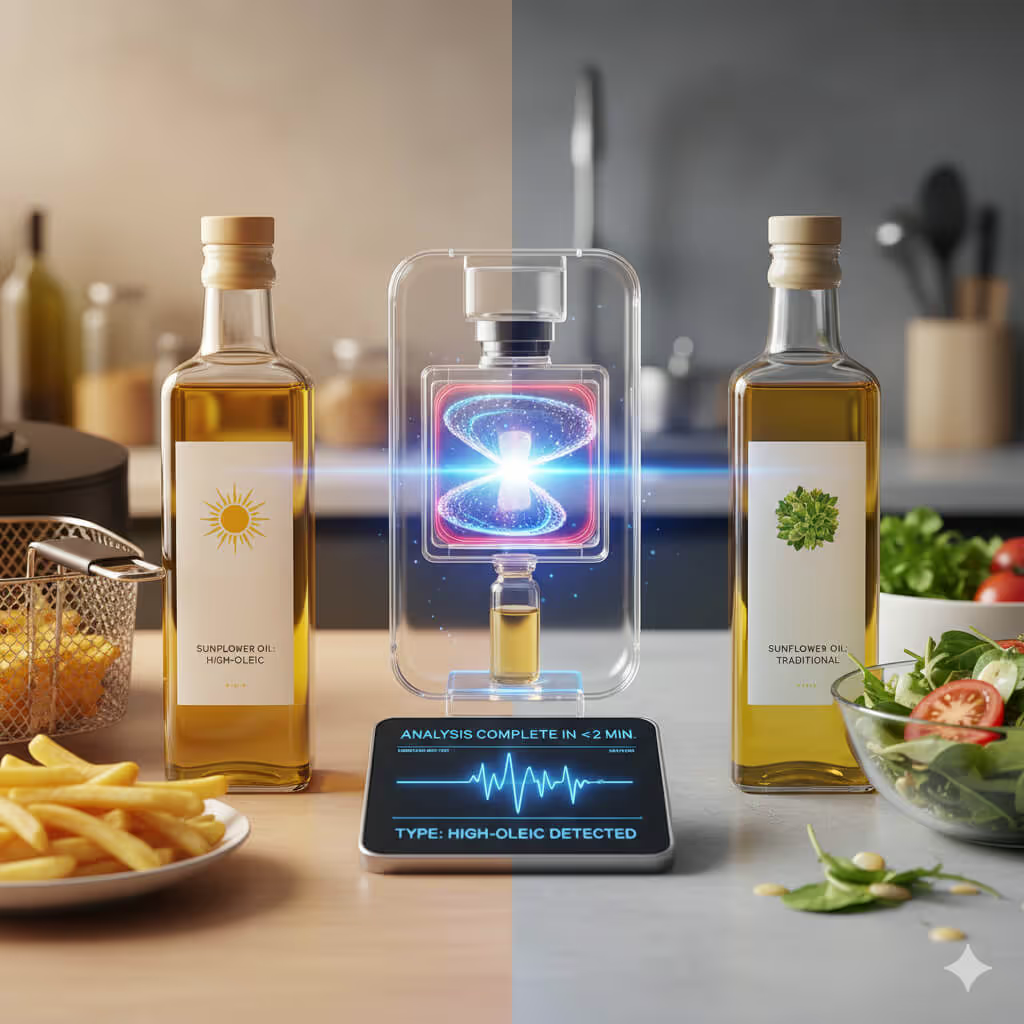
In this context, researchers at the University of Granada have designed an innovative technique that enables the accurate identification of the different types of sunflower oil available in the market. This system is based on oil spectroscopy and shows results in less than two minutes, without the use of chemicals and with the least possible environmental impact, which is in line with the “green analytical chemistry” philosophy aimed at consumer protection.
This methodology combines “instrumental fingerprinting” with advanced chemical measurements, enabling it to distinguish patterns that are invisible to the human eye. This clearly distinguishes between low-oleic and high-oleic sunflower oil.
“High oleic” sunflower oil has become an increasingly popular choice for cooking and frying, in addition to being used as an ingredient in cocoa cream or baked goods.
Its high nutritional value compared to other vegetable oils (such as palm oil or rapeseed oil) is due to its high concentration of oleic acid, which gives it health benefits similar to those provided by virgin olive oil.
Guillermo Jimenez Hernandez, the project's principal investigator and member of the Department of Analytical Chemistry at the University of Granada, says: “This characteristic also increases its price, so it is essential to ensure that consumers get exactly what they buy.”
This innovative, fast, portable and environmentally friendly tool is ahead of current government regulations and comes in conjunction with regulating sunflower oil categories based on their fatty acid content.
We find that this development is not only an advantage for the food industry and regulatory bodies, but it is an important shift for consumers who will be able to obtain the oil they want specifically.