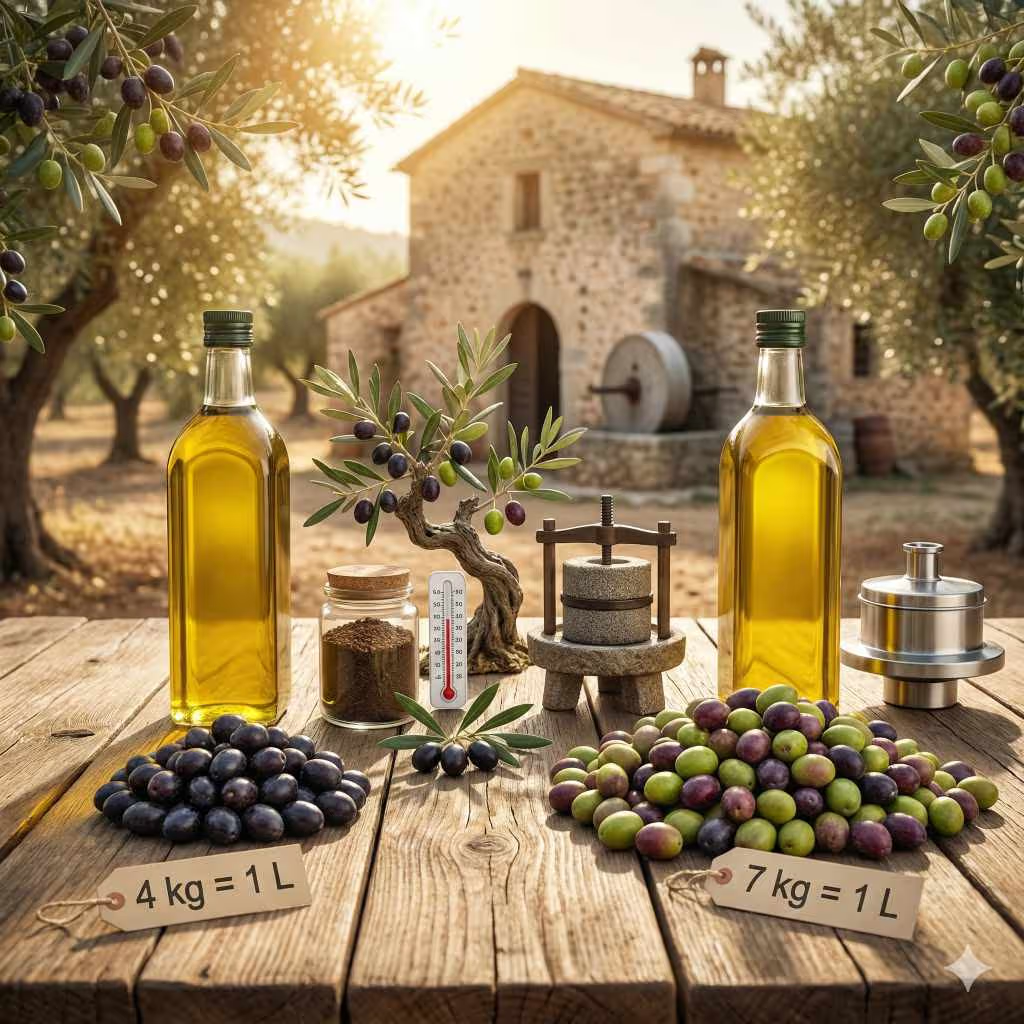
Imagine you are standing in front of an olive oil mill during harvest season, watching the olives turn into that golden liquid everyone loves. You ask yourself: why does the amount of oil extracted differ from one farm to another? And why might 4 kilos of olives yield one liter of oil while another needs 7 kilos to obtain the same liter?
This question is asked by farmers and consumers every year, and the answer is not simple. The oil extraction process is a precise scientific journey in which the tree's genes intertwine with the farmer's experience and modern pressing techniques. Let us dive together into the secrets of this journey.
Variation in Extraction Ratios: The Truth and the Numbers
The olive oil extraction ratio usually ranges between 12% and 25% (and sometimes reaches 30% in special cases), a wide gap that reflects the influence of intertwined factors. Not all fruits are the same, nor do all mills operate with the same efficiency.
First: Agricultural Factors (Before the Mill)
1. Olive variety (genetics)
- Varieties differ genetically in their ability to store oil.
- There are table varieties (for pickling) in which the oil proportion is low, and specialized "oil" varieties in which the oil proportion exceeds 18-20% of the fruit's weight.
2. Degree of ripeness and harvest timing (the common misconception)
- The scientific truth: the tree stops producing oil (the biosynthesis process) when the fruit reaches the stage of "physiological ripeness" (when the color begins to change).
- Why do black olives give more oil? Because black fruits lose their water, so the oil becomes more concentrated relative to weight, but the net amount of oil has not actually increased.
- The equation: early harvesting (green/colored olives) gives a premium oil full of antioxidants (polyphenols) but in a slightly smaller quantity due to the presence of water. Very late harvesting gives a larger "apparent" quantity but exposes the oil to oxidation and causes it to lose its distinctive flavor.
3. Climatic conditions and irrigation
- Contrary to popular belief, high humidity harms the oil proportion. Sunny and relatively dry regions (with measured irrigation) push the tree to concentrate the oil in the fruits.
- Excessive irrigation before harvest makes the fruits "watery," which reduces the proportion of extracted oil and makes the separation process in the mill more difficult.
4. Tree and soil health
- Infestation by pests such as the "olive fruit fly" destroys cell walls and catastrophically raises the acidity of the oil even before pressing.
- Balanced fertilization (especially potassium) plays an essential role in filling the fruits with oil.
Second: The Role of the Mill (Engineering and Chemistry)
Even if the fruits are ideal, the mill is the "bottleneck" that may preserve this treasure or squander it:
1. Malaxation Time
- The malaxation stage is considered the most important stage for releasing the oil droplets from the cells.
- The ideal time: from 30 to 45 minutes.
- The danger: increasing the time beyond 60 minutes may marginally increase the extracted quantity, but it leads to oxidation of the paste and the breakdown of aromatic compounds and antioxidants, producing a "dead" oil in terms of benefit and flavor.
2. Temperature (the "cold pressing" law)
- For oil to be classified as "extra virgin" and cold-extracted, the temperature of the paste must not exceed 27 degrees Celsius (not 28 or 30).
- Raising the temperature increases the extracted quantity, but it destroys vitamins and changes the taste of the oil, making it closer to cooked commercial oils.
3. Separation technology (centrifugation)
- Modern mills (two-phase or three-phase systems) differ in their efficiency. Adjusting the speed of the "decanter" and its cleanliness determines the amount of oil lost with the solid waste (pomace).
4. Logistics management (transporting and storing the fruits)
- The 24-hour rule: olives must be pressed within 24 hours of harvesting.
- How to transport: ventilated plastic crates must be used. Transporting in closed bags raises the temperature of the fruits and causes immediate "fermentation" that damages quality.
An important clarification about storage
A distinction must be made between storing the fruits and storing the oil:
- The fruits: are not stored, but pressed immediately.
- The produced oil: is the one stored in conical "stainless steel" tanks, in a cool and dark place, and it is preferable to pump an inert gas (such as nitrogen) to expel oxygen and prevent oxidation.
Conclusion: The Expected Amount of Oil
Based on the above, producing one liter of high-quality olive oil usually requires between 4 and 7 kilos of olives.
Producing olive oil is not just about pressing the fruit, but an interconnected chain of smart decisions. It begins with choosing the variety, passes through controlled irrigation and harvesting at the ideal time, and ends with a mill that respects temperature and time standards. Understanding these factors is the difference between obtaining mere "fats" and obtaining the "liquid gold" that carries healing and nourishment.
 Advertise