Advertise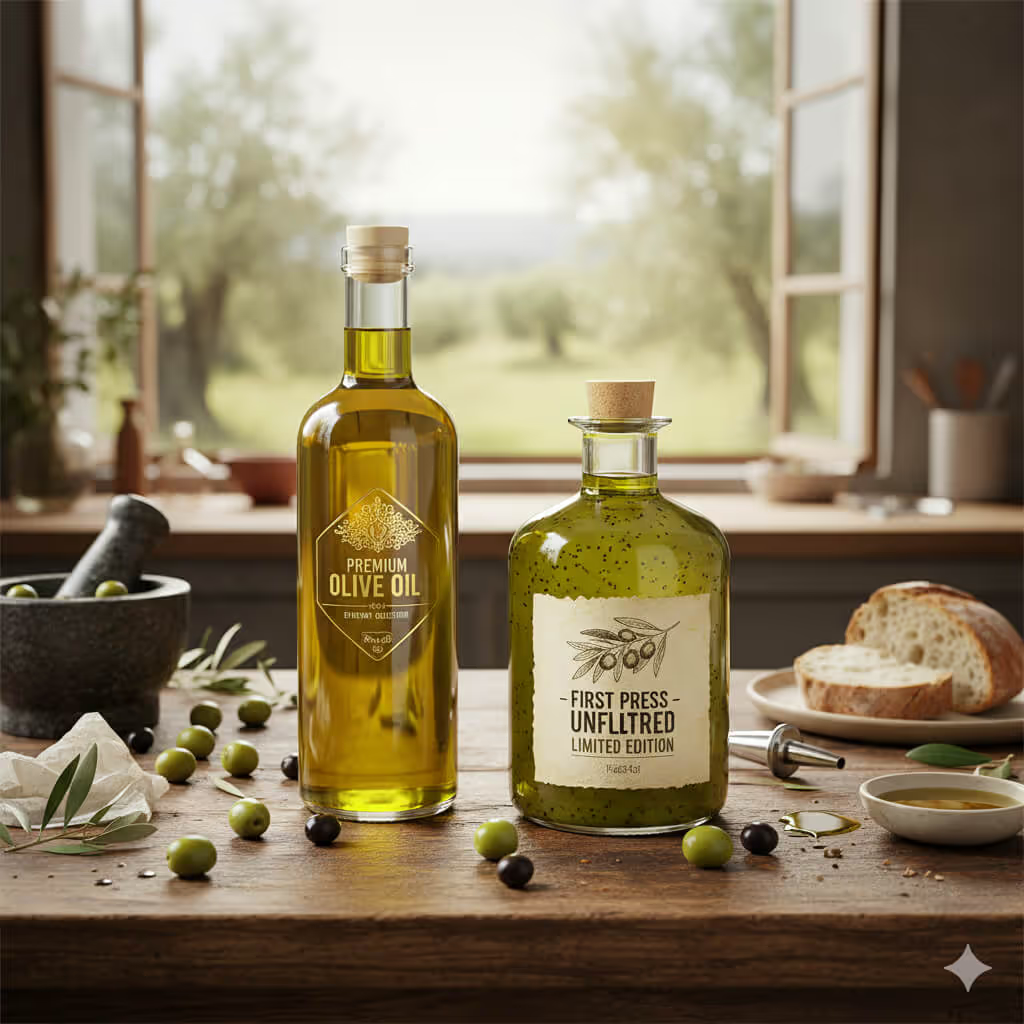
Note: This article was AI-translated from Arabic and is currently under manual review. The author is not responsible for any translation errors. Please refer to the original Arabic text for the most accurate and authoritative information.
It is considered olive oil One of the best and most versatile oils on earth. Homer, the Greek poet, gave him the title “Liquid Gold”It has been produced for thousands of years and is an essential part of the famous Mediterranean diet.
Olive oil is made by extracting oil from olives, whether by pressing, pressing or centrifuging recently. After that, olive oil can be filtered and bottled, or packaged unfiltered.
The purpose of filtering is to purify the oil and remove any remaining water or sediment. Fresh olive oil contains fine drops of water and small pieces of sediment from the fruits.
Producers use a cellulose paper filter to remove these fine drops of water and small pieces of olives, keeping the oil completely pure. Filtering helps to:
Producers looking for an alternative to mechanical filtration usually resort to placing olive oil in tanks for long periods of time to get rid of deposits. The oil position for marinating depends on gravitationalOver time, deposits are deposited at the bottom of the tank, making it easier to separate the pure oil.
However, deposits may affect oil specifications over time, and this process leaves room for errors and changes in oil grade. It is difficult that the filtering process gives better results than filtration, because filtering removes all residual deposits and moisture, which speeds up the decomposition of extra virgin olive oils.
“The filter removes unwanted elements better, so it's no exaggeration to say that filtered oil will usually be of higher quality, as it shows the best scents and flavors, and ensures a longer shelf life.”
enjoys filtered olive oil It has a much longer shelf life than unfiltered olive oil, making it the perfect choice. Unfiltered olive oil may be a great choice, but it should be used at just the right time. Water and particles will oxidize and break down unfiltered olive oil more quickly.
“When I see unfiltered olive oil on store shelves that is months old, I am very sad because I know that it will become rancid over time.”
The water and sediment particles in unfiltered olive oil ferment and become rancid much faster than filtered olive oil. Whether you buy olive oil months after harvest, or from a supermarket shelf, Filtered olive oil is always the best choice. It is the perfect choice for daily use, which can be used for everything from spraying to cooking.
Both have their place in the world of olive oil, and the secret is knowing when and how to enjoy it. Olive oil lovers should treat unfiltered oils with the same respect.
Unfiltered olive oil should be celebrated at the beginning of its production and consumption immediately at harvest. It is one of the best times of the year for olive oil lovers. It gives olive oil a more stimulating smell than filtered olive oil.
Specifications of unfiltered oil:
Experts say: “It is a true blessing, and when we get it, we use it for everything. It's turbid, delicious, refreshing, and rich. It will make you feel a fuller and more intense taste in your mouth. But it should be consumed very quickly.”
The bottom line is:Your filtered daily oil, and unfiltered harvest oil. Both have advantages, but each has its time.. Enjoy it as you please.