 Advertise
Note: This article was AI-translated from Arabic and is currently under manual review. The author is not responsible for any translation errors. Please refer to the original Arabic text for the most accurate and authoritative information.
From watching His Excellency the President's honor for the heroes of the glorious October War on television, and the audience was touched by the moment of loyalty to the sacrifices made by the heroes in the redemption of the homeland, I quickly called General Ahmed Hassan Behairy, a hero of the October War, and requested his visit. I immediately went to meet him and check on him. We talked about the October War, the miracles that happened in the war and the victory of the will of the nation, while believing in ourselves and that we are capable and are no less than anyone.
During our conversation, he asked me, “What is the news of the blessed tree in our Arab world?” I told him, “Thank God, there is a great expansion in the cultivation of the blessed tree with a great ambition to lead the world.”
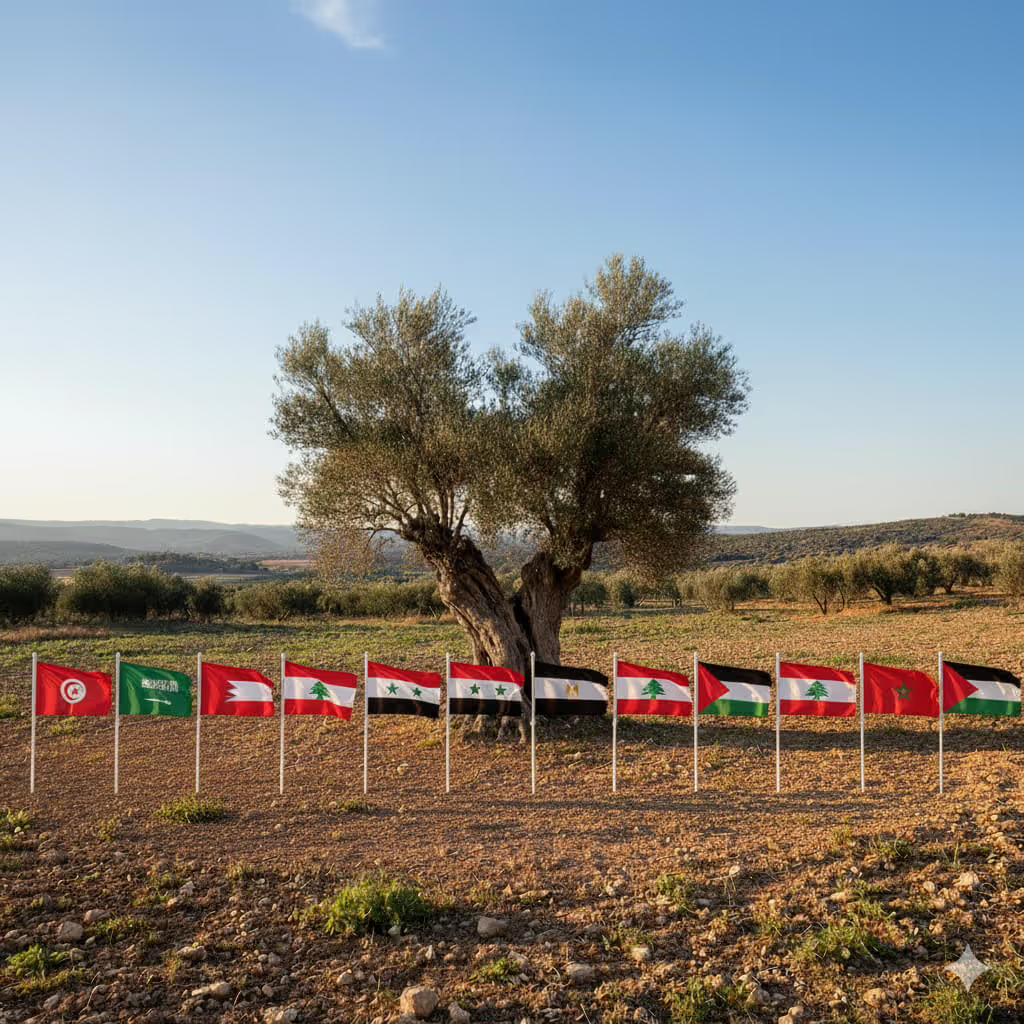
Olive trees have been grown for thousands of years, especially in the Mediterranean region, where they are an integral part of Arab culture, economy and cuisine. The number of olive trees in a country reflects not only its productive capacity, but also its historical and agricultural commitment to the blessed tree. The following is an overview through the 2024 statistics issued by the International Olive Council on the number of trees in the Arab countries.
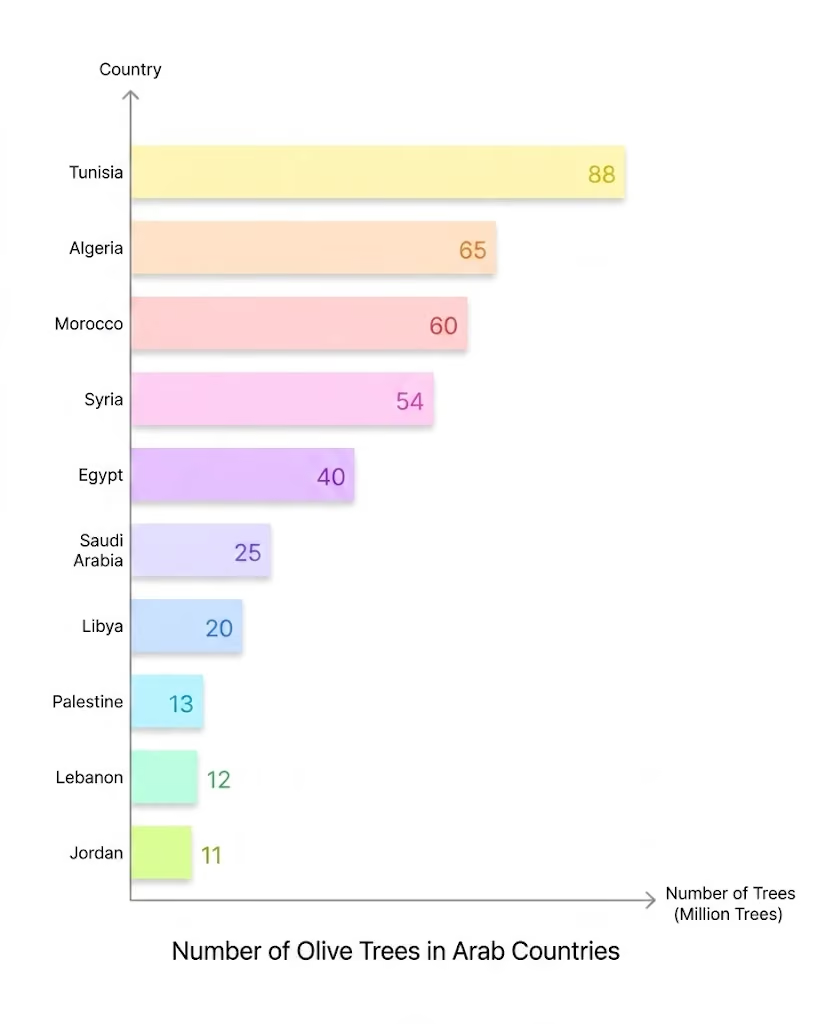
For information, there is a significant expansion in the Arab countries to invest in the cultivation of olive trees to produce oil and table olives. For example, Egypt has a national project to plant 100 million olive trees. It is moving steadily towards completing the project, attracting Spanish varieties (Arbequina - Arbosana) and distinctive Greek (Cornici) varieties, and developing Egyptian varieties at the Agricultural Research Center such as “Olive 66”, “Olive 69” and “Olive 48” to produce oil, which are suitable for the climate in Egypt. Mechanization and modern methods are also used in harvesting and extraction. We have noticed a shift from extraction with presses to modern centrifugal techniques to improve the quantity and quality of olive oil.
Olive trees in the Arab region are characterized by unique traditional varieties that have high-quality characteristics, a special taste, and multiple phenolic ingredients that give olive oil a charming aromatic smell. Our region has many international experts specialized in this field. Let us not forget that the former Executive Director of the International Olive Council, Mr. Abdellatif Ghadira, of Moroccan nationality, was at the top of the world's olive pyramid for two consecutive terms from 2016 to 2023.