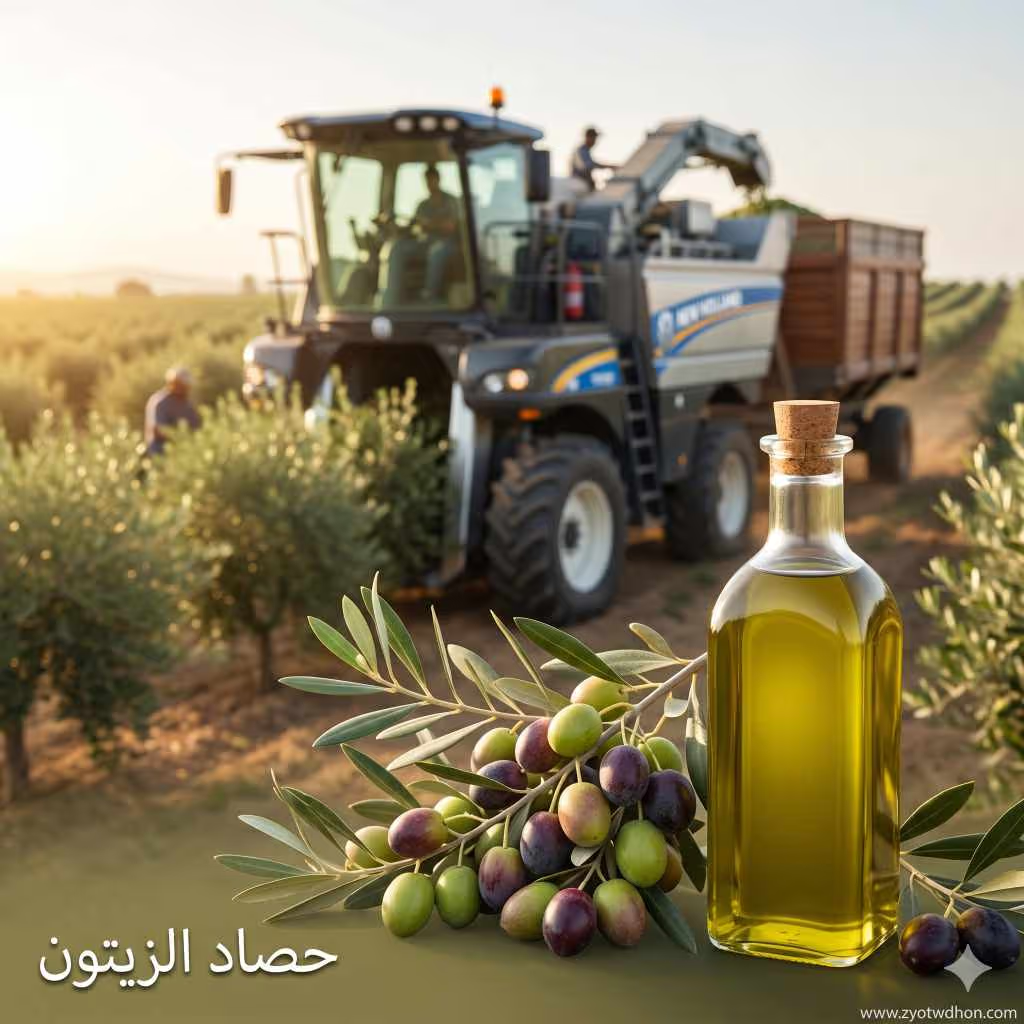
On a quiet morning in early September, at the intensive olive farm, Abu Abdullah stood with the project manager, inspecting the rows of trees that had begun to yield their first olives. Abu Abdullah noticed the first signs of ripening on the fruit, saying, "The first yields are appearing. Are we ready for the harvest phase? And will we need special harvesters and presses for the project?"
The project manager replied, "Yes, Abu Abdullah, our entry into the initial yield phase means we are on the verge of actual production, which necessitates preparing the harvesting and pressing system. Intensive olive farming requires modern harvesters that pass over the rows, and table olives require a completely different approach. Furthermore, choosing the right press will determine the quality of the final oil."
Abu Abdullah smiled, looking at the trees, and said, "So, let's start planning now... We want the best efficiency and highest quality."
First: Choosing Intensive Olive Harvesters
The efficiency of intensive olive harvesting relies on 'over the row' harvesters, which is the latest and most suitable technology for intensive farming.
Key technical considerations when choosing the right harvester:
- Harvester Type: Over-the-row harvesters are the best because they harvest the entire tree in a single pass, and are suitable for intensive and super-intensive systems.
- Shaking and Picking Efficiency: Machines capable of detaching over 95% of the fruit should be chosen without breaking branches or causing structural damage to the trees.
- Maneuverability: The harvester's dimensions must be compatible with the spacing between rows (typically 3–4 meters), to ensure smooth movement without damaging the trees.
- Cleaning and Fruit Conveyance System: An effective system for separating leaves and debris and directly storing the fruit is essential, reducing time and cost in the post-harvest stage.
- Operating Speed: Modern harvesters reduce harvest time by 70–90% compared to traditional methods, significantly lowering labor costs.
Examples of advanced harvesters include: the VS+ harvester from Moresil, and New Holland harvesters, which adapt to different tree sizes and offer high harvesting efficiency.
Second: Best Methods for Harvesting Table Olives
Table olives require gentle handling to preserve skin integrity and fruit quality; therefore, their harvesting method differs from olives intended for pressing.
Ideal Harvesting Methods for Table Olives:
- Manual or Semi-Mechanical Harvesting: Using manual or light electric combs, which is the safest method to avoid bruising.
- Using Cloths and Nets: Spread plastic nets under the trees to prevent fruit contamination from the ground.
- Avoid Strong Vibrations: Intensive side harvesters are not recommended as they cause bruising that affects pickling quality.
- Timely Harvesting: Pick the fruit at its optimal ripeness and immediately transport it in ventilated crates.
The Importance of Harvesting for Oil and Olive Quality
- Harvesting is the crucial stage that determines the quality of extra virgin olive oil.
- It represents the culmination of a full year of agricultural work.
- Harvesting techniques have evolved with the global development of the oil industry.
Preparing for the Harvest Stage
- Determine the ideal ripeness stage for each variety.
- Prepare tools: ventilated crates, nets, transport vehicles.
- Coordinate with the mill in advance to schedule pressing.
- Avoid collecting fallen fruit; modern mills reject dirty or damaged fruit.
- Provide safety equipment and training for workers.
Available Harvesting Methods
- Manual Harvesting:
- Preserves fruit integrity.
- Suitable for table olives and small farms.
- Slow and labor-intensive.
- Fruits are collected in small boxes (25 kg).
- Assisted Harvesting (Electric Tools):
- Portable tools powered by electricity or air.
- Doubles production compared to manual methods.
- Suitable for traditional and semi-intensive farms.
- May cause bruising, so fruits must be pressed quickly.
- Relies on batteries that last 6–8 hours.
- Full Mechanical Harvesting:
- Using trunk or branch shakers.
- Suitable for large farms.
- Productivity up to 300 kg/hour.
- Requires appropriate spacing between trees.
- In super-high-density systems, over-the-row harvesters are used.
- Limited to varieties with uniform ripening.
Quality Factors and Challenges
- Preserving fruit integrity is fundamental for oil quality.
- Avoid exposing olives to sun or piling them up.
- Planning based on cultivar maturity:
- Early cultivars: Arbequina.
- Medium cultivars: Arbosana.
- Climate change has led to early ripening, requiring annual adjustments to harvest dates.
- Harvesting too early reduces oil quantity and affects flavor.
Principles for selecting harvesters and presses for intensive olive projects
First: Harvester selection:
- Utilizing self-propelled harvesters (Over the row).
- Ability to harvest large areas quickly.
- Machine size compatible with inter-row spacing.
- Minimizing damage to branches.
- Reducing reliance on manual labor.
Second: Press selection:
- Capacity: Receiving large daily quantities without backlog.
- Modern technology: Continuous centrifugal systems.
- Cold pressing: Below 27 degrees Celsius to preserve quality.
- Raw materials: Stainless steel construction.
- Technical Control: Control of mixing time and paste temperature.
- Oil Loss: Minimizing oil loss with pomace (residue).
Additional Factors for Success
- Selecting a suitable location with well-drained soil for the farm.
- Providing adequate storage areas before pressing.
Conclusion
Successful olive harvesting depends on: choosing the right time, the right method, preserving fruit integrity, adapting to climate change, and selecting appropriate harvesters and presses.
 Advertise