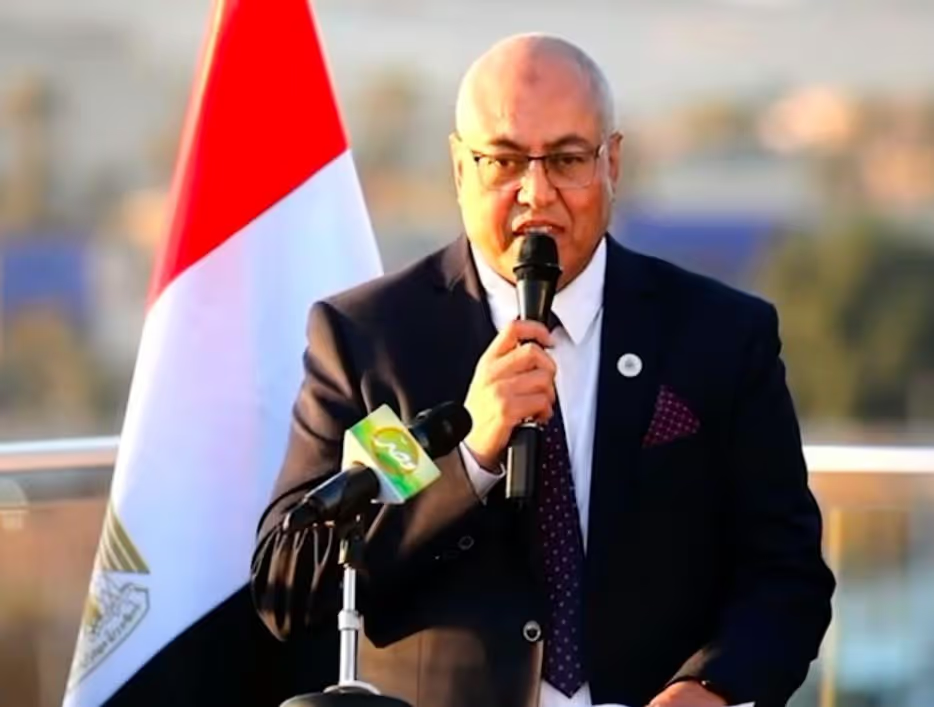
After a full year since the start of the agricultural project and the planting of olive saplings, Abu Abdullah conducted a field visit to review the progress and evaluate the initial results. The visit was an important opportunity to assess what had been accomplished, identify challenges, and discuss future steps with the agricultural consultant responsible for the project.
Abu Abdullah's Observations During the Visit Upon arriving at the farm, Abu Abdullah noted the excellent growth of the saplings, the improved soil structure, and the orderly planting rows. He was also impressed by the team's adherence to modern service methods, whether in irrigation, fertilization, or pest control. Despite the changing climatic conditions, the young trees appeared to be in excellent health, reflecting the success of the agricultural management plan during the first year.
Abu Abdullah's Discussion with the Agricultural Consultant Abu Abdullah sat with the agricultural consultant during an inspection tour, engaging in an in-depth discussion about the importance of a scientific approach in agriculture and how reliance on data and analysis has become a fundamental part of the success of modern agricultural projects.
1. Using Artificial Intelligence in Water Management The consultant explained how AI systems have helped in:
- Accurately measuring soil moisture using modern sensors.
- Determining the actual needs of each tree based on weather conditions and plant age.
- Rationalizing irrigation by up to 30–40% compared to traditional methods. He emphasized that this rationalization not only reduces water consumption but also encourages root systems to expand and minimizes water stress.
2. Data-Driven Fertilization Management The consultant clarified that the smart system analyzes:
- Soil fertility and its periodic changes.
- The saplings' needs for macronutrients (NPK): Nitrogen (N) to encourage vegetative growth at this early stage, Phosphorus (P) for root development, and Potassium (K) to strengthen plant immunity.
- Deficiencies in micronutrients such as boron and zinc. Accordingly, fertilization timings and quantities are precisely determined and injected directly through the drip irrigation network (fertigation) to ensure direct delivery to the roots, which reduces material and labor costs and prevents waste.
3. Pest Control Using Smart PredictionThe consultant explained that AI technologies have helped in:
- Monitoring the activity of pests threatening the vegetative growth of saplings (such as the olive psyllid and olive moth) using smart traps integrated with cameras and sensors.
- Determining the optimal time for preventive intervention.
- Significantly reducing pesticide use and moving towards safe and organic alternatives, thereby maintaining the ecological balance on the farm.
Scientific principles underpinning the project At the end of the tour, Abu Abdullah reviewed the technical report, which summarized the key field practices implemented during the first year to ensure successful establishment. These included:
- First: Soil Preparation
- Selecting light, well-drained soil composed of 10-15% clay, 15-20% silt, and 65-75% sand.
- Avoiding heavy machinery to preserve soil structure and porosity.
- Controlling water erosion and protecting soil from runoff.
- Second: Planting and Pruning
- Planting seedlings in January to ensure optimal success and soil adaptation.
- Conducting a simple initial training prune to guide seedling growth and establish a strong foundational structure for the tree.
- Third: Fertilization Management
- Applying organic fertilizer in winter at the onset of rains to improve soil properties and moisture retention.
- Chemical Fertilization (via irrigation system):
- Nitrogen: 100–150 grams per tree to support rapid vegetative growth.
- Compound + Potassium: 150–300 grams, depending on seedling response, applied in regular installments.
- Micronutrients: Spraying boron and zinc to enhance leaf health and physiologically prepare the tree for future years.
- Fourth: Pest Control
- Spraying mineral oils as a preventive measure during dormant periods.
- Relying on early monitoring and targeted control to manage vegetative growth pests, rather than indiscriminate spraying of chemical pesticides.
- Fifth: Irrigation
- Although olive trees can tolerate drought, regular and carefully planned supplementary irrigation during the first year was crucial for establishing strong roots.
- Relying on smart irrigation schedules reduced waste and increased the efficiency of every drop of water consumed.
Abu Abdullah's impression at the end of the visit Abu Abdullah expressed his admiration for the remarkable progress in the project and praised the results achieved in just one year. He affirmed that investing in scientific methods and smart technologies was a sound decision, as it reduced costs, accelerated the healthy growth of seedlings, and set the project on the path to producing high-quality olive oil in the coming years.
He also directed the continuation of:
- Developing smart systems and updating field sensors.
- Training workers on how to use modern technologies and advanced irrigation networks.
- Studying the future expansion of the cultivated area based on the success of the establishment phase.
Conclusion This visit reflects the importance of combining practical agricultural expertise with modern technologies in project management. Scientific knowledge and artificial intelligence are no longer a luxury; they have become an essential element for the success of any project aiming for sustainability, cost reduction, and establishing a model farm from day one.
 Advertise