Advertise
.avif)
Note: This article was AI-translated from Arabic and is currently under manual review. The author is not responsible for any translation errors. Please refer to the original Arabic text for the most accurate and authoritative information.
Not all fruits are born the same... Avocado is an exceptional fruit with a rich taste and health benefits at its heart. It is a golden ticket to the world of luxury oils and a gateway for Egypt to open a new export industry that generates millions of dollars. Its emerald green color and its soft nutty flavor hide an integrated investment treasure: from the farm to the extraction lines, from international cuisines to cosmetic and medical laboratories.
At a time when the global market is hungry for rare and high-value oils, avocado oil is an exceptional opportunity for Egypt, thanks to its ideal climate and expandable lands, to become an agro-industrial project that combines great economic return, added value, and global competitiveness.
Avocado is not just a fruit for salad or smoothies, it is a crop that can be turned into an integrated industry:
• Productivity per acre: 5—8 tons per year (up to 10 tons in intensive agriculture).
• The percentage of oil in the whole fruit: 12—22% depending on the variety and maturity.
• The percentage of oil in the pulp: 15—30% (the main source of extraction).
• The percentage of oil in the kernel is only 2-3%. It is not usually used in food production.

Choosing the right variety is the cornerstone of the project’s success:
• Hass: the commercial star with an oil content of 18-22% with a distinctive color and flavor.
• Fuerte: 18-20% oil with a stronger flavor.
• Reed: 15—18% light-colored oil, ideal for blends.
• Bacon: 15—20%, suitable for industrial or blending products.

The extraction method determines the quality and yield of the oil:

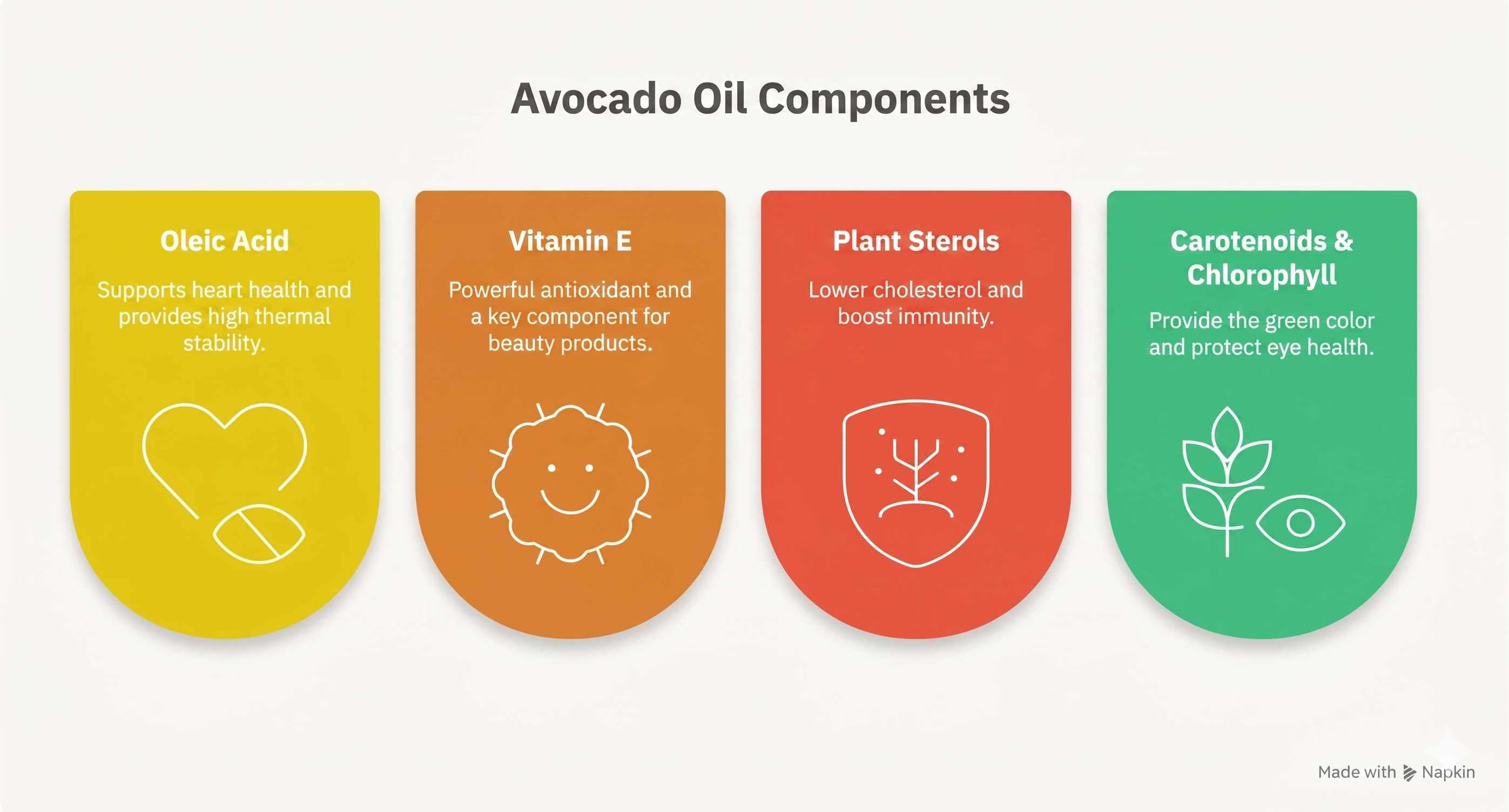
• Oleic acid 55—75%: supports heart health and gives the oil high thermal stability.
• Vitamin E 200—400 mg/kg: a powerful antioxidant and a key pillar in cosmetology.
• Plant sterols: lower cholesterol and enhance immunity.
• Carotenoids and chlorophyll: give green color and protect eyes.
Although the price per kilo for the local consumer is high, oil extraction proves its feasibility:
• Added value: a liter of oil exceeds 20—25 dollars (≈ 960—1,200 pounds).
• Exploiting fruits that are not suitable for fresh marketing: reduces waste and increases returns.
• Integration between the two markets: selling premium fruits fresh and directing the rest to manufacturing achieves the highest profitability.
• Scenario 1 — Selling fruits fresh.
• Scenario 2 — Full oil recovery.
• Scenario 3 - Combining the sale of first-class fruits and the manufacturing of all grades.
• Complete manufacturing is profitable with an export outlet.
• The combination of fresh and manufacturing reduces risks and increases profitability.
• Selling in small packages increases the profit margin in specialized markets.
The avocado treasure does not end at the moment the oil is extracted, but a new journey begins to maximize the use of every part of the fruit and convert waste into economic resources:
• Pulp residues: animal feed, dietary supplements, natural cosmetics.
• Seeds (kernels): antioxidant compounds, gluten-free flour, and biofuel.
• Crusts: natural dyes, pharmaceutical extracts, organic fertilizers.
• Extraction water: a source of antioxidants or reused in irrigation.
Waste is transformed into additional products that raise returns and place the project in the category of sustainable green investment.
• Food and beverages: Avocado oil is the largest use (~51.5% of the global market). It is used in frying (250°C smoke point), salads, omega-9 capsules, as well as culinary products such as oil spray, which had a market value of 314 million dollars in 2023 with an expected annual growth of more than 7.6%.
• Beauty and personal care: a strong and growing sector. Avocado oil is included in moisturizing creams, anti-aging, and hair treatments, and is used in 26% of luxury beauty products in Europe.
• Medicine and dietary supplements: contributes to supporting joint health and improving vitamin absorption. It feeds a growing market for supplements and pharmacy driven by global health awareness.
• Industry: used in the production of fine soaps and specialized lubricants.

• Demand is not limited to food only, but extends to cosmetics and medicine.
• Product diversification (crude oil, spray, cosmetic raw materials) enhances export opportunities.
• Focusing on quality and sustainability increases product attractiveness in global markets.
World avocado production has reached 9 million tons, while oil production does not exceed 200 thousand tons, against a demand of more than 500 thousand tons per year — a gap of at least 300 thousand tons that Egypt can help fill.
• An ideal climate for growing commercial varieties (especially Hass).
• Expandable areas in the North Coast, New Valley, and Sinai.
• A strategic location that allows fast and low-cost exports to the markets of Europe, the Middle East and Africa.
Avocado oil is not a food luxury, but a national project linking the farmer to the factory to the global market. Acting now means taking the lead, building an Egyptian industry that competes globally, and transforming avocados from a seasonal fruit into a symbol of a promising export industry that generates millions of dollars and contributes to improving the trade balance and supporting the national economy.