Intensive Olive Investment Guide: The Importance of Mother Plants and Land Preparation

تاريخ النشر:
April 11, 2026
أخر تعديل:
June 12, 2026

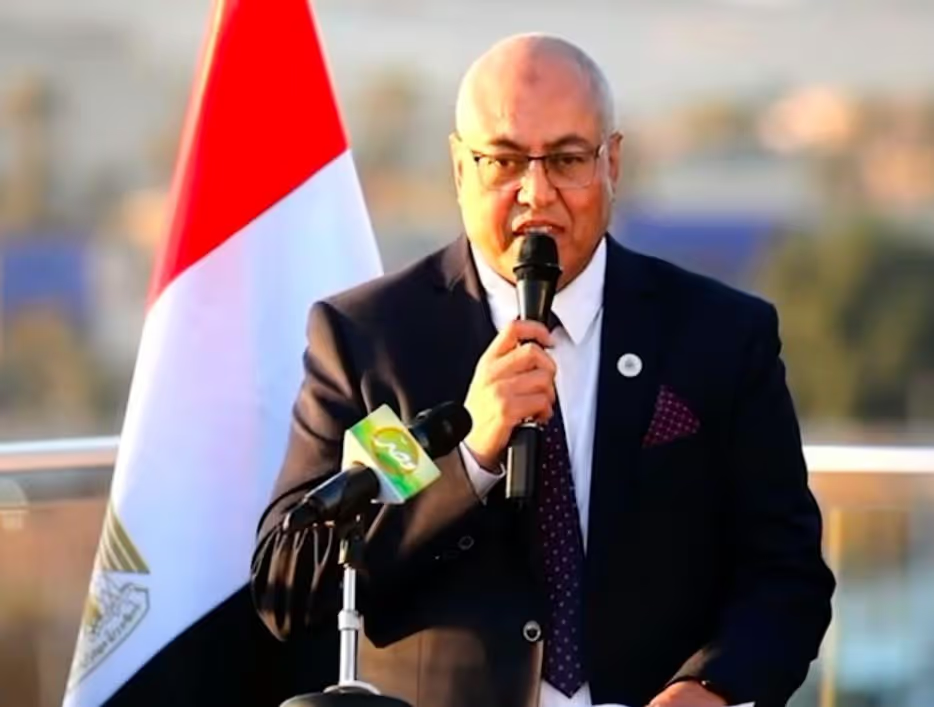
International olive oil expert and judge, and member of the Scientific Society – Alexandria University.

الفهرس

Text Link

After the completion of the first meeting regarding the investment choice. The second meeting was held after the decision had been made and the project discussion finalized.

Abu Abdullah: "Folks, I've decided to go into intensive olive farming for oil production, and I'll dedicate a portion to table olives."Agricultural Consultant: "Abu Abdullah, intensive olive farming is currently one of the best agricultural investments, especially with Spanish varieties like Arbequina and Arbosana. But the most important thing above all else... is the type of seedlings."Abu Abdullah: "What do you mean?"Agricultural Consultant: "The difference between mother seedlings and sucker seedlings... this difference determines the success or failure of the project."Abu Abdullah: "Let's make sure we start right."

Subsequently, preparations for the land and purchasing seedlings began.

Mother Seedlings and Suckers... and their Impact on Investment

1. Mother Seedlings (Cuttings – Grafted Seedlings)These seedlings are produced from strong, carefully selected mother trees.

Their Investment Advantages:

  • Long productive life exceeding 50 years.
  • Strong root growth helps withstand drought and salinity.
  • Faster production compared to suckers.
  • Uniform fruits in size and quality, which facilitates mechanical harvesting.
  • 100% true to type, with no genetic degradation.

Why do investors prefer them?Because they reduce risks, increase productivity, and ensure a stable return for decades.

2. Sucker Seedlings (Basal Shoots)These are growths that emerge from the base of the mother tree and are often of lower quality.

Their investment drawbacks:

  • Lower productivity and delayed fruiting.
  • They compete with the mother tree for nutrients, which weakens growth.
  • Lack of uniformity in tree height and production.
  • Potential for disease transmission, such as olive knot, if not properly treated.
  • They require continuous removal because they regrow.

In summary:They might be cheaper to buy… but they are more expensive in the long run due to low production and numerous problems.

Land preparation… the most important step in intensive and traditional olive projects

Abu Abdullah's project success was not only in cultivar selection but also in scientifically preparing the land.

Firstly: Critical points shared between traditional and intensive farming

  • Soil analysis:
    • Measuring the ideal pH around 6.5.
    • Knowing the salinity level.
    • Analyzing macro and micronutrients.
  • Good drainage:Olive trees do not tolerate waterlogging, so you must:
    • Avoid heavy clay soils.
    • Or improve them through drainage systems or by raising the rows.
  • Deep plowing:
    • A depth of 30–50 cm to break up hardpan layers.
    • This helps roots spread.
  • Adding organic matter:
    • Add compost before planting to improve soil and increase biological activity.

Second: Critical points for Super High Density olive cultivation

  • Straight rows: Essential for the passage of mechanical harvesters.
  • Precise planting distances:
    • Between trees: 1.3 – 1.5 meters for intensive cultivation.
    • Between rows: 3.5 – 4 meters.
  • Drip irrigation system:
    • Install and test it before planting.
    • Precise distribution of water and fertilizers.
  • Stakes: Essential for stabilizing trees in their early years.

Third: Key Considerations for Traditional Olive Cultivation

  • Wide Spacing:
    • 8x8 or 6x6 meters, to allow for large tree growth.
  • Pit Preparation:
    • Dig large and deep pits.
    • Add improved soil and compost.

Additional Tips for the Success of Abu Abdullah's Project

  • Avoid planting during periods of frost or extreme heat.
  • Contract with reliable nurseries to ensure seedlings are free from diseases such as Xylella bacteria.
  • Start with a small experimental area before expanding.
  • Choose intensive varieties (Arbequina - Arbosana) with a portion of the project dedicated to table olives.

مقالات آخرى للكاتب

Newsletter

Contact us and follow us on social media platforms

Tiktok logolinkedin logoinstagram logofacebook logoyoutube logoX logoEmail icon
.Copyright Zyotwdhon. All Rights Reserved ©