
Lang
Grapeseed oil: a vegetable oil extracted from the seeds of grapes. A comprehensive reference covering specifications, fatty acids, production, and uses.
Vitis vinifera L.
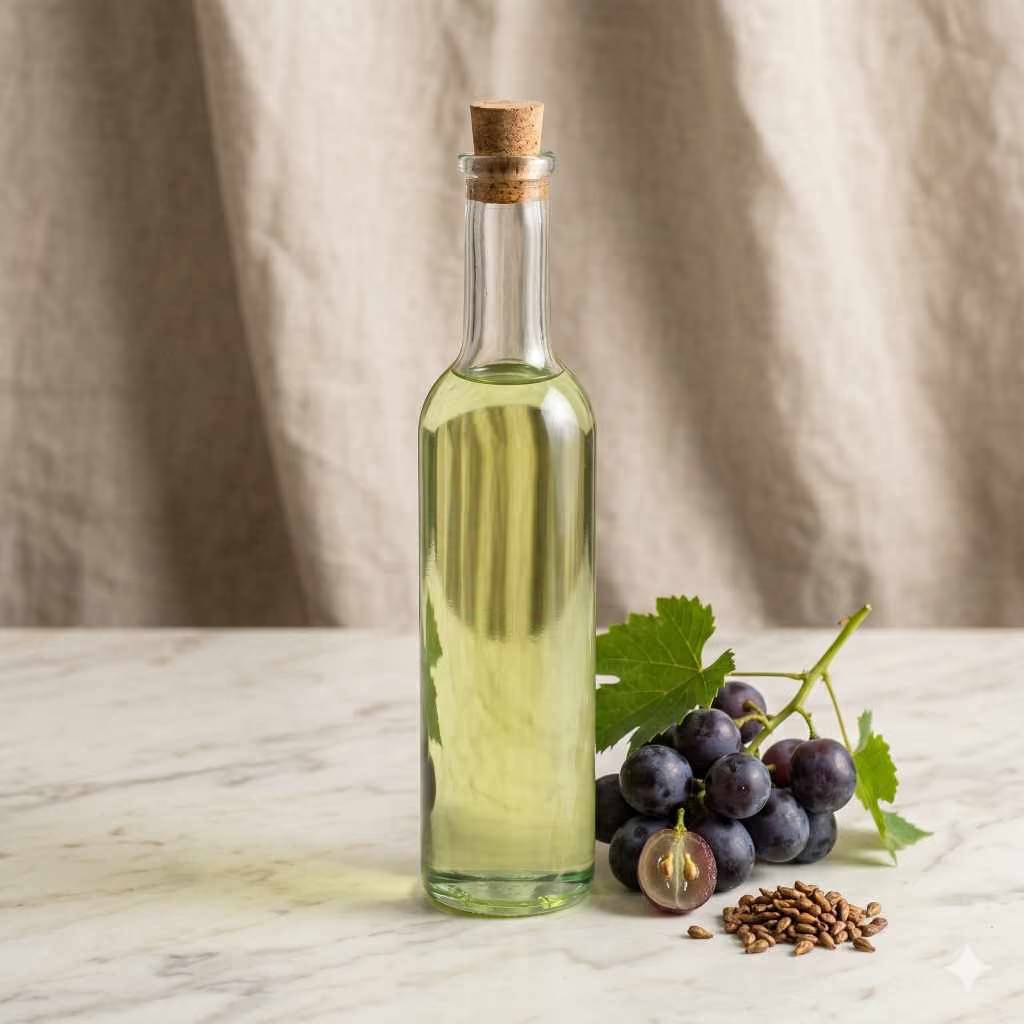
Grapeseed oil is a vegetable oil extracted from the seeds of grapes Vitis vinifera L., and is a by-product of the wine industry. The seeds contain only 12-18% oil by weight, a relatively low proportion, so production requires large quantities of seeds (about 100 tons of seeds to produce 12-18 tons of oil). It is extracted by two methods: cold pressing for the virgin oil, and solvent extraction followed by refining for commercial uses.
Interest in grapeseed oil dates back to Italy and France in the twentieth century as an economical way to make use of the grape seeds left over from wine production, which were discarded as waste. Production is directly tied to the wine industry, so the wine-producing countries lead it: Italy, France, Spain, Argentina, Chile, and the United States.
Grapeseed oil has a composition very rich in linoleic acid (70% omega-6), followed by oleic acid (16%) and palmitic acid (7%). The omega-6:omega-3 ratio is about 200:1. It contains a high proportion of vitamin E (tocopherols) and antioxidant proanthocyanidin compounds. It has a high smoke point of up to 216°C, a light green-yellow color, and a neutral flavor.
USDA-FAS data are not available for grapeseed oil production, as it is a specialty oil. Global production is relatively small and concentrated in Italy, France, and Spain. Its price is relatively high due to the complexity of the extraction process and the large quantity of seeds required. The oil is governed by Codex Alimentarius standard CXS 210-1999.
Grapeseed oil is used in cooking and frying thanks to its high smoke point and neutral flavor, in salads and marinades, and in the making of fine mayonnaise and sauces. Industrially, it goes widely into the making of cosmetics and skin care (serums, face creams, hair oils) thanks to its light texture and content of antioxidants. It is used in massage oils and natural therapy.
HS Code
1515
Oil percentage in the seed/fruit
12-18%
Oil yield/hectare
—
Omega-6:Omega-3
200:1
This oil conforms to the Codex Alimentarius standard for named vegetable oils, CXS 210-1999, which specifies fatty acid composition, and quality and authenticity criteria. The following cards present the specification for each variety of this oil.
Grape seed oil is derived from the seeds of the grape (Vitis vinifera L.).
Oleic acid (Omega-9)
12.0-28.0
Linoleic acid (Omega-6)
58.0-78.0
Linolenic acid (Omega-3)
n.d.-1.0
Palmitic acid
5.5-11.0
Stearic acid
3.0-6.5
Lauric acid
n.d.
Erucic acid
n.d.-0.3
Total saturated
Total monounsaturated
Total polyunsaturated
Iodine value
128-150
Vitamin E (mg/kg)
240-410
Caproic acid (C6:0): n.d.
Caprylic acid (C8:0): n.d.
Capric acid (C10:0): n.d.
Lauric acid (C12:0): n.d.
Myristic acid (C14:0): n.d.-0.3
Palmitic acid (C16:0): 5.5-11.0
Palmitoleic acid (C16:1): n.d.-1.2
Margaric acid (C17:0): n.d.-0.2
Heptadecenoic acid (C17:1): n.d.-0.1
Stearic acid (C18:0): 3.0-6.5
Oleic acid / Omega-9 (C18:1): 12.0-28.0
Linoleic acid / Omega-6 (C18:2): 58.0-78.0
Linolenic acid / Omega-3 (C18:3): n.d.-1.0
Arachidic acid (C20:0): n.d.-1.0
Gadoleic acid (C20:1): n.d.-0.3
Eicosadienoic acid (C20:2): n.d.
Behenic acid (C22:0): n.d.-0.5
Erucic acid (C22:1): n.d.-0.3
Docosadienoic acid (C22:2): n.d.
Lignoceric acid (C24:0): n.d.-0.4
Nervonic acid (C24:1): n.d.
Sterols (% of total):
Cholesterol: n.d.-0.5
Brassicasterol: n.d.-0.2
Campesterol: 7.5-14.0
Stigmasterol: 7.5-12.0
Beta-sitosterol: 64.0-70.0
Delta-5-avenasterol: 1.0-3.5
Delta-7-stigmastenol: 0.5-3.5
Delta-7-avenasterol: 0.5-1.5
Other sterols: n.d.-5.1
Total sterols (mg/kg): 2000-7000
Tocopherols and tocotrienols (mg/kg):
Alpha-tocopherol: 16-38
Beta-tocopherol: n.d.-89
Gamma-tocopherol: n.d.-73
Delta-tocopherol: n.d.-4
Alpha-tocotrienol: 18-107
Gamma-tocotrienol: 115-205
Delta-tocotrienol: n.d.-3.2
Total tocopherols and tocotrienols (mg/kg): 240-410
Relative density: 0.920-0.926 (20°C)
Apparent density (g/mL): —
Refractive index: 1.467-1.477
Saponification value: 188-194
Iodine value: 128-150
Unsaponifiable matter (g/kg): ≤ 20
Melting point: —
δ¹³C ratio: —