
Lang
Almond oil: a vegetable oil extracted from the kernel of the almond tree's fruit. A comprehensive reference covering specifications, fatty acids, and uses.
Amygdalus communis L.
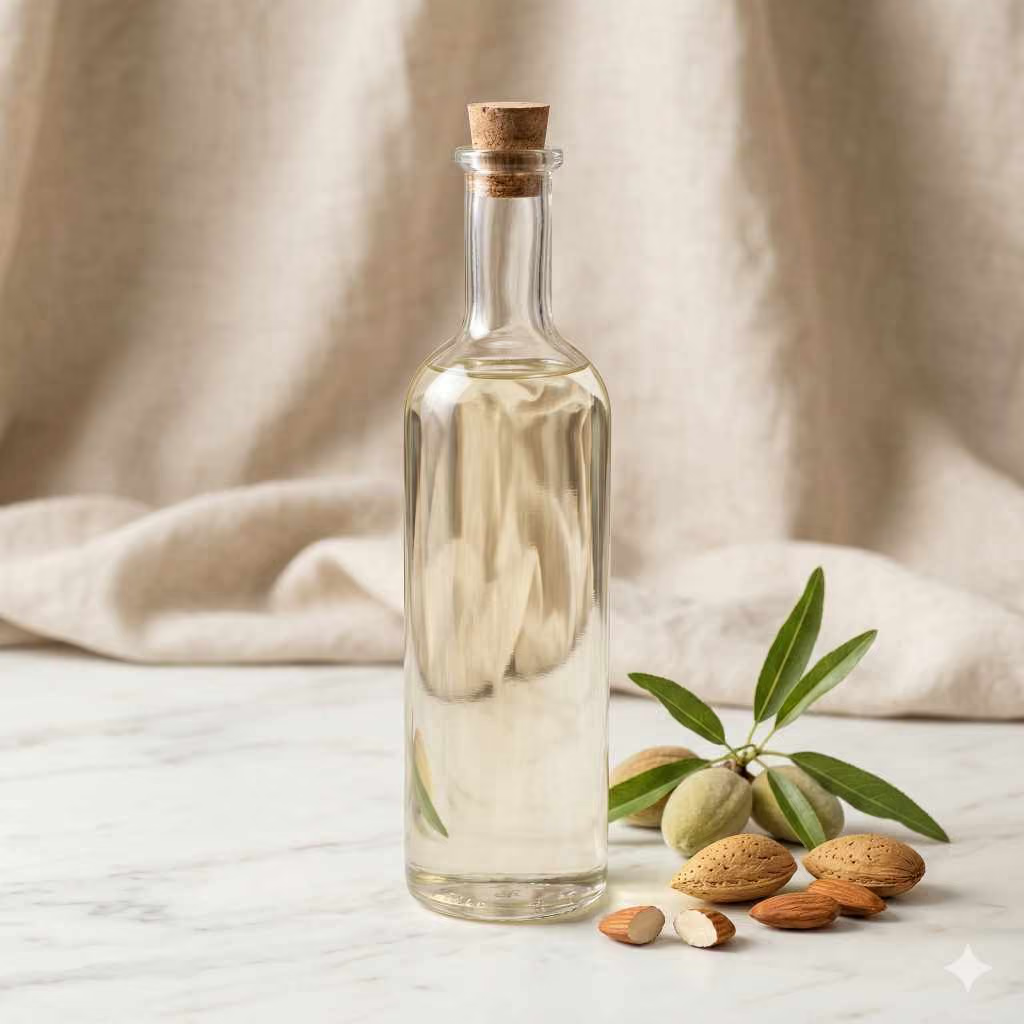
Almond oil is a vegetable oil extracted from the kernel of the fruit of the almond tree Amygdalus communis L. (also known scientifically as Prunus dulcis). It is produced in two types: sweet almond oil (from edible sweet almonds), and bitter almond oil (from bitter almonds, which is toxic raw because of its amygdalin content, and is processed for aromatic uses only). The kernel contains 50-55% oil by weight.
The almond tree is native to the Middle East and Central Asia, where it was cultivated more than four thousand years ago. Its cultivation spread along trade routes to the Mediterranean region, then to California in the nineteenth century, which became the world's largest producer of almonds (about 80% of production). Spain, Australia, Iran, and Turkey are also major producers.
Almond oil has a composition rich in oleic acid (62-86% omega-9), linoleic acid (8-26% omega-6), and palmitic acid (6-8%). It contains an exceptionally tiny proportion of linolenic acid (omega-3), with an omega-6:omega-3 ratio of about 1,984:1, one of the highest among vegetable oils. The oil's main feature is its high content of vitamin E (tocopherols), phytosterols, and squalene.
Detailed USDA-FAS data are not available for almond oil production because it is a specialty oil, and most almonds are consumed as nuts rather than as oil. California produces most of the world's almonds, followed by Spain and Australia. Production is tied to the size of the almond crop and the availability of damaged nuts or those unfit for direct eating. The oil is governed by Codex Alimentarius standard CXS 210-1999.
Sweet almond oil is used in food in a limited way in salads, sweets, and fine baked goods. The oil's main use is industrial, in cosmetics and skin care (face and hand creams, aromatherapy oils, luxury soap, baby massage oils) for its light texture and rapid absorption. Bitter almond oil is used to extract the benzaldehyde compound for industrial flavorings and cosmetics after being processed to remove toxicity.
HS Code
1515
Oil percentage in the seed/fruit
50-55%
Oil yield/hectare
—
Omega-6:Omega-3
1,984:1
This oil conforms to the Codex Alimentarius standard for named vegetable oils, CXS 210-1999, which specifies fatty acid composition, and quality and authenticity criteria. The following cards present the specification for each variety of this oil.
Almond oil is derived from the kernel of almond fruit (Amygdalus communis L.).
Oleic acid (Omega-9)
62.0-76.0
Linoleic acid (Omega-6)
20.0-30.0
Linolenic acid (Omega-3)
n.d.-0.5
Palmitic acid
4.0-9.0
Stearic acid
n.d.-3.0
Lauric acid
n.d.
Erucic acid
n.d.-0.1
Total saturated
Total monounsaturated
Total polyunsaturated
Iodine value
85-109
Vitamin E (mg/kg)
20-600
Caproic acid (C6:0): n.d.
Caprylic acid (C8:0): n.d.
Capric acid (C10:0): n.d.
Lauric acid (C12:0): n.d.
Myristic acid (C14:0): n.d.-0.1
Palmitic acid (C16:0): 4.0-9.0
Palmitoleic acid (C16:1): 0.2-0.8
Margaric acid (C17:0): n.d.-0.2
Heptadecenoic acid (C17:1): n.d.-0.2
Stearic acid (C18:0): n.d.-3.0
Oleic acid / Omega-9 (C18:1): 62.0-76.0
Linoleic acid / Omega-6 (C18:2): 20.0-30.0
Linolenic acid / Omega-3 (C18:3): n.d.-0.5
Arachidic acid (C20:0): n.d.-0.5
Gadoleic acid (C20:1): n.d.-0.3
Eicosadienoic acid (C20:2): n.d.
Behenic acid (C22:0): n.d.-0.2
Erucic acid (C22:1): n.d.-0.1
Docosadienoic acid (C22:2): n.d.
Lignoceric acid (C24:0): n.d.-0.2
Nervonic acid (C24:1): n.d.
Sterols (% of total):
Cholesterol: n.d.-1.0
Brassicasterol: n.d.-0.3
Campesterol: 2.0-5.0
Stigmasterol: 0.4-4.0
Beta-sitosterol: 73.0-86.0
Delta-5-avenasterol: 5.0-14.0
Delta-7-stigmastenol: n.d.-3.0
Delta-7-avenasterol: n.d.-3.0
Other sterols: n.d.-6.0
Total sterols (mg/kg): 1590-4590
Relative density: 0.911-0.929 (25°C)
Apparent density (g/mL): —
Refractive index: 1.468-1.475 (20°C)
Saponification value: 183-207
Iodine value: 85-109
Unsaponifiable matter (g/kg): ≤ 20
Melting point: —
δ¹³C ratio: —