
Lang
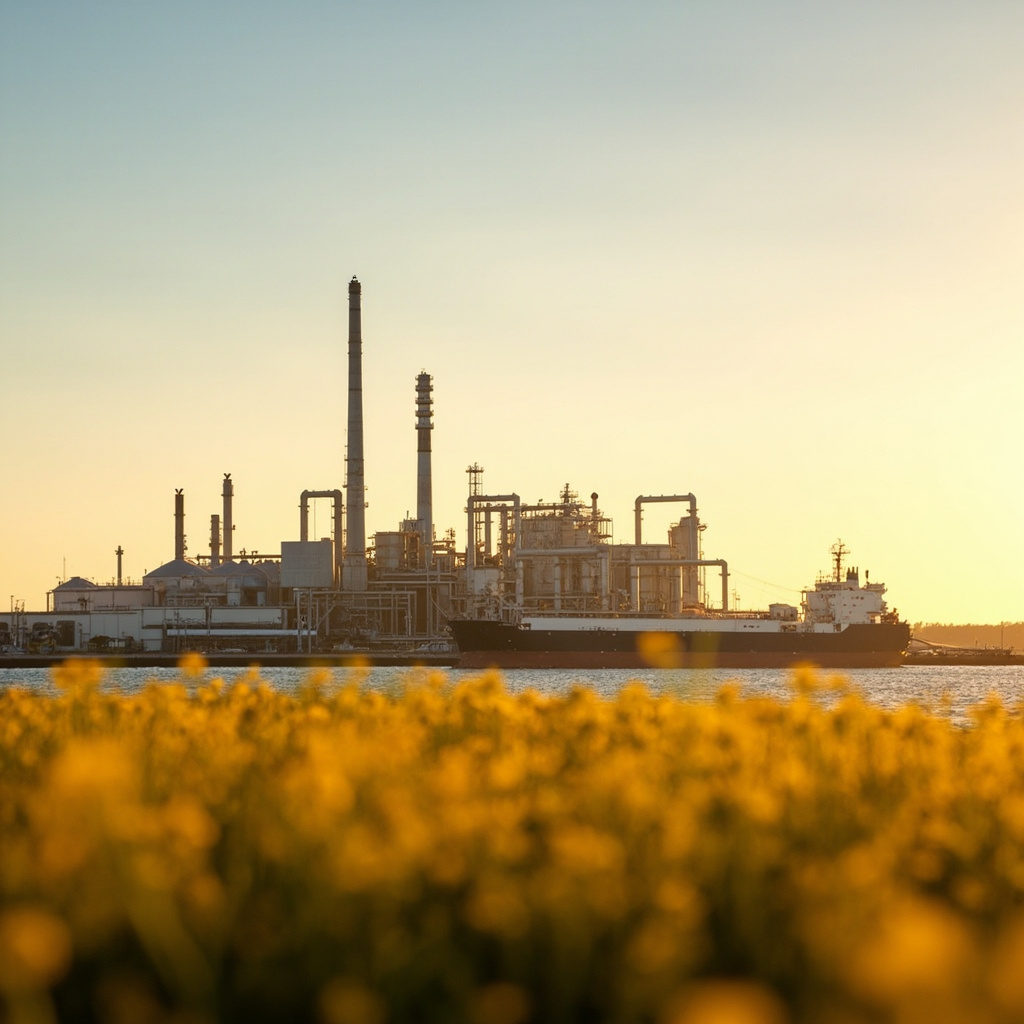
A consortium led by the Yamatji Southern Regional Corporation (YSRC) has unveiled plans for a A$2.5 billion renewable diesel refinery in Western Australia's Mid West region, with the maritime sector positioned as a key target market.
YSRC, the strategy and design firm Veyter, and Canadian advisory company Agilitas Advisory Corp. have signed a memorandum of understanding to investigate the development of a renewable diesel refinery near Geraldton with an annual production capacity of 1.1 billion litres.
The proposed facility would be majority owned by Traditional Owners, with Yamatji interests holding 51% and Veyter the remaining 49%. Located within the Mid West region, the refinery would process Western Australian canola and tallow into renewable diesel, marketed under the brand 'Agri-Diesel', for domestic customers across the mining, agriculture, transport, defence and aviation sectors.
For the maritime sector, the proposal carries significant weight. Diesel demand remains strong across port operations, heavy transport, marine support vessels and supply chains servicing Australia's mining and resources industries. The proponents estimate annual output would equate to approximately 20,000 barrels per day, representing around 4% of Australia's diesel consumption.
The development is also pitched as a direct response to Australia's heavy reliance on imported refined fuels. The project partners estimate that around 80% of Australia's refined petroleum products are sourced from overseas, leaving key industries exposed to international supply disruptions and price volatility.
Geraldton's proximity to agricultural production areas, existing export infrastructure and major resource projects could position the refinery as a strategic fuel supplier for regional industries and ports across Western Australia.
The proposed facility would incorporate an integrated oilseed crushing plant and associated infrastructure. Production would target customers seeking lower-emission fuels without requiring engine modifications, with the developers claiming lifecycle emissions reductions of approximately 85% compared with conventional diesel.
YSRC chief executive Luka Gray said the project aimed to create meaningful economic participation for Traditional Owners. 'For Yamatji people, this is about moving beyond participation to genuine ownership of major industry on our country,' Ms Gray said. 'A project of this scale has the potential to create lasting economic opportunities for Yamatji people, Mid West growers and the broader region, while contributing to Australia's domestic fuel security.'
The proponents are assessing the Oakajee Strategic Industrial Estate, north of Geraldton, among potential locations within the Yamatji Nation Indigenous Land Use Agreement area.
Subject to feasibility outcomes, the project could support around 4,000 construction jobs and approximately 400 ongoing operational positions.
Agilitas Advisory Corp managing partner Ron Loborec said the Mid West offered many of the ingredients required to support a large-scale renewable fuels project. 'Projects like this get financed when the feedstock, the land, the power and the offtake market are already in place. In the Mid West they are,' he said.
A key challenge remains government policy. The developers said Australia's lack of commercial-scale renewable diesel production means future investment will depend heavily on Commonwealth support mechanisms for low-carbon liquid fuels and broader Future Made in Australia initiatives.
The consortium has launched a 12-month pre-FEED program scheduled to conclude by the third quarter of 2027. If feasibility studies prove successful and a final investment decision is made, first production is targeted for 2032.
For Australia's maritime and freight sectors, the proposal highlights growing interest in domestically produced renewable fuels that could help reduce emissions while improving resilience across transport and industrial fuel supply chains.
Source: thedcn.com.au