 Advertise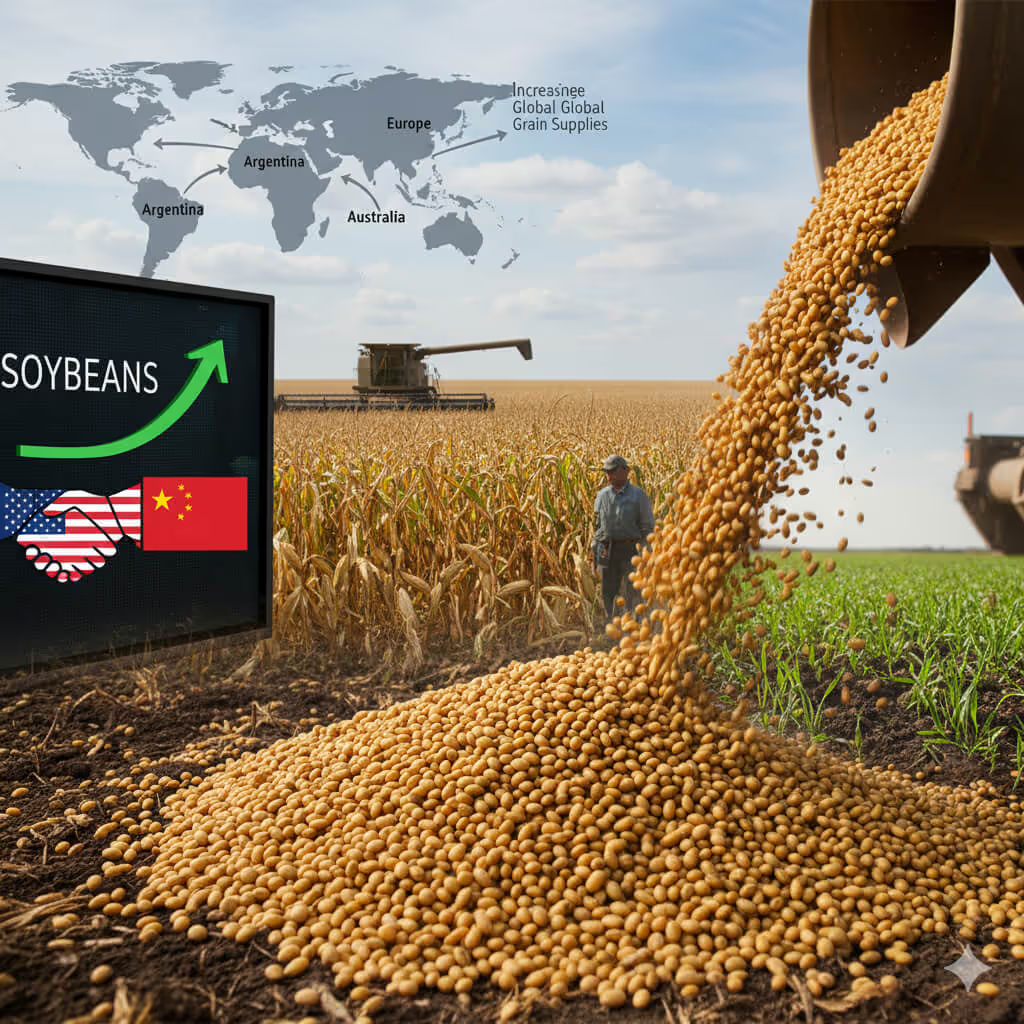
Soybean prices rose slightly, supported by short-covering and technical buying.
The soybean market is still waiting for US-China tariff talks scheduled for the end of the month.
Renewed optimism followed recent activity from President Trump on social media over the weekend, easing some concerns triggered by an earlier post late last week.
The ongoing tariff dispute between the United States and China continues to keep Beijing focused on soybeans from Brazil.
Chinese customs data for September showed imports reached a monthly record of 12.87 million tonnes, with a large share coming from South America.
The US harvest is expected to have passed the halfway point, while weather appears favorable for planting in South America.
Soymeal futures declined, while soybean oil prices rose because of product-margin adjustments.
Soybean oil received additional support from a rebound in crude oil prices, while soymeal faced extra pressure from large domestic supplies.
Corn prices declined slightly because of fund selling and technical selling.
Corn markets are watching US harvest activity, with most estimates indicating around 40% completion and rain expected in parts of the region this week.
Longer-term forecasts point to warm temperatures across much of the Corn Belt for a large part of the second half of the month.
Markets are also monitoring planting weather in Argentina and Brazil, where some major growing areas reported good rainfall over the weekend.
Updated forecasts from Brazil’s national supply agency, Conab, are scheduled for release on Tuesday, along with the weekly export inspections report, which was delayed by Monday’s federal holiday.
Last week’s export inspections data was strong. Although it does not replace USDA’s weekly export sales data, which is currently unavailable because of the government shutdown, it should still reflect continued strong global demand for US corn.
Wheat prices declined on most exchanges, with weak performance in Chicago and Kansas City and mixed trade in Minneapolis.
Rain delayed winter wheat planting in some areas but improved soil moisture, which should help during the growing stage.
The pace of planting remains a major question, as USDA’s weekly crop progress and condition report is suspended during the partial federal government shutdown.
Although contracts are technically oversold, large global supplies continue to pressure prices.
This follows higher production in Canada, Europe, and Russia, as well as strong new-crop production prospects in Argentina and Australia.
SovEcon now estimates Russia’s 2025 wheat crop at around 87.8 million tonnes, up 600,000 tonnes from its previous estimate, supported by record crops in Siberia.
APK-Inform expects Ukraine’s 2025/2026 grain crop to reach about 59.1 million tonnes, including more than 22 million tonnes of wheat and nearly 30 million tonnes of corn. The firm also raised its export forecast.