
Lang
The South Korean government has announced an expansion of its mandatory genetically modified (GM) food labeling requirements, which will now encompass specific food products derived from GM raw materials, even if genetically modified DNA or proteins are no longer detectable after processing. This significant policy shift was confirmed by the country's Ministry of Food and Drug Safety (MFDS), as reported by the U.S. Department of Agriculture (USDA).
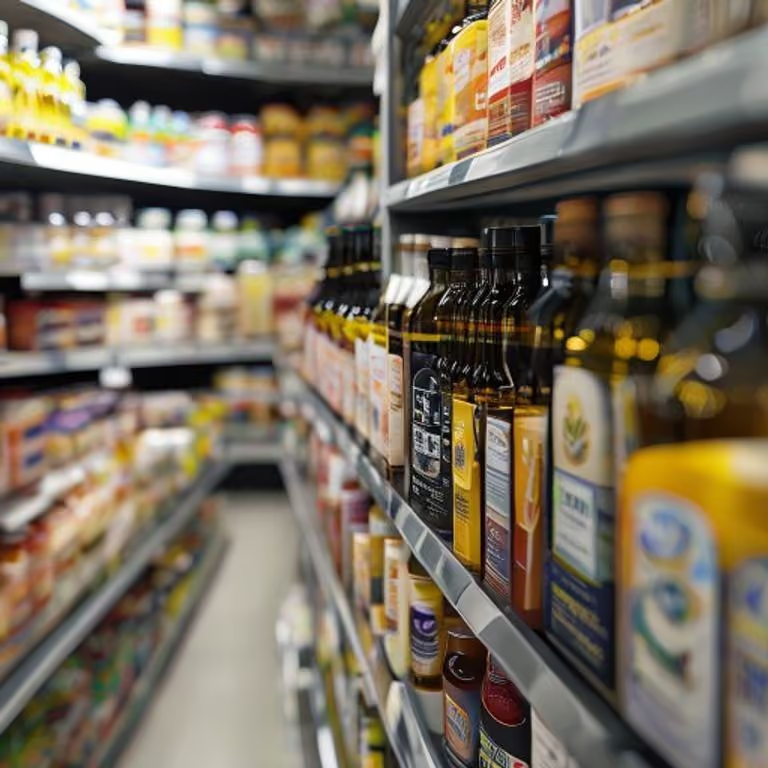
These new regulations are slated to come into effect on December 31, 2026. They will apply to a range of edible oils, including those produced from soybeans, corn, canola, and cottonseed. Additionally, the expanded rules will cover animal fats, such as edible tallow and lard. Processed oil and fat products, including blended cooking oils, flavored oils, shortening, and margarine, are also subject to the new labeling mandates. Furthermore, soy sauce and certain saccharide products will fall under these GM labeling requirements.
However, an important distinction is made for other food products that incorporate these ingredients. If the final composite product does not contain detectable genetically modified DNA or proteins, it will not be required to bear a GM label, despite containing components (like the newly regulated oils) that originated from GM sources.
According to statements from the South Korean government and the MFDS, the primary objective behind these updated requirements is to safeguard consumers' 'right to know' and to offer them enhanced choices when selecting food products. These amendments follow revisions to the Food Sanitation Act, which received approval at the close of 2025.
South Korea has had GM labeling mandates in place since 2001, but these were previously limited to products where GM DNA or proteins were still detectable. The revised framework significantly extends these obligations to selected highly processed items, including edible oils and fats, irrespective of whether genetically modified DNA or proteins can still be identified in the finished product.
Source: UkrAgroConsult