 Advertise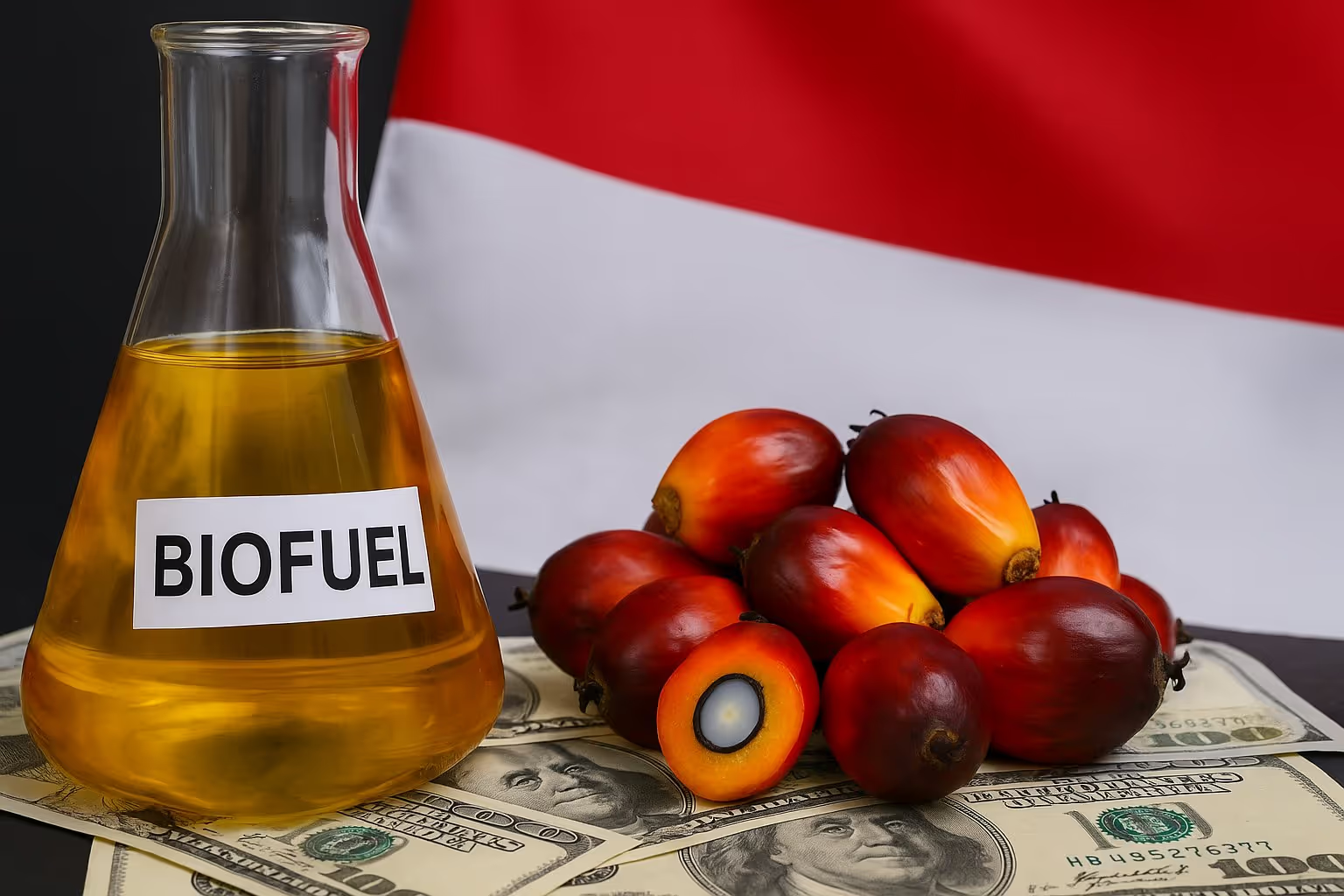
Indonesia recently reported that its national program for using palm oil-based biodiesel has helped the country save at least $3.68 billion in foreign exchange this year.
Indonesia is the world’s largest palm oil producer and has mandated the use of biodiesel produced by blending the food crop with conventional diesel fuel. The blending rate has increased over time, with the government currently enforcing a mandatory 40% palm oil blend under the B40 policy, which came into effect in early 2025.
Indonesian Energy Minister Bahlil Lahadalia said at a press conference on Monday: “We distributed around 6.8 million kiloliters of biodiesel [B40] in the first half of 2025.”
As a result, Indonesia was able to reduce fuel imports, saving $3.68 billion in foreign exchange through June.
The program is also part of Indonesia’s broader strategy to maximize the value of its abundant natural resources by converting raw materials into finished products. The government said converting crude palm oil into biodiesel added economic value of IDR 9.51 trillion, equivalent to about $583.4 million.
Bahlil noted that Indonesia has already achieved half of its target to distribute 13.5 million kiloliters of B40 biodiesel during 2025.
The national biodiesel program has expanded significantly in recent years. Between 2020 and 2023, the mandatory palm oil content was lower at 30%. The country distributed 8.4 million kiloliters in 2020, rising to 9.3 million kiloliters in 2021 and 10.4 million kiloliters the following year.
The government then gradually raised the mandatory rate to 35% in 2023 and maintained the B35 policy for two years. Indonesia distributed 12.3 million kiloliters of B35 biodiesel in 2023 and 13.2 million kiloliters the following year. Foreign exchange savings from the biodiesel program reached around $9.3 billion last year, according to the data.