
Lang
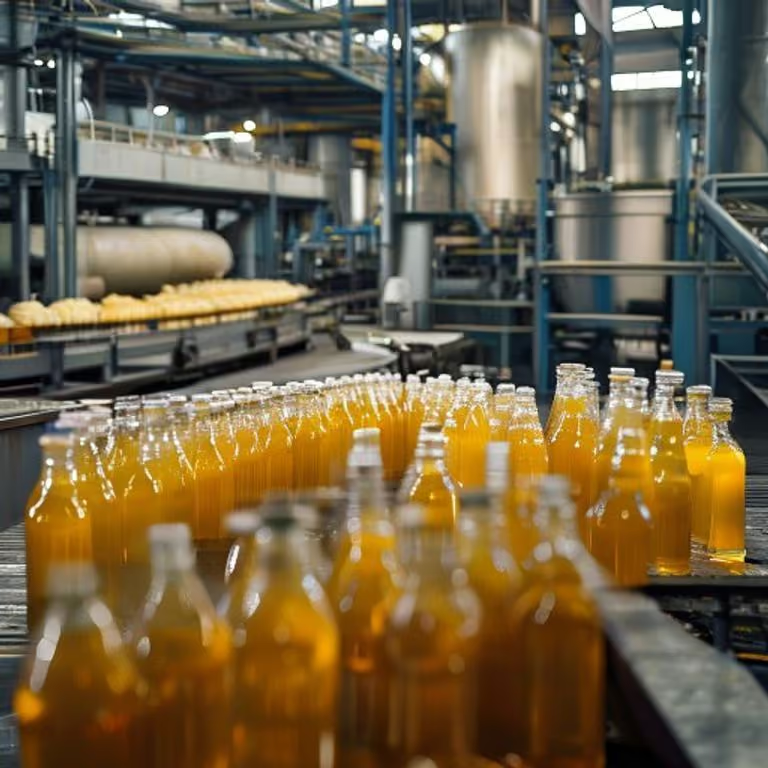
Pakistan experienced a significant surge in palm oil imports, reaching an unprecedented 3.482 million tonnes valued at $3.785 billion in fiscal year 2026 (FY26). This marks a substantial increase from the 3.214 million tonnes imported at a cost of $3.4 billion in the preceding fiscal year (FY25), according to recent data released by the Pakistan Bureau of Statistics (PBS). The average import price per tonne also saw an uptick, rising from $1,056 in FY25 to $1,078 in FY26.
Sheikh Umer Rehan, Chairman of the Pakistan Vanaspati Manufacturers Association (PVMA), attributed the escalating demand for palm oil to a growing population and reduced yields of local oilseed crops, such as cottonseed, which in turn fuels higher consumption of ghee and cooking oil. He highlighted that edible oil consumption in Pakistan has grown from 4 million tonnes five years ago to 4.8 million tonnes currently. Despite this consistent growth, Rehan noted a critical policy gap, stating that 'no edible oil policy had been formulated since independence'.
Amidst rising import costs, domestic prices for essential cooking ingredients have also seen a modest increase over the past year. The Sensitive Price Index (SPI) indicates that the national average price for a 5-litre container of cooking oil is now between Rs2,975 and Rs3,110, up from Rs2,800-Rs3,000 a year prior. Similarly, 2.5kg of ghee is priced at Rs1,500-Rs1,565 (previously Rs1,425-Rs1,485), and 1kg of ghee costs Rs590-Rs610 (up from Rs550-Rs580).
The local industry is currently facing additional pressure from the Federal Board of Revenue (FBR). The FBR is reportedly pushing manufacturers to shift from the traditional ex-mill price basis for General Sales Tax (GST) collection to a retail price mechanism. Rehan criticized this approach, suggesting the FBR is 'creating complications for taxpayers rather than fostering a business-friendly environment and lowering the cost of doing business'.
He warned that a new sales tax mechanism, set to be implemented with the FY27 budget, would likely result in an increase of Rs10-Rs15 per kilogram in the prices of ghee and cooking oil. This change involves the expansion of the Third Schedule within the FY27 budget, mandating sales tax collection on ghee and cooking oil based on the Maximum Retail Price (MRP). Rehan asserted that this shift 'would significantly increase the industry's tax burden'. The PVMA had previously advocated for tax reductions in the edible oil and ghee sector to alleviate financial strain on consumers.
Source: Profit by Pakistan Today