 Advertise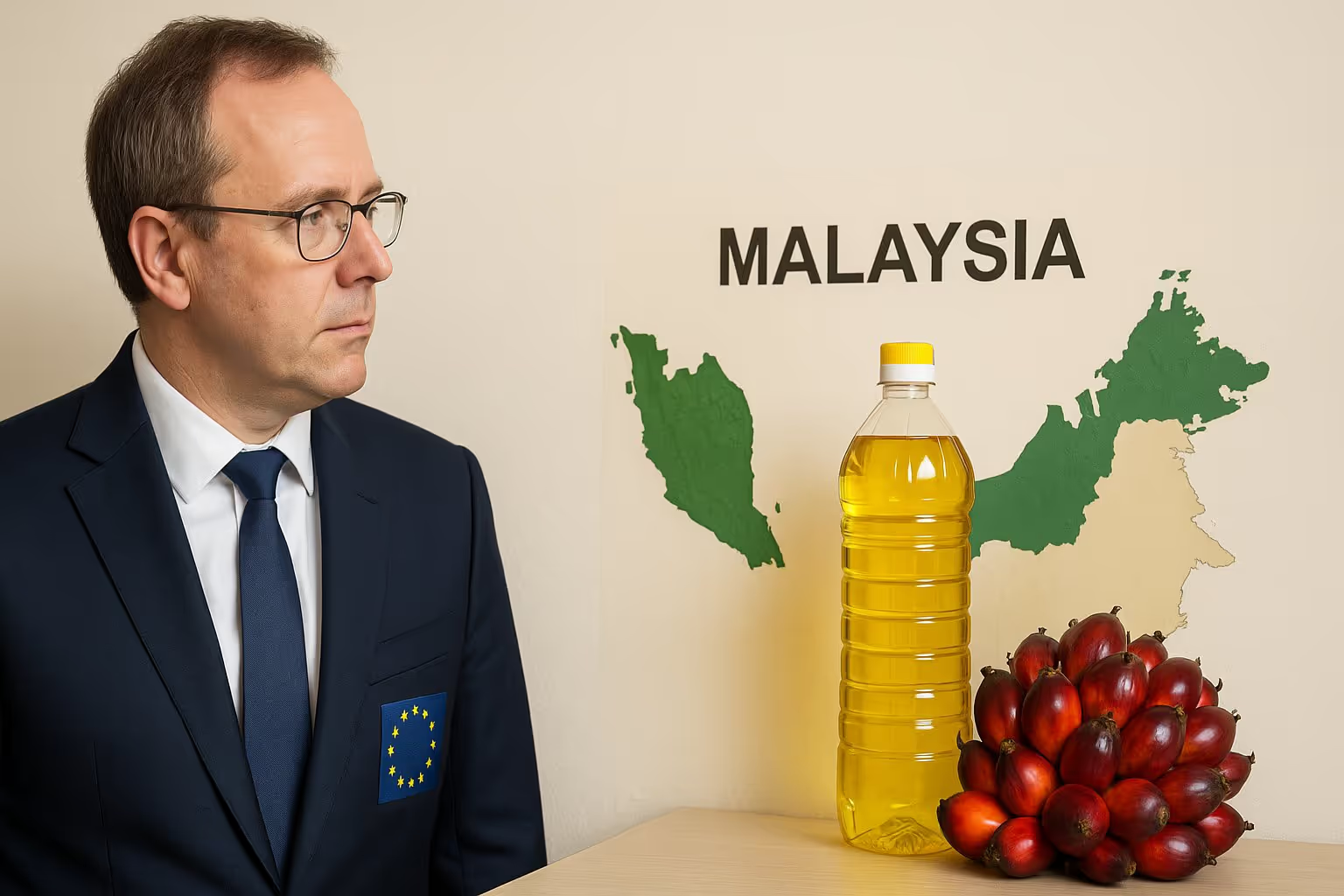
European Union Ambassador to Malaysia Rafael Daerr said the EU has not yet decided whether Malaysia will be classified as a “low-risk” country under the new country benchmarking system of the EU Deforestation Regulation (EUDR).
He explained that the system will classify countries into three categories — low, standard, and high risk — based on their deforestation levels, with the aim of reducing the EU’s contribution to global deforestation and ecosystem degradation.
The first official list of these classifications is expected to be released by June 30.
Malaysia, as a major producer of palm oil, rubber, timber, and cocoa, faces potential trade restrictions under the regulation, which requires seven key commodities — palm oil, rubber, timber, cocoa, cattle, soy, and coffee — and their derived products to be deforestation-free, legally sourced, and accompanied by due diligence procedures.
Although Malaysian authorities, including the Malaysian Palm Oil Board (MPOB), have called for the country to be classified as low risk, Daerr said the EU assessment outcome is still under discussion.
He said the default classification for all countries is “standard risk,” and that “low risk” is granted only to countries where, for example, the palm oil industry is small enough to be easier to monitor and trace.
He explained that smaller countries or those with limited growth in such industries may be classified as low risk after detailed assessment.
He noted that Malaysia’s geographic diversity and large forest cover make traceability and monitoring more complicated, which is a key factor for evaluators.
He said Malaysia is a large and impressive country with extensive forests, making traceability naturally more difficult. He added that varying data and different traceability systems across regions could lead authorities to postpone a final classification.
However, he emphasized that the risk classification does not change the requirements of the EU regulation. It only serves as an indicator for EU countries on the level of checks required when importing shipments, without changing the standards themselves.
Daerr said Malaysia’s palm oil sector is already advanced in its readiness to comply with EUDR requirements.
He said that when looking at Malaysia’s readiness to produce palm oil compliant with the regulation, the country appears to be among the global leaders in the sector.
The EU currently imports 10% of Malaysian palm oil, and Daerr expressed the EU’s readiness to import larger volumes provided there is full compliance with the regulation.
He praised Malaysia’s efforts to improve the sustainability of the sector and said the European market is prepared to expand trade if these efforts continue.
He added that Malaysian palm oil sold in Europe commands higher prices than in other markets because the EU favors high-quality, sustainable products, and European consumers are willing to pay more for environmentally friendly products.
He noted that although only 10% of Malaysian palm oil is exported to Europe, the revenue from that volume exceeds its share because sustainable oil achieves higher prices in that market.
He said Malaysian exporters dealing with the European market are largely ready to comply with the new regulation, noting that most conferences in Malaysia increasingly focus on sustainable production aligned with environmental, social, and governance goals.
He also urged Malaysian stakeholders to intensify promotion of sustainable palm oil in Europe to counter negative perceptions.
He said a campaign could be launched in Europe to show that a different type of palm oil is being produced in Malaysia, adding that there is no need only to defend the sector, but also an opportunity to develop and show the truth.
The EUDR is scheduled to come into force at the end of this year for large companies. It requires products exported to Europe to have no link to deforestation after December 31, 2020.