 Advertise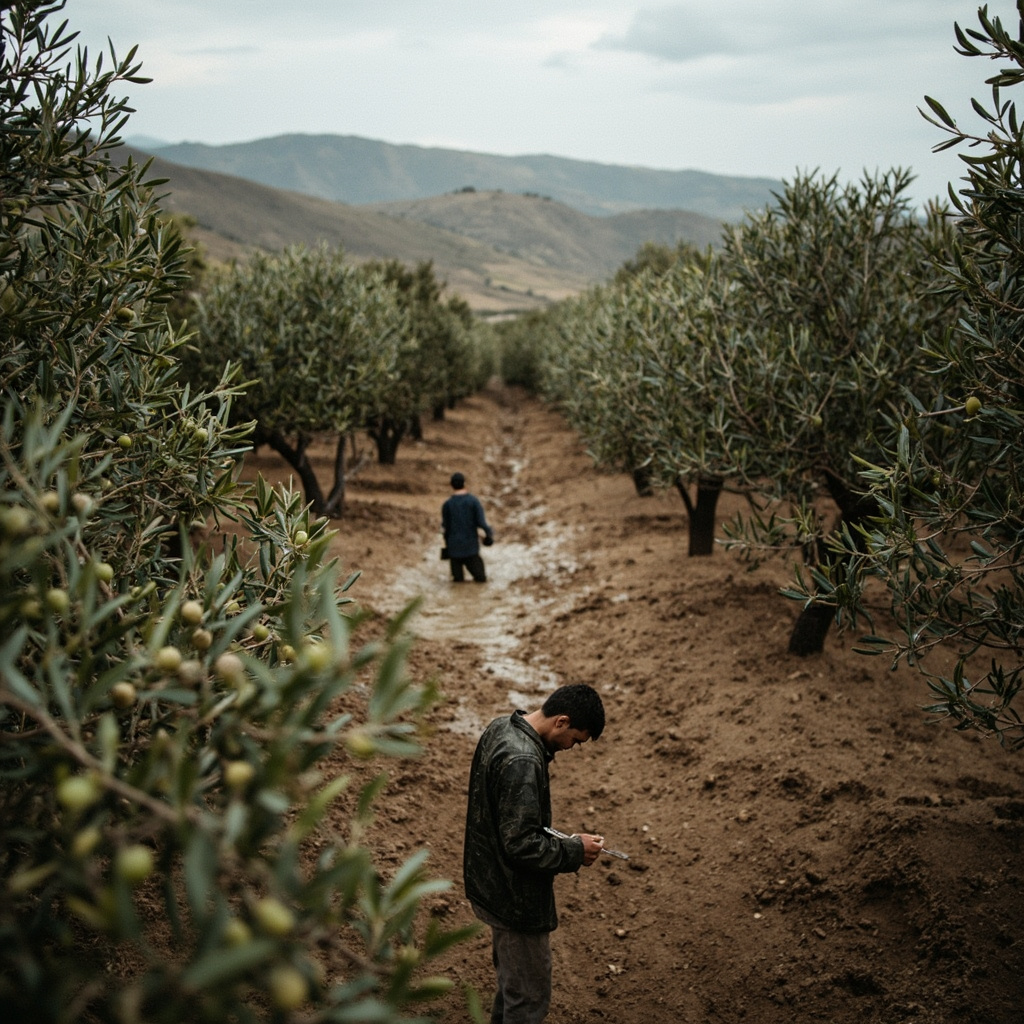
With the olive harvest season and oil pressing just two months away, field data and professional estimates in Morocco indicate an anticipated decline in olive yields this season, a stark contrast to the abundant production of the previous year. This downturn is attributed to several factors, primarily some farmers retaining a portion of last season's olives on trees due to escalating labor costs, compounded by erratic weather conditions including sudden rains and cold spells that adversely affected the growth and quality of the olives.
The last season saw a significant drop in olive fruit prices in national markets, ranging from 2 to 3 Moroccan Dirhams (MAD) per kilogram, while olive oil prices reached 40 to 50 MAD per liter. Conversely, industry professionals predict a substantial increase in olive oil prices this current season, with projections reaching between 60 and 80 MAD per liter, a direct consequence of the expected production decline.
Mohamed Sobeih, an olive oil producer and trader from the Beni Mellal region, explained that a significant portion of last year's olive crop remained on the trees, impeding the development of new olives. Sobeih, in a statement to 'Madar21' online newspaper, attributed this practice to the plentiful harvest of the previous season. Landowners found that harvesting and labor costs might outweigh potential returns, especially as olive fruit prices dropped to 3 or 4 MAD per kilogram, while labor wages ranged from 2 to 3 MAD per kilogram.
Sobeih added that farmers faced considerable losses due to slim profit margins compared to fixed costs and transportation expenses, alongside a notable surge in labor wages, which no longer stayed within the 70 MAD per day limit. He noted that daily worker wages during the last harvest season sometimes reached 300 MAD for specific working hours (8 AM to 12 PM and 2 PM to 4 PM) in areas like Beni Mellal.
Furthermore, Sobeih pointed out that harvesting costs climbed to about 2 MAD per kilogram. When transport and market costs were added, it became clear that farmers were incurring losses, prompting many to halt harvesting operations. He affirmed that some farmers lost 2 MAD per kilogram despite selling their crop, partly due to the high volume of production and heavy rains that prevented farmers from harvesting due to muddy conditions.
For the current season, there has been a significant shedding of olive fruits and buds even after fruit formation. This is due to recent untimely rains, in addition to thunderstorms and other factors that will clearly contribute to a lower olive yield this year compared to previous years.
Sobeih predicted a notable increase in olive oil prices compared to last year. Last season, olive fruit prices ranged from 3 to 4 MAD per kilogram, and the oil price for producers who harvested and pressed their own olives reached 30 MAD. It was retailed to consumers at 40 MAD (including 2 MAD for packaging and 8 MAD net profit per liter). This year, the price of a liter of olive oil is expected to range between 60 and 70 MAD, potentially reaching 80 MAD. Source: Tawasul News Network