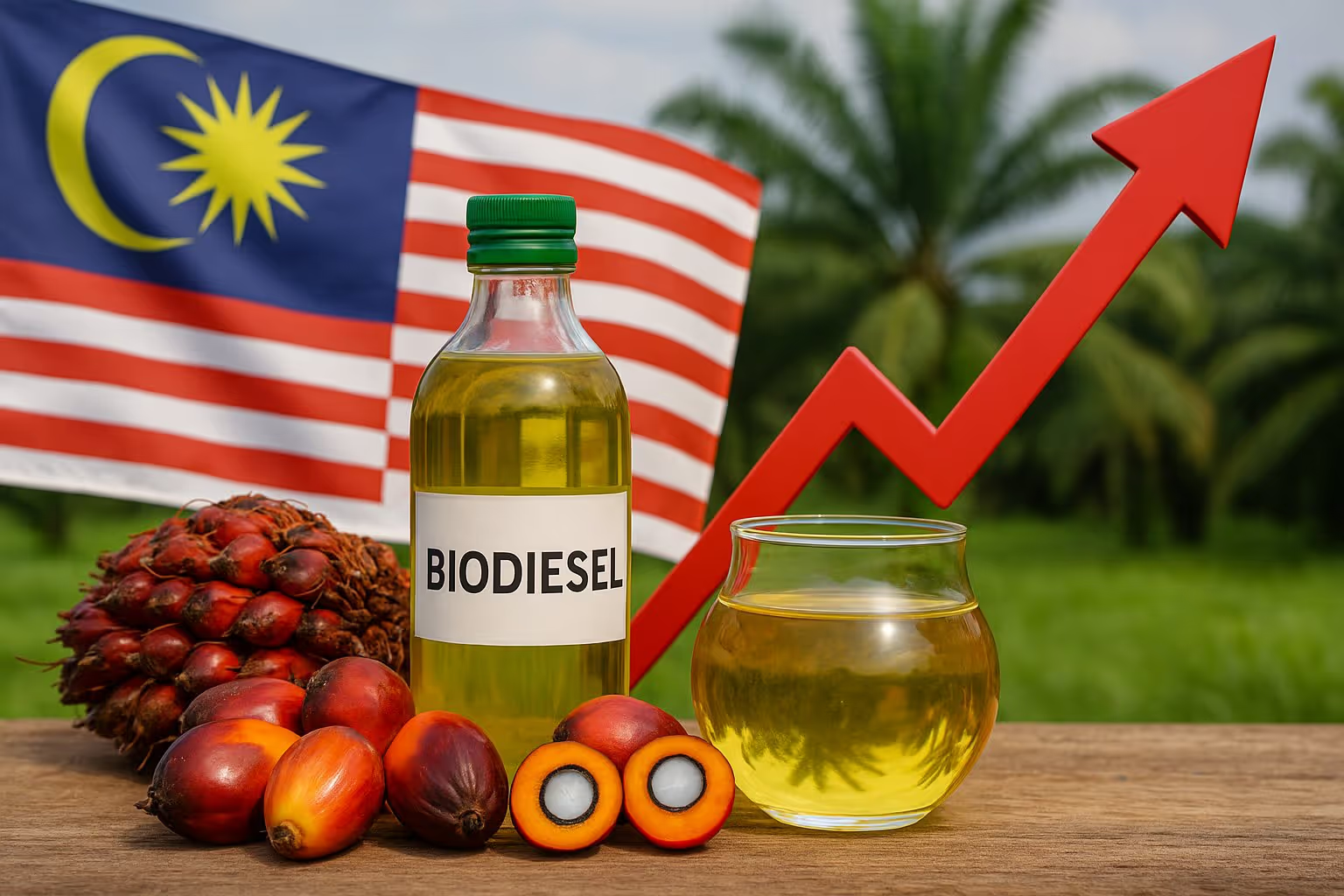
Malaysia's palm oil industry delivered a stronger performance in July 2025, with higher production, improved exports and a sharp jump in biodiesel shipments. The latest data show that gains in Peninsular Malaysia offset declining output in Sabah and Sarawak across most production categories.
Production Rises Despite Regional Disparities
- Crude palm oil (CPO) output rose 7.09% month-on-month to 1.81 million tonnes, supported by a 14.44% increase in Peninsular Malaysia, while Sabah and Sarawak saw declines of 4.50% and 1.71% respectively.
- Palm kernel production rose 8.75%, while output of crude palm kernel oil (CPKO) climbed 13.27% to 218,239 tonnes.
- Palm kernel meal production increased 11.77% to 238,511 tonnes.
Stocks Show Mixed Movements
- CPO stocks edged down 2.02% to 1.02 million tonnes, despite higher inventories in the Peninsula and Sabah, as Sarawak recorded a steep drop of nearly 40%.
- Processed palm oil stocks rose 10.38% to 1.09 million tonnes, driven by a 20.96% increase in the Peninsula.
Exports Improve, With A Huge Jump In Biodiesel
- Palm oil exports rose 3.82% to 1.31 million tonnes.
- Palm kernel oil exports increased 3.70%, while palm kernel meal exports surged 33.97%.
- Oleochemical exports rose 22.27% to 248,923 tonnes.
- Biodiesel exports jumped more than 16-fold, from 2,792 tonnes in June to 49,195 tonnes in July, a staggering increase of 1,662.25%.
Imports Shift Towards Palm Kernel Oil
- Malaysia imported 7,816 tonnes of CPO in July after recording no such imports in June.
- Processed palm oil imports fell 23.98%, while palm kernel oil imports more than doubled (+105.57%).
Fresh Fruit Bunch (FFB) Prices Rise
- The average fresh fruit bunch (FFB) price rose 5.07% to 44.79 ringgit, reflecting improved market fundamentals and stronger demand from downstream industries.
Outlook
Observers are likely to watch whether Peninsular Malaysia can sustain its strong production momentum in the coming months, and whether the jump in biodiesel exports marks a temporary spike or a lasting shift in demand. Meanwhile, continued weakness in Sabah and Sarawak output could constrain overall supply growth.
 Advertise