 Advertise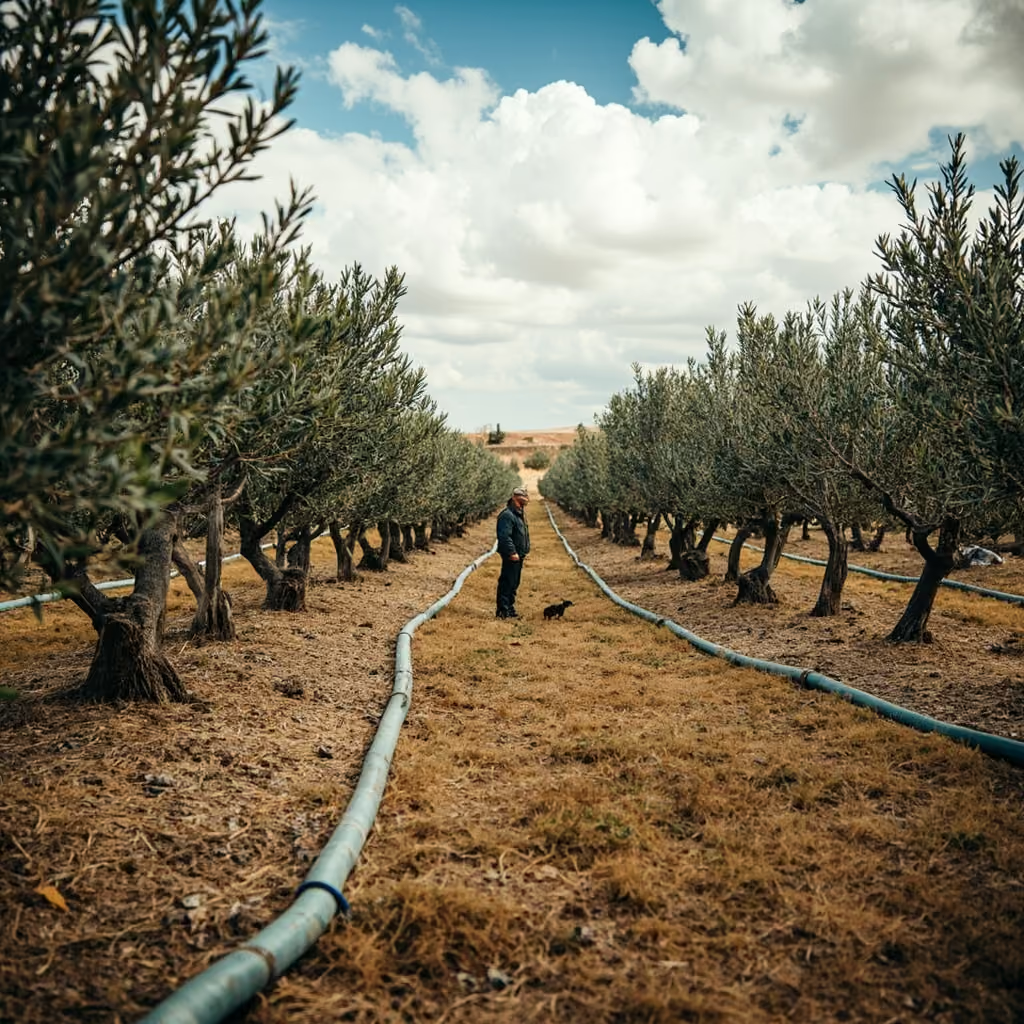
Agricultural specialists in Jordan have revealed a sharp decline in olive oil production for the 2025 season, necessitating a proactive plan to address the escalating challenges posed by traditional 'alternating bearing' and the complex impacts of climate change. Experts emphasized the urgent need for effective strategies to ensure the sustainability of the olive sector, a fundamental pillar of national food security and economy.
According to the results of the 2025 olive oil press survey in Jordan, issued by the Department of Statistics, total production reached 16,342 tons. This represents a 34.4 percent decrease from the general average production for the period (2012–2024) of 24,923 tons. Production also dropped by 54.4 percent compared to the 2024 season, which saw 35,828 tons, marking the lowest level since the 2009 season. The quantity of olives processed declined to 84,154 tons this season, down from 184,903 tons last season, reflecting a simultaneous reduction in crop volume and overall production.
The findings also indicated a geographical concentration of production in the northern governorates, with Irbid's presses leading at approximately 5.5 thousand tons, followed by Ajloun with about 3.3 thousand tons. In contrast, Aqaba governorate recorded the lowest production, at around 52 tons, highlighting a significant production gap between the north and south of the kingdom.
Dr. Fadel Al-Zoubi, an international expert in food security, agriculture, and emergencies, attributed this decline to two main factors: first, the phenomenon of alternating bearing, which involves cyclical high and low yields due to nutrient and energy depletion in trees after abundant seasons. Second, the complex effects of climate change, which not only included weak or irregular rainfall but also changes in the geographical distribution of rain and flood pathways, directly impacting tree growth and fruit set.
Al-Zoubi noted that Irbid and Ajloun maintained relatively better production levels due to larger cultivated areas, tree density, accumulated farmer expertise, and some farmers' adoption of supplementary irrigation. He called for a proactive response, including supporting supplementary irrigation in rain-fed areas and considering allowing the import of raw olives for local pressing to maintain press operations and mitigate price volatility, while ensuring transparency in product origin.
Mohammad Taisir Al-Najdawi, Head of the Jordanian Olive Press Owners Syndicate, affirmed that the figures reflect an exceptional season, pointing out that the reduction in processed quantities indicates the decline originated in the fields. He stressed the importance of enhancing agricultural extension and developing field management techniques, in addition to supporting presses to maintain their technical readiness.
Engineer Fayyad Al-Zayoud, Head of the Jordanian Association of Olive Exporters and Producers and an advisory board member of the International Olive Council, linked the sharp decline to successive weak rainy seasons and climate change impacts over the past five years. He explained that the 2024 rainy season saw a significant drop in precipitation, directly affecting fruit formation for the 2025 season. He also noted that this decline aligns with a broader reduction across Eastern Mediterranean countries, leading to higher local prices.
Engineer Jamal Al-Batsh, Executive Director of the Jordanian General Syndicate of Olive Press Owners and Producers, elaborated that the data primarily reflects the impact of climatic and agricultural factors on geographical production disparities, particularly delayed, weak, and poorly distributed rainfall, and high temperatures in the south. He emphasized the necessity of intensifying agricultural extension in the south, judiciously expanding the cultivation of drought and heat-tolerant varieties, and employing modern agricultural technologies and applied research to reduce production costs, improve olive and olive oil quantity and quality, and narrow the production gap between the leading northern governorates and other regions of the kingdom.
Source: Jordan News Agency