 Advertise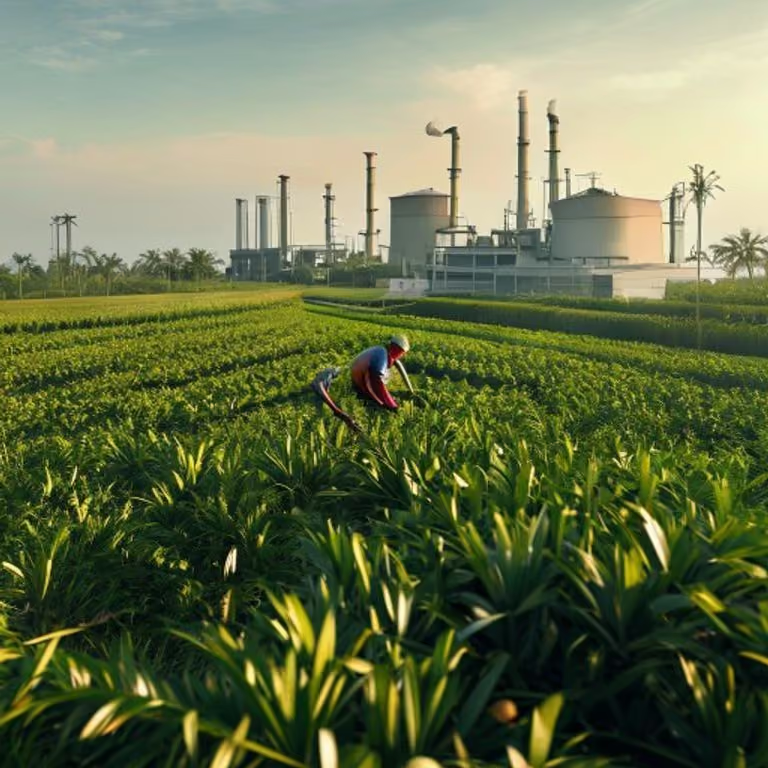
India is significantly boosting its domestic palm oil production capabilities, driven by a strategic imperative to reduce its substantial reliance on imports, especially in the wake of new export limitations imposed by Indonesia. With more than 600,000 hectares currently dedicated to oil palm cultivation, the Indian government has set an ambitious target to triple national output by the year 2031. This accelerated shift aims to insulate both consumers and industries from the volatility of global edible oil prices.
Indonesia's recent decision to tighten palm oil exports, primarily to support its burgeoning domestic biofuel program, has provided additional impetus for India to fast-track its self-sufficiency initiatives. As one of the world's largest importers, India has historically been susceptible to sudden supply disruptions and price fluctuations originating from key Southeast Asian producers. Through the focused implementation of the National Mission on Edible Oils-Oil Palm (NMEO-OP), the government intends to curb its annual import expenditure and establish more resilient supply chains for sectors ranging from food processing to personal care products.
The NMEO-OP mission, inaugurated in 2021, has already achieved a notable milestone, bringing approximately 640,000 hectares of land under oil palm cultivation by March 2026. While the initial target for the 2025-26 period was set at 650,000 hectares, the nation is now directing its efforts towards more extensive long-term production goals. Official forecasts indicate that domestic palm oil output could potentially ascend to 1.5 million metric tonnes by the fiscal year 2030-31, as existing plantations reach maturity and optimal productivity levels.
Geographical concentration remains a critical component of this expansion strategy. Andhra Pradesh and Telangana have emerged as the leading states, together accounting for nearly 98% of India's total palm oil output. These regions have effectively demonstrated that with appropriate irrigation and water management techniques, oil palm can be a highly productive crop for agriculturalists. Field reports confirm that numerous farmers in these areas have experienced significant increases in their income after transitioning from traditional, less profitable crops to oil palm, thereby providing a strong economic incentive for continued growth.
For investors, the long-term success of this expansion hinges on a judicious balance between land use and sustainability practices. In contrast to certain international markets where palm oil expansion has drawn criticism regarding deforestation, India's policy emphasizes the conversion of existing degraded land or agricultural plots previously utilized for less productive crops. From a financial standpoint, the capacity of these palm oil plantations to function as carbon sinks and supply feedstock for biofuel production adds a layer of enduring value, potentially mitigating some of the substantial initial capital investment required for establishing processing infrastructure.
A key indicator for both investors and industry stakeholders in the forthcoming quarters will be the rate at which new plantations are established and the timely commissioning of local processing mills capable of handling the increasing volumes of raw fruit bunches. The operational efficiency of this infrastructure will directly determine India's ability to narrow the disparity between current domestic production and total national consumption, consequently influencing the overall import cost burden on the national economy.
Source: Whalesbook